The Points Guy believes that credit cards can transform lives, helping you leverage everyday spending for cash back or travel experiences that might otherwise be out of reach. That's why we publish a variety of editorial content and card comparisons: to help you find a great card to turn your goals into reality.
Our site may earn compensation when a customer clicks on a link, when an application is approved, or when an account is opened with our partners, and this may impact how or where these products appear. While we don't cover all available credit cards, our editorial team creates and maintains all of the analysis of these cards, and our content is not influenced nor subject to review by any credit card company, bank or partner prior to (or after) publication. Please view our advertising policy and product review methodology for more information.
Advertiser disclosure
The Points Guy believes that credit cards can transform lives, helping you leverage everyday spending for cash back or travel experiences that might otherwise be out of reach. That's why we publish a variety of editorial content and card comparisons: to help you find a great card to turn your goals into reality.
Our site may earn compensation when a customer clicks on a link, when an application is approved, or when an account is opened with our partners, and this may impact how or where these products appear. While we don't cover all available credit cards, our editorial team creates and maintains all of the analysis of these cards, and our content is not influenced nor subject to review by any credit card company, bank or partner prior to (or after) publication. Please view our advertising policy and product review methodology for more information.
Jasmin Baron is TPG's former Senior Points & Miles Editor. Previously, she spent over five years as a writer and Senior Editor at sister site Million Mile Secrets.
September 28, 2019 • 10 min read
The cards we feature here are from partners who compensate us when you are approved through our site, and this may impact how or where these products appear. We don't cover all available credit cards, but our analysis, reviews, and opinions are entirely from our editorial team. Terms apply to the offers listed on this page. Please view our advertising policy and product review methodology for more information.Editorial disclaimer: Opinions expressed here are the author's alone, not those of any bank, credit card issuer, airline or hotel chain, and have not been reviewed, approved or otherwise endorsed by any of these entities.
Comments
By commenting, you agree to our Community Guidelines to help create a positive space for conversation. The responses below are not provided or commissioned by the bank advertiser, our partners, or The Points Guy (“TPG”). They have not been reviewed, approved, or otherwise endorsed by any of these parties. All responses are submitted by individual contributors, and neither the bank advertiser, our partners, nor TPG are responsible for ensuring that all posts and/or questions are answered.
Related stories
Quick summary
The article explores how introducing children to points and miles strategies can foster financial responsibility and open up travel opportunities from a young age.
Adding children as authorized users on travel rewards cards helps them build credit and understand responsible card usage.
The author highlights the educational value of involving kids in travel planning, from choosing destinations to maximizing loyalty program benefits.
Emphasis is placed on teaching kids to use shopping portals for purchases and to value patience and manners during travel.
What to consider
Parents are responsible for any charges made by authorized user children, so clear boundaries and oversight are essential.
Minimum age requirements for adding children as authorized users vary by financial institution, typically starting at 13 or 15 years old.
Some issuers may count authorized user accounts toward application limits, which could affect future card approvals.
What you'll miss from the article
Practical strategies for teaching children to maximize points and miles, build credit, and develop travel etiquette from an early age.
Generated by AI with support from our editorial team.
Update: Some offers mentioned below are no longer available. View the current offers here.
One of the greatest joys in life is experiencing travel through the eyes of a child — especially when they delight in things veteran travelers might take for granted, like airport lounge access or a hotel upgrade. Thanks to points and miles, my three children have been traveling since infancy and have visited dozens of destinations, ranging from family favorites like Walt Disney World in Orlando to more international locales like the Philippines and Abu Dhabi.
I'm a firm believer in the idea that travel is the best education, and my kids have hopped on the bandwagon. They're now authorized users on several of my credit cards, can recognize the hotel brands that belong to each chain and are able to navigate an airport or hotel check-in counter like seasoned pros. My friends and family think I'm nuts, but there's a method in my madness. Once the kids are adults, they'll have a world of free travel open to them from learning these points and miles fundamentals at a young age.
The kids at Sheikh Zayed Grand Mosque in Abu Dhabi.
Learn (responsible) credit card usage
Never paying with cash (if you can help it) is a no-brainer for points and miles old-timers, but children are often taught that using credit cards is a fast track to accumulating debt. I've shown the kids that earning rewards from travel credit cards, when done responsibly, is an excellent method for unlocking the ability to travel for free.
As they've gotten older, I've added them as authorized users on several of my cards, including:
Capital One Savor Cash Rewards Credit Card — Earn 4% cash back on dining, entertainment purchases, and popular streaming services, 3% at grocery stores (excluding superstores like Walmart and Target) and 1% on everything else. My kids use this card frequently when they grab a meal with pals or go to the movies.
Chase Freedom — (No longer open to new applicants) This card comes in handy when the rotating 5% cash-back bonus categories (on up to $1,500 in combined purchases each quarter when you activate the bonus) align with the kids' typical spending. Past categories have included department stores and Amazon purchases, plus it has no annual fee.
Hilton Honors American Express Aspire Card — I added my hungry teen to this card because it earns 7x Hilton points per dollar at U.S. restaurants, and it won't hurt to develop her history with American Express (more on that in a second).
The information for the Capital One Savor Cash Rewards Credit Card and Hilton Aspire card has been collected independently by The Points Guy. The card details on this page have not been reviewed or provided by the card issuer.
My kids respect the boundaries I've set for using their cards and, if they decide to make a purchase with their own money, they'll pay with their card and withdraw cash from their bank accounts afterward to pay me back. While they're usually pretty good about remembering each card's bonus categories, I'm always tickled when my teen texts me asking, "Mom, which card should I use again?"
Build (and protect) your credit score
While they can't apply for a credit card until they turn 18, adding kids as authorized users is an excellent way to build your child's credit. My kids have learned to treat their authorized user cards like debit cards, and never spend more than they can afford to pay back in full and on time each month to avoid fees and interest. Learning financial management skills and discipline at an early age will hopefully help them once they're college students, and beyond.
By adding the kids as authorized users, they'll build a credit history and a relationship with the bank. That way, by the time they're adults, they'll have a much better shot at being approved when they apply for their first credit cards. Although the government doesn't have an age restriction on who can be added as an authorized user, some banks impose a minimum age:
Bank
Minimum age
American Express
13
Bank of America
None
Barclays
13
Capital One
None
Chase
None
Citi
None
Discover
15
U.S. Bank
16
If you choose to go the same route with your kids, be mindful of the fact that any charges they make will be your responsibility. It's also worth considering backing off from adding them as authorized users once they turn 16 or so, because Chase will include authorized user cards in their 5/24 count (although if you're denied because of this you can call the Chase reconsideration line and ask for these accounts to be ignored).
Never leave miles and points on the table
Using a credit card for all purchases is just part of the equation. The kids are now all too familiar with the fact that if they spot an item at the mall they want or need supplies for back-to-school shopping, they're probably not going to get it that day. Instead, we'll make the purchase online through a shopping portal to earn bonus points, miles or cash back.
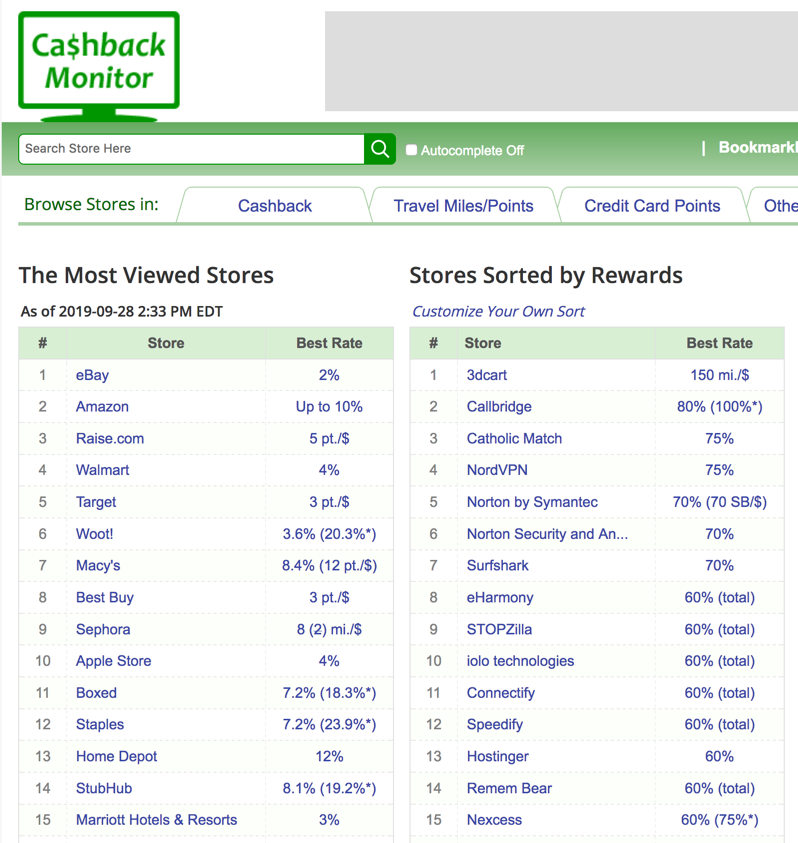
This is especially lucrative when we can double-dip rewards by using a card that earns a bonus in the store's category, like next quarter's Chase Freedom 5% cash-back bonus at department stores (combined with Chase Pay and PayPal). For example, if they want to buy something at Macy's, I'll check Cashback Monitor or another shopping portal aggregator to see which shopping portal is giving the best return, and make the purchase that way.
Starting your shopping through an online shopping portal can supercharge your miles and points earning. (Image courtesy of Cashback Monitor)
This strategy has another beneficial effect: delayed gratification. The kids have found out that taking time between spotting an item they want and actually shelling out cash for it is a good way to temper impulse purchases they might later regret. And if they do end up buying, they've learned patience ("Is it coming today, Mom?") and have a little something to look forward to when the mail truck swings by.
Work toward a travel goal
Points and miles don't grow on trees, although when my kids were younger they sure thought so. Now, they're cognizant of the fact that planning a trip takes time, diligence and patience. Between deciding on a destination, figuring out which miles and points can get you there and how to save up enough to book the trip, I've allowed them to participate in the planning process. They also have their own frequent flyer accounts, so when we do take paid flights they accumulate rewards for themselves.
My kids know that rewards go a lot further when we book coach flights or stay in lower-category hotels, and that's how we usually travel. This makes it all the more special when we splurge on a fancy five-star accommodation or blow a lot of miles on an international business-class itinerary.
Flying Japan Airlines business class between Tokyo and Vancouver was a real treat for the kids, but it doesn't happen often.
Stretching our points and miles so we can take more trips isn't lost on the kids — and they know having a stash readily available can make for last-minute travel opportunities. When they found out they'd have a couple of extra days off around the Columbus Day long weekend, for instance, immediately they asked where we'd be going and what kinds of miles we had at our disposal. (Shh... I've planned a trip but the destination is a secret).
Understand points and miles open doors, but so do manners
Being organized, setting goals and being financially responsible are all necessary skills to learn if you plan to succeed in the points and miles world. However, once you're on the road, being polite and well-behaved is equally important.
Traveling with points and miles has exposed the kids to situations that haven't always been ideal, from delays to disappointments when things haven't gone our way. They've also learned that good manners and being friendly can be easily as valuable as hotel elite status. We've been upgraded at hotels where I have low-tier or even no elite status simply because we've asked nicely (and yes, sometimes the kids beat me to the punch by asking, with a smile: "Are there any upgrades available to a bigger room so we can have more space?"). They've become fearless (but not too fearless).
Miles and points have given the kids lots of travel etiquette practice, especially when we've traveled in premium cabins and stayed at luxury properties, where it's often challenging for little ones to behave appropriately (and where grownups might look on their presence with disdain). The kids have learned to never brag or speak loudly about getting a flight or stay "for free" or act in a boisterous, loud manner. I'd like to think these experiences have helped them become better people in other aspects of life as well, like making new friends (they still keep in touch with pals they've met during our travels to Cuba, the Philippines and Canada) and conversing with adults.
Bottom line
It's never too early to start teaching your children about points and miles. Not only will they benefit from participating in the travel planning process, but also learn about the importance of keeping organized and setting goals. By adding kids as authorized users to your own travel rewards credit cards (when you're comfortable with it), they'll get a head start on building a credit history and have a better chance of being approved for cards of their own when the time comes.
Most importantly, my kids have discovered that being in this crazy hobby of ours can open up amazing opportunities for adventure. My wish for them is that they carry these skills forward in their adult life and continue their points and miles journey, wherever it may take them.
All photos by the author unless noted otherwise
Comments
By commenting, you agree to our Community Guidelines to help create a positive space for conversation. The responses below are not provided or commissioned by the bank advertiser, our partners, or The Points Guy (“TPG”). They have not been reviewed, approved, or otherwise endorsed by any of these parties. All responses are submitted by individual contributors, and neither the bank advertiser, our partners, nor TPG are responsible for ensuring that all posts and/or questions are answered.