The Points Guy believes that credit cards can transform lives, helping you leverage everyday spending for cash back or travel experiences that might otherwise be out of reach. That's why we publish a variety of editorial content and card comparisons: to help you find a great card to turn your goals into reality.
Our site may earn compensation when a customer clicks on a link, when an application is approved, or when an account is opened with our partners, and this may impact how or where these products appear. While we don't cover all available credit cards, our editorial team creates and maintains all of the analysis of these cards, and our content is not influenced nor subject to review by any credit card company, bank or partner prior to (or after) publication. Please view our advertising policy and product review methodology for more information.
Advertiser disclosure
The Points Guy believes that credit cards can transform lives, helping you leverage everyday spending for cash back or travel experiences that might otherwise be out of reach. That's why we publish a variety of editorial content and card comparisons: to help you find a great card to turn your goals into reality.
Our site may earn compensation when a customer clicks on a link, when an application is approved, or when an account is opened with our partners, and this may impact how or where these products appear. While we don't cover all available credit cards, our editorial team creates and maintains all of the analysis of these cards, and our content is not influenced nor subject to review by any credit card company, bank or partner prior to (or after) publication. Please view our advertising policy and product review methodology for more information.
News
Why the Chase Sapphire Reserve is the best premium card for rental cars
Featured image by MONKEYBUSINESSIMAGES/GETTY IMAGES
Credit card writer Danyal Ahmed is an avid traveler, averaging about 100,000 aeronautical miles per year. He regularly applies that knowledge and his expertise in credit cards to his role as a credit card writer at TPG.
June 18, 2026 • 7 min read
The cards we feature here are from partners who compensate us when you are approved through our site, and this may impact how or where these products appear. We don't cover all available credit cards, but our analysis, reviews, and opinions are entirely from our editorial team. Terms apply to the offers listed on this page. Please view our advertising policy and product review methodology for more information.
Editorial note: This is a recurring post, regularly updated with new information and offers.
Editorial disclaimer: Opinions expressed here are the author's alone, not those of any bank, credit card issuer, airline or hotel chain, and have not been reviewed, approved or otherwise endorsed by any of these entities.
Comments
By commenting, you agree to our Community Guidelines to help create a positive space for conversation. The responses below are not provided or commissioned by the bank advertiser, our partners, or The Points Guy (“TPG”). They have not been reviewed, approved, or otherwise endorsed by any of these parties. All responses are submitted by individual contributors, and neither the bank advertiser, our partners, nor TPG are responsible for ensuring that all posts and/or questions are answered.
Related stories
Quick summary
Certain premium travel cards provide notable benefits for frequent car renters, including high earning rates when booking through the card's travel portal.
These cards offer an annual travel credit that can be applied broadly to various travel purchases, including car rentals.
Primary rental car insurance is included, covering theft or collision damage for rentals up to 31 days, with worldwide coverage and some exclusions.
Cardholders may also access elite status and discounts with major rental agencies through additional privileges.
What to consider
Primary insurance coverage requires declining the rental agency's collision damage waiver and is limited to specific vehicle types and uses.
Business card versions may only provide primary coverage for business rentals, while personal versions cover both personal and business use.
Elite status perks and discounts may be available when booking directly with rental agencies, but comparing prices and benefits between direct bookings and the travel portal is advised.
What you'll miss from the article
A detailed comparison of booking strategies, insurance nuances and how to maximize both travel credits and elite rental car benefits.
Generated by AI with support from our editorial team.
Comments
By commenting, you agree to our Community Guidelines to help create a positive space for conversation. The responses below are not provided or commissioned by the bank advertiser, our partners, or The Points Guy (“TPG”). They have not been reviewed, approved, or otherwise endorsed by any of these parties. All responses are submitted by individual contributors, and neither the bank advertiser, our partners, nor TPG are responsible for ensuring that all posts and/or questions are answered.
Here's what makes a Sapphire Reserve card the best premium card for rental cars, how you can maximize its benefits and what fine print to keep in mind.
Why Sapphire Reserve cards are great for renting cars
There are three key benefits that make either of the Sapphire Reserve cards an excellent choice for rental cars. These include:
Earning 8 points per dollar spent when you book a car via Chase Travel
Having access to primary rental car insurance when you decline an agency's collision damage waiver
Discounts and perks with Avis, Hertz or National when booking directly
Book through Chase Travel for maximum bonus points
Both Sapphire Reserve cards earn 8 points per dollar spent on all Chase Travel purchases, including rental cars.
In my experience, Chase Travel car rental prices are competitive, sometimes lower than booking directly with rental agencies. Based on TPG's June 2026 valuations, you'll get an approximate 16% return.
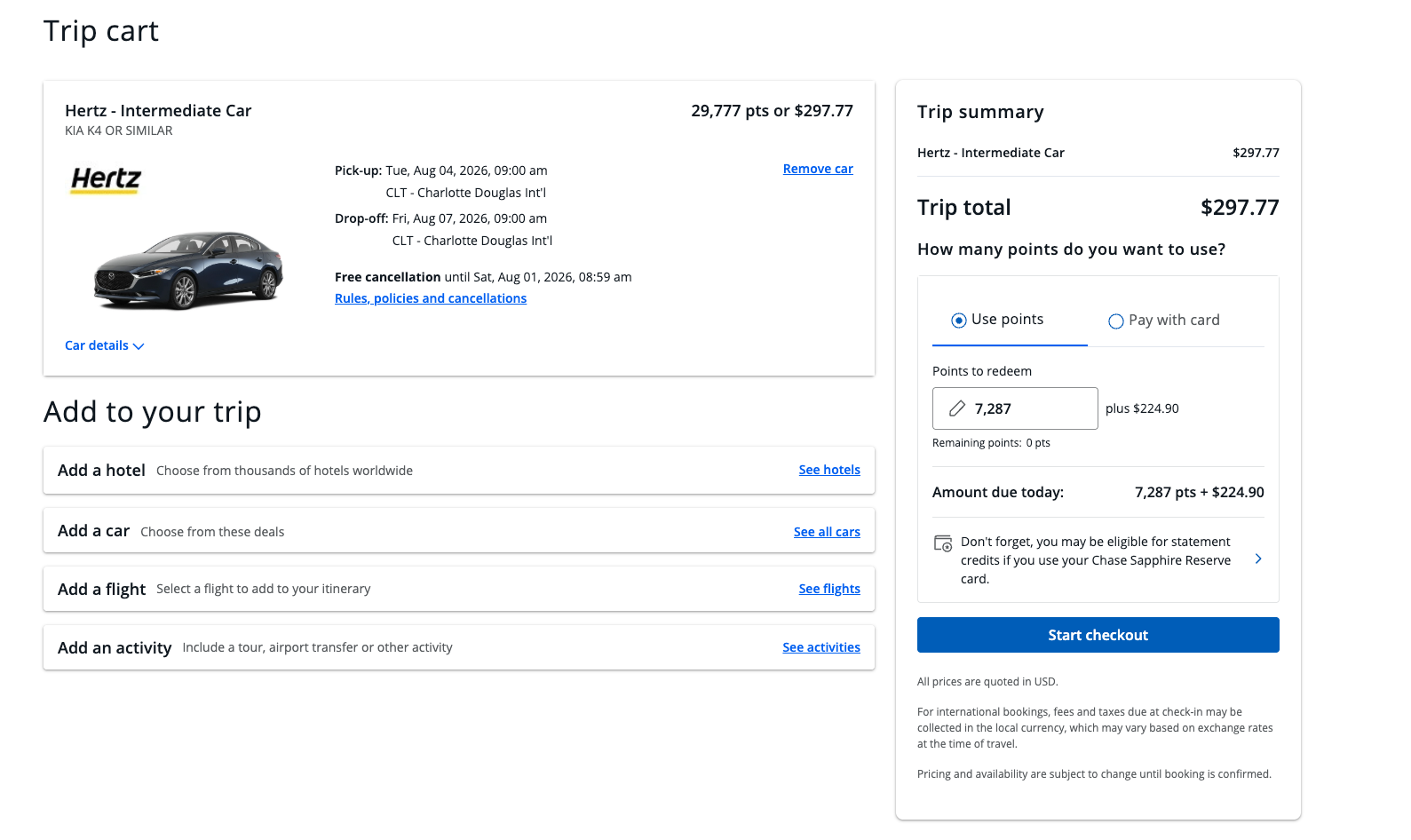
For example, when searching for a rental car in Charlotte, Chase offers an intermediate car through Hertz for around $100 a day. You'd earn 2,382 Chase Ultimate Rewards points from this booking, worth about $49 based on TPG's valuations.
CHASE
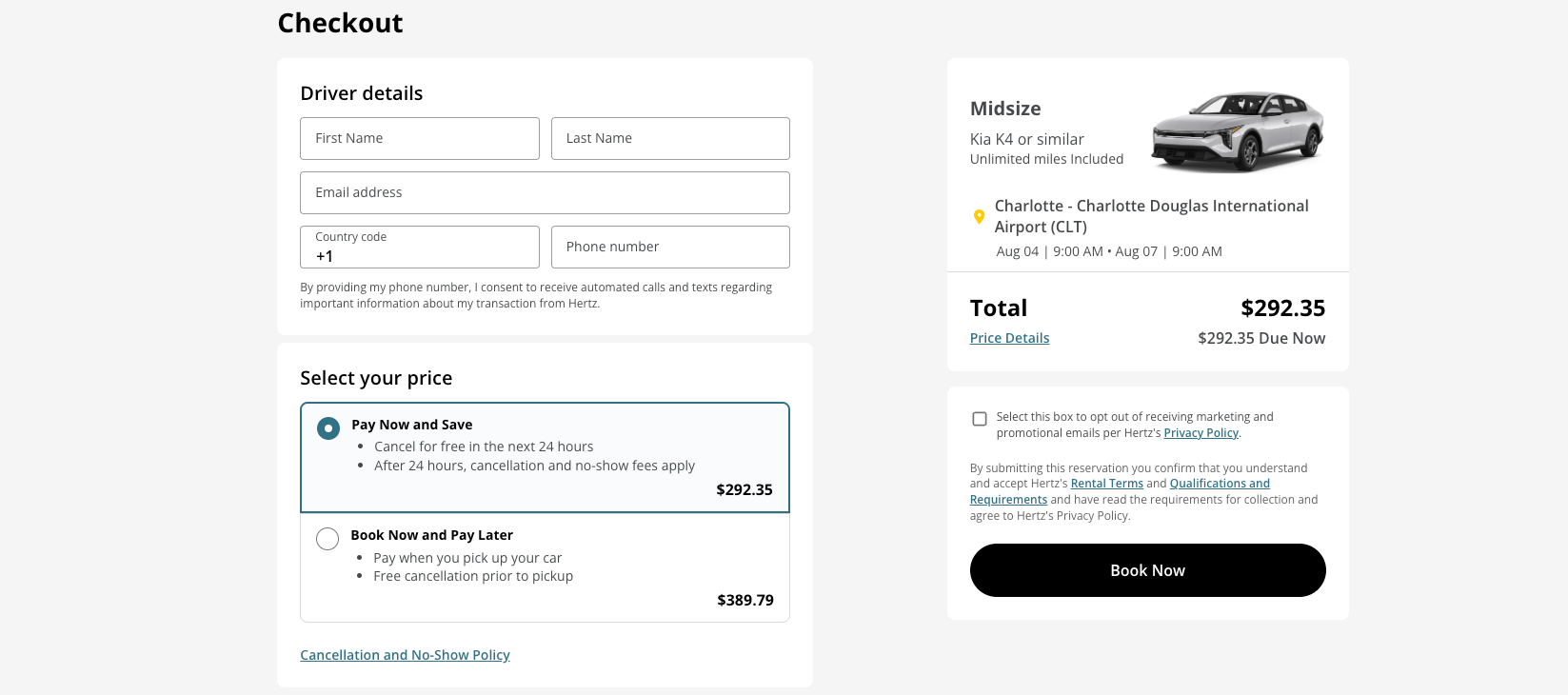
If I book directly with Hertz, the prepaid rate is about $97 a day. However, the rate to pay at the counter is $130 a day. Chase Travel is slightly cheaper, and, most importantly, it offers free cancellation up to 72 hours before the reservation starts, whereas the direct booking is nonrefundable after 24 hours.
HERTZ
Before booking with Chase Travel or directly with the rental agency, review the cancellation policies and any elite status perks available to you. That can help you determine which channel to book through.
I prefer booking through Chase Travel because the earning rate of 8 points per dollar is excellent. Not to mention, the Sapphire Reserve only earns 1 point per dollar spent on all other travel (outside of direct airline or hotel purchases).
Chase offers primary rental car insurance to cardholders of both the Sapphire Reserve and the Sapphire Reserve for Business. You must decline the rental company's collision damage waiver/loss damage waiver to use the benefit, and coverage only applies to rentals for up to 31 consecutive days.
If the car rental agency requires it, you can request a letter of coverage — which is proof of your auto rental coverage — through chasecardbenefits.com.
Having previously purchased rental agency insurance, this benefit saves me between $35 and $60 per day.
YELLOW DOG PRODUCTIONS/GETTY IMAGES
Both Sapphire Reserve cards will reimburse up to $75,000 for damage to a rental car caused by theft or collision, and coverage is worldwide. Note that this covers the rental vehicle and won't cover personal injuries or damages to other vehicles or objects. Both Sapphire Reserve cards' primary car insurance policies have the same list of excluded cars and motorized vehicles, and coverage does not extend to off-road driving or if you are under the influence of an intoxicant.
The cards differ in how the insurance protection benefit is applied. With the Sapphire Reserve for Business, primary car rental insurance applies only to car rentals for commercial or business purposes. If it's for personal use, the coverage is secondary to any other insurance the primary driver may possess. However, the coverage acts as primary if the driver has no other insurance.
As a Sapphire Reserve cardholder, your car rental is covered regardless of whether it is for personal or business use. For New York residents, when renting within the U.S., the coverage is primary unless you have personal car insurance, in which case it's excess coverage.
Considering the Visa Infinite perks for rental cars, booking directly can be enticing. I've activated my benefits as a Sapphire Reserve cardholder and have elite status with Avis and National. Both Sapphire Reserve cards offer a range of perks, so be sure to weigh the pros and cons.
Although you'll get a discount with one of the agencies, compare the price to Chase Travel. If you're saving significant money and can receive an upgrade, a return grace period or other ancillary benefits, then go for it.
I prefer earning Chase Ultimate Rewards points, so if the price difference is negligible, I would rather earn 8 points per dollar than 1 point per dollar.
Both the Sapphire Reserve and the Sapphire Reserve for Business offer high earning rates on rental car bookings, the ability to use a travel credit to offset its cost and industry-leading primary insurance coverage.
If you book rental cars often, consider one of these cards to help you earn bonus points along the way.