The Points Guy believes that credit cards can transform lives, helping you leverage everyday spending for cash back or travel experiences that might otherwise be out of reach. That's why we publish a variety of editorial content and card comparisons: to help you find a great card to turn your goals into reality.
Our site may earn compensation when a customer clicks on a link, when an application is approved, or when an account is opened with our partners, and this may impact how or where these products appear. While we don't cover all available credit cards, our editorial team creates and maintains all of the analysis of these cards, and our content is not influenced nor subject to review by any credit card company, bank or partner prior to (or after) publication. Please view our advertising policy and product review methodology for more information.
Advertiser disclosure
The Points Guy believes that credit cards can transform lives, helping you leverage everyday spending for cash back or travel experiences that might otherwise be out of reach. That's why we publish a variety of editorial content and card comparisons: to help you find a great card to turn your goals into reality.
Our site may earn compensation when a customer clicks on a link, when an application is approved, or when an account is opened with our partners, and this may impact how or where these products appear. While we don't cover all available credit cards, our editorial team creates and maintains all of the analysis of these cards, and our content is not influenced nor subject to review by any credit card company, bank or partner prior to (or after) publication. Please view our advertising policy and product review methodology for more information.
News
6 things to weigh before canceling a discontinued credit card
TPG's director of travel content Eric Rosen has used points and miles to visit some of the world's most remote corners, including swimming with whale sharks off Western Australia's Ningaloo Coast, exploring the wilds of Botswana's Okavango Delta and tasting the high-altitude wines of Argentina's Mendoza region.
January 27, 2020 • 11 min read
The cards we feature here are from partners who compensate us when you are approved through our site, and this may impact how or where these products appear. We don't cover all available credit cards, but our analysis, reviews, and opinions are entirely from our editorial team. Terms apply to the offers listed on this page. Please view our advertising policy and product review methodology for more information.Editorial disclaimer: Opinions expressed here are the author's alone, not those of any bank, credit card issuer, airline or hotel chain, and have not been reviewed, approved or otherwise endorsed by any of these entities.
Comments
By commenting, you agree to our Community Guidelines to help create a positive space for conversation. The responses below are not provided or commissioned by the bank advertiser, our partners, or The Points Guy (“TPG”). They have not been reviewed, approved, or otherwise endorsed by any of these parties. All responses are submitted by individual contributors, and neither the bank advertiser, our partners, nor TPG are responsible for ensuring that all posts and/or questions are answered.
Related stories
Quick summary
Discontinued credit cards may still be usable by existing cardholders, even if new applications are closed.
Closing a discontinued card can impact your credit score by reducing your total available credit and shortening your credit history.
Some legacy cards offer unique benefits or lower costs not available on newer products, making them worth retaining.
Upgrading, downgrading or converting to a new product may affect your eligibility for future sign-up bonuses.
What to consider
Carefully compare the benefits and costs of your discontinued card versus newer options before making changes.
Using any annual or time-sensitive perks before closing a card is important, as these may be forfeited if the account is not open and in good standing.
Eligibility for future bonuses may be affected by closing or converting a discontinued card, depending on issuer rules.
What you'll miss from the article
A detailed guide to weighing the pros and cons of keeping, closing or converting a discontinued credit card, including how to maximize benefits and avoid common pitfalls.
Generated by AI with support from our editorial team.
Update: Some offers mentioned below are no longer available. View the current offers here.
There are several reasons for this. In some cases, an airline or hotel group switches credit card partners. That’s what happened a few years ago when Hilton Honors dropped Citibank to consolidate its line of cards with American Express. In another instance, when Marriott took over Starwood, it kept both American Express and Chase as credit card partners, and we have products like Chase’s Marriott Bonvoy Boundless Credit Card and the Marriott Bonvoy Brilliant® American Express® Card to choose from. When shifts in the credit card market occur, some cards are “converted” into new products: the Starwood Preferred Guest® Business Credit Card from American Express turned into the Marriott Bonvoy Business® American Express® Card.
When credit cards are discontinued altogether, cardholder accounts are either closed automatically, or cardholders are issued entirely different products from the same bank. That’s what happened when Chase phased out the Fairmont Visa and sent cardholders the new Chase Sapphire Preferred Cards. Interestingly, some discontinued cards that are no longer open to new applicants remain available to existing cardholders. Those cardholders, who are “grandfathered in,” can continue to use cards such as Chase's United MileagePlus Select and UnitedPresidential Plus, the Hyatt Visa or the IHG Rewards Club Select.
It might seem easier to “upgrade” to a new card, or simply close your discontinued card account and apply for a new offer, but there are many reasons why you should keep your card open. Here are a few things to consider before closing your account:
Top reasons to keep a discontinued card open
Whether to keep or cancel a discontinued card depends on several factors: the impact on your credit score, the value you get from the card’s annual fee, and the availability of benefits on your old card versus the newer products.
1. The impact on your credit score
The single most important consideration in keeping or canceling a discontinued card is the impact it might have on your credit score.
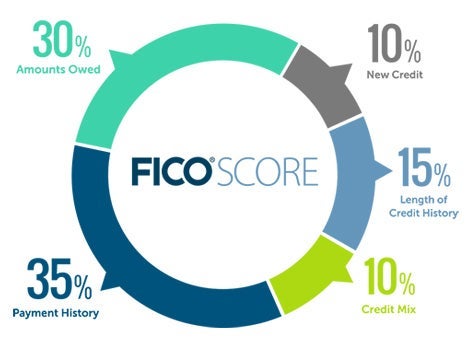
(Photo courtesy of FICO.)
Your credit score is based on five major elements. Your payment history (whether you pay your balances in full and on time every month) counts for 35% of your score. The amounts owed, also sometimes referred to as the debt-to-utilization ratio, counts for 30% of your score. It is a snapshot of how much you are using your overall credit line.The other factors are the length of your credit history and age of accounts, the types of credit you have (i.e., cards versus loans) and how many new lines of credit you have opened recently.
When you close a credit card account, you reduce your overall credit limit and thus increase your utilization rate. Depending on the credit limit you had on that card (as well as the total available credit you have across other cards), that will usually cause a temporary dip in your score.
Before you decide to cancel a discontinued card, check its place in your card lineup — how long you’ve had the card versus other credit cards, and how much closing it will reduce your overall line of credit. Based on these factors, you might want to keep it open, especially if you are thinking of applying for a mortgage or a car in the near future.
2. Its benefits still make the fee worth it
This consideration is not unique to discontinued cards. If you pay an annual fee for your rewards card, ask yourself each card anniversary year whether or not you get as much or more value from its benefits than the annual fee costs.
Ask yourself whether you are actually using benefits like club lounge access.
To put this into context with discontinued cards, the United Presidential Plus Card costs $450 per year, but comes with United Club access, much like the United Club Card does. That’s about $200 less than access costs most travelers without a card. If you use the United Club, this benefit alone could be worth it, though the card offers more, like double miles on purchases from United, hotels and car rental agencies, Premier Access priority check-in and boarding when traveling, and free checked bags.
The information for the United Club card has been collected independently by The Points Guy. The card details on this page have not been reviewed or provided by the card issuer.
3. Its benefits aren't available through other cards
Along the same lines, one of the best reasons to keep a discontinued card is that it might offer perks you will not find on newer versions. This is the case for a number of products out there.
It can be worth hanging onto a discontinued card for perks like free nights at fabulous hotels. (Photo by JT Genter/The Points Guy)
One example is the old Hyatt Visa that has an annual fee of $75 and comes with an automatic free night at Category 1–4 hotels each cardmember year. The World of Hyatt Credit Card offers the same benefit (and increased earning on some categories), but costs $95 per year. So you might as well save $20 by hanging onto the old card if this perk is your primary reason for having the card.
On the airline side, Chase still honors the United MileagePlus Select Card, though it’s not available to new applicants. It earns 3x miles per dollar on United purchases (currently not offered by any other United card) and 2x on tickets purchased from other Star Alliance member airlines as well as at gas stations, grocery stores, restaurants and home improvement stores. It also awards cardholders with 5,000 bonus miles on each account anniversary, worth around $65 by TPG valuations. In short, it’s a top earner for United flyers.
Finally, the Diners Club Premier and Diners Club Elite cards, which are not available for new applications, have some great benefits. The Elite version, which costs $300 per year, earns 3x points per dollar at gas stations, grocery stores and drugstores. Cardholders can access over 700 airport lounges and transfer points to over a dozen airline partners including Air Canada, Delta, Southwest and British Airways.
Before making a decision to cancel or product change, look at the benefits offered by your discontinued card versus those offered by newer versions and see if you would be missing out by canceling.
4. Is an upgrade or downgrade opportunity worth it?
When an issuer discontinues a particular card, members are typically offered the chance to switch to a different product altogether, or ”upgrade” to a newer (and generally more expensive) version of the same card. Before doing so, however, make sure the offer is worth it.
Evaluate the pros and cons of an upgrade or transition offer before deciding. (Photo via Getty Images)
For instance, when the Hyatt Visa was first discontinued and cardmembers were asked to upgrade to the World of Hyatt Credit Card, they were offered 2,000 points for doing so – worth around $34. However, folks who were under Chase’s 5/24 limit and had gotten the old card more than two years before, should have been eligible to submit an application for the new card and have a shot at sign-up bonus instead.
In a similar circumstance, when Chase shuttered the Fairmont Visa, the bank offered to transition cardholders to the Chase Sapphire Preferred with no sign-up bonus. However, anyone who didn’t already have the Sapphire Preferred, should have applied for a new card rather than accept the conversion to have the opportunity to earn its sign-up bonus of tens of thousands of Ultimate Rewards points.
In another case, folks with the old Barclays US Airways Mastercard were automatically sent one of the American AAdvantage Aviator cards. But given the similarity in benefits between those cards and the Citi/AAdvantage cards, it was like having duplicate cards … and having to pay multiple annual fees to boot.
5. Sign-up bonus eligibility
Closing your discontinued card can affect your eligibility for sign-up bonuses on future applications. For example, when Citi discontinued the Citi ThankYou Preferred, the bank soon launched the Citi Rewards+® Card to replace it in Citi's lineup.
Both cards charge no annual fee, and some people might have been tempted to close their account at that point, figuring they could apply for the new card and earn its sign-up bonus. However, Citi has clear language on its applications for ThankYou Points-earning cards that if you opened or closed a card within the ThankYou portfolio in past 24 months, you are ineligible for a sign-up bonus until you are outside that time frame. So closing that account might have made folks ineligible for bonuses on that card as well as the Citi Prestige® Card and the Citi Premier® Card for a substantial period of time.
(The information for the Citi Prestige has been collected independently by The Points Guy. The card details on this page have not been reviewed or provided by the card issuer.)
Sometimes closing a card precludes you from better offers. (Photo by mixetto/Getty Images)
Before making any moves, read the terms and conditions for closing your current account as well as eligibility requirements for any new card applications to make sure you don’t miss out on bonus opportunities.
6. Leverage any unused benefits
If your discontinued card includes a time-sensitive or annual benefit such as anniversary bonus points or a free hotel night, be sure you use it before canceling your card. That’s because many of these perks state in their terms and conditions that your account must be open and in good standing in order to receive benefits. You wouldn’t want to miss out on hundreds of dollars in valuable perks simply by canceling at the wrong time.
Bottom line
As the credit card marketplace continues to expand and evolve, chances are you have (or will have) a discontinued card. When that happens, evaluate your options carefully, think about whether keeping your card open or closing it will be more or less beneficial to your overall rewards strategy, and how your decisions might affect your credit score and other earning opportunities.
For rates and fees of the Amex Platinum card, click here.
Comments
By commenting, you agree to our Community Guidelines to help create a positive space for conversation. The responses below are not provided or commissioned by the bank advertiser, our partners, or The Points Guy (“TPG”). They have not been reviewed, approved, or otherwise endorsed by any of these parties. All responses are submitted by individual contributors, and neither the bank advertiser, our partners, nor TPG are responsible for ensuring that all posts and/or questions are answered.