Skip to content

What are winglets, the aesthetically-pleasing aerodynamic marvels found on most planes?

July 16, 2022
7 min read
Boeing Re-Opens Some Manufacturing Facilities Amid COVID-19 Pandemic
The cards we feature here are from partners who compensate us when you are approved through our site, and this may impact how or where these products appear. We don’t cover all available credit cards, but our analysis, reviews, and opinions are entirely from our editorial team. Terms apply to the offers listed on this page. Please view our advertising policy and product review methodology for more information.

Have you ever snagged a window seat, looked out and wondered what was protruding off the end of the wing — a mostly vertical extension of the wing itself?

Some may curve upward, making a seamless transition from horizontal to vertical. Others may look angular. Some might even be split in two, extending both above and below the wing.

These are called winglets, and they're an aerodynamic marvel that has — with some notable exceptions — become a staple of airliners over the past 30 years. But how do they work, and what are the differences between the styles? We're here to tell you.

Winglets cut down on a phenomenon called wake vortices that trail off the tips of an aircraft's wings. These vortices can cause significant drag, making aircraft less efficient.

Winglets are technically small wings that generate lift and can cut down on the amount of drag created, therefore reducing fuel consumption and increasing an aircraft's range.

While winglets do add weight to an aircraft, the amount of efficiency they provide generally makes their extra weight worthwhile on all but the shortest flights.

Winglets are most efficient during the cruise portion of a flight, as well as during the actual takeoff and landing when an aircraft is in what's known as a "high angle of attack," which is defined as the difference between where a wing is pointed and where it's going.
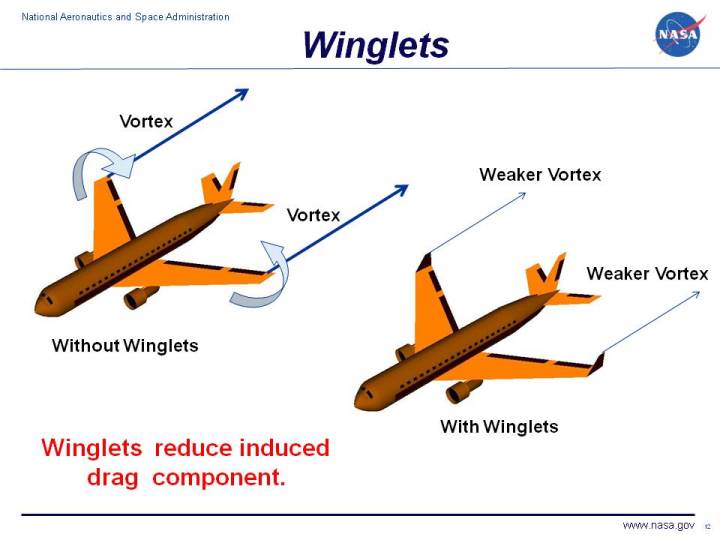
(Image courtesy of NASA)

Winglets can come in different shapes and sizes. Here are some of the winglets you might encounter during your travels.

Conventional canted winglet

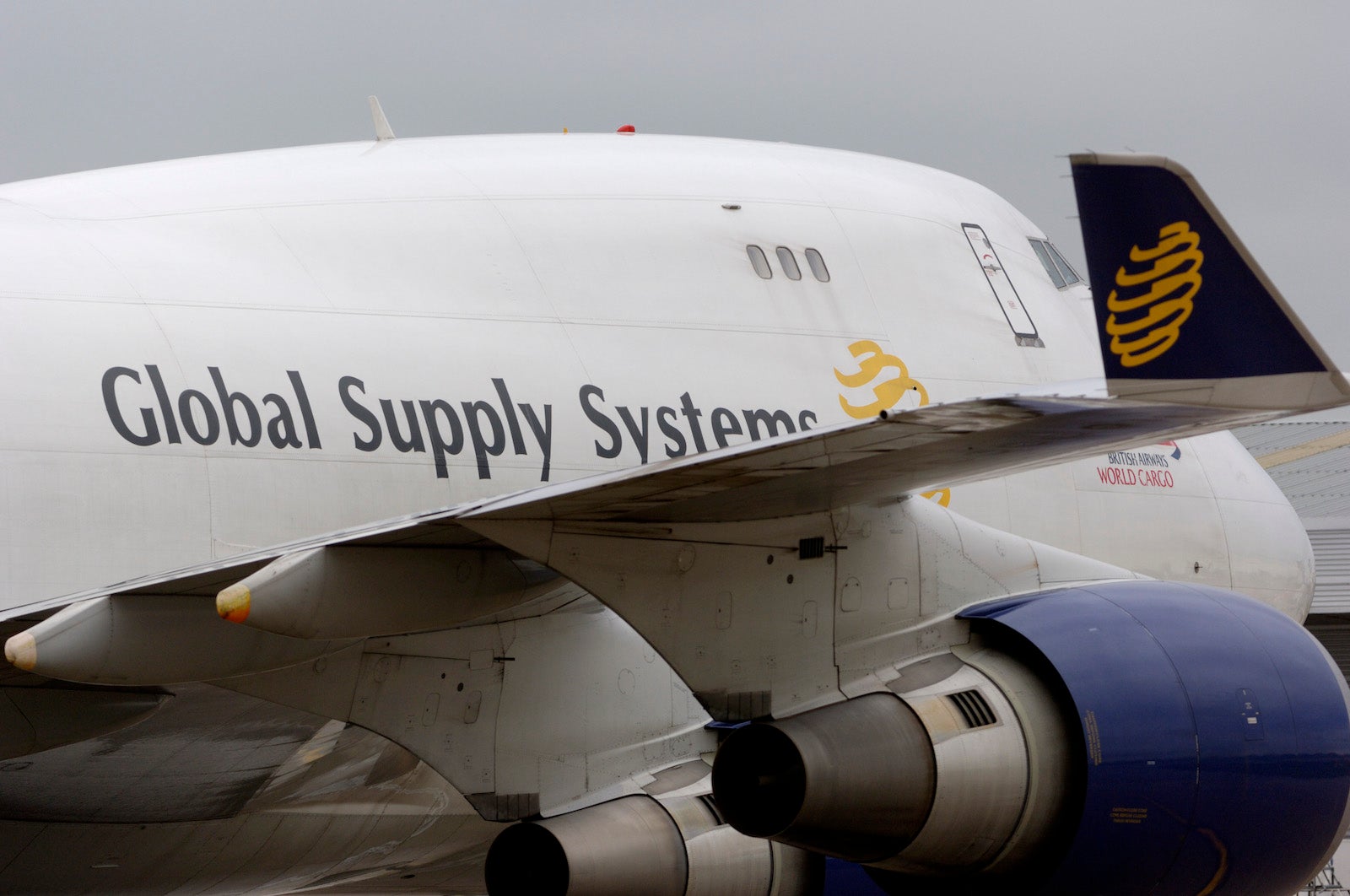
A winglet on a Boeing 747-400. (Photo by aviation-images.com/Getty Images)

Aircraft: Boeing 747-400, Airbus A330-200 and -300, Airbus A340, Canadair Regional Jet, Embraer E-Jets.

Daily Newsletter
Reward your inbox with the TPG Daily newsletter
Join over 700,000 readers for breaking news, in-depth guides and exclusive deals from TPG’s experts

These early winglets were direct descendants of the original winglet research that took place at NASA in the late 1970s. Engineers had known about the potential for wingtip devices. However, Richard Whitcomb at the agency's Langley Research Center is widely credited with improving the concept to the point where winglets became commercially viable.
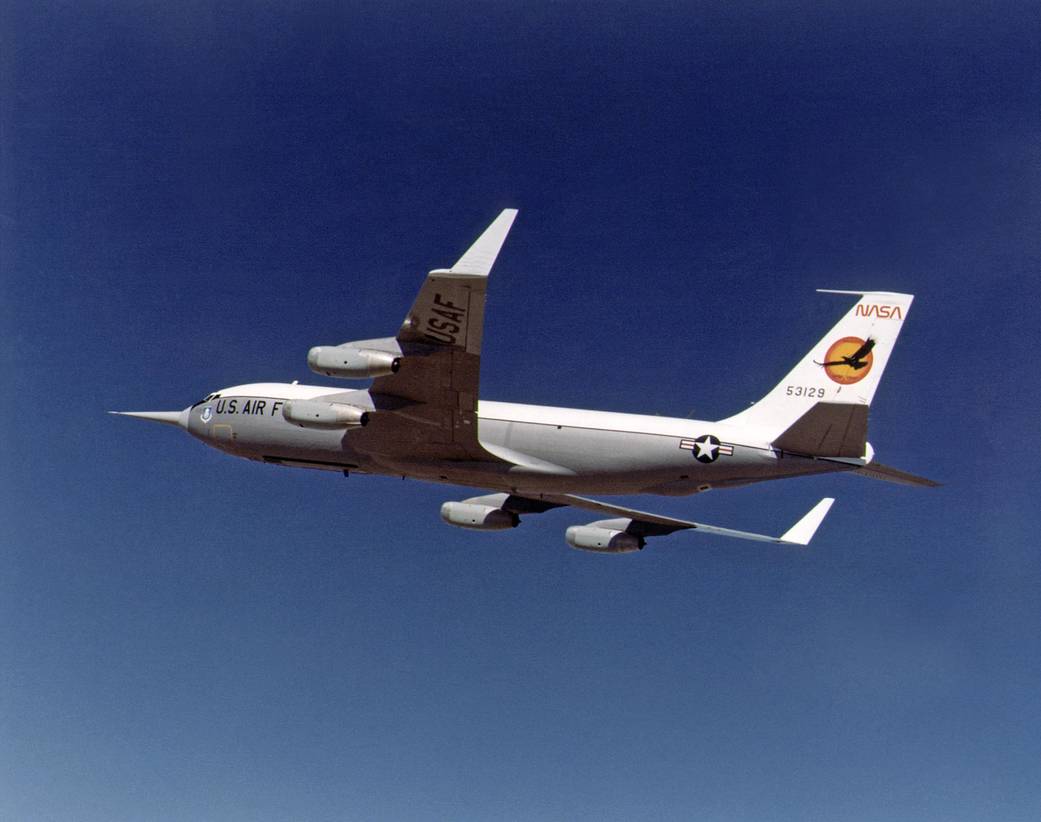
The KC-135 used in Whitcomb's tests. (Photo courtesy of NASA)

Whitcomb modified a KC-135 (the U.S. Air Force's workhorse aerial tanker) with the winglets he designed. His research revealed that the winglets boosted the KC-135s range by as much as 7%.

Blended winglet
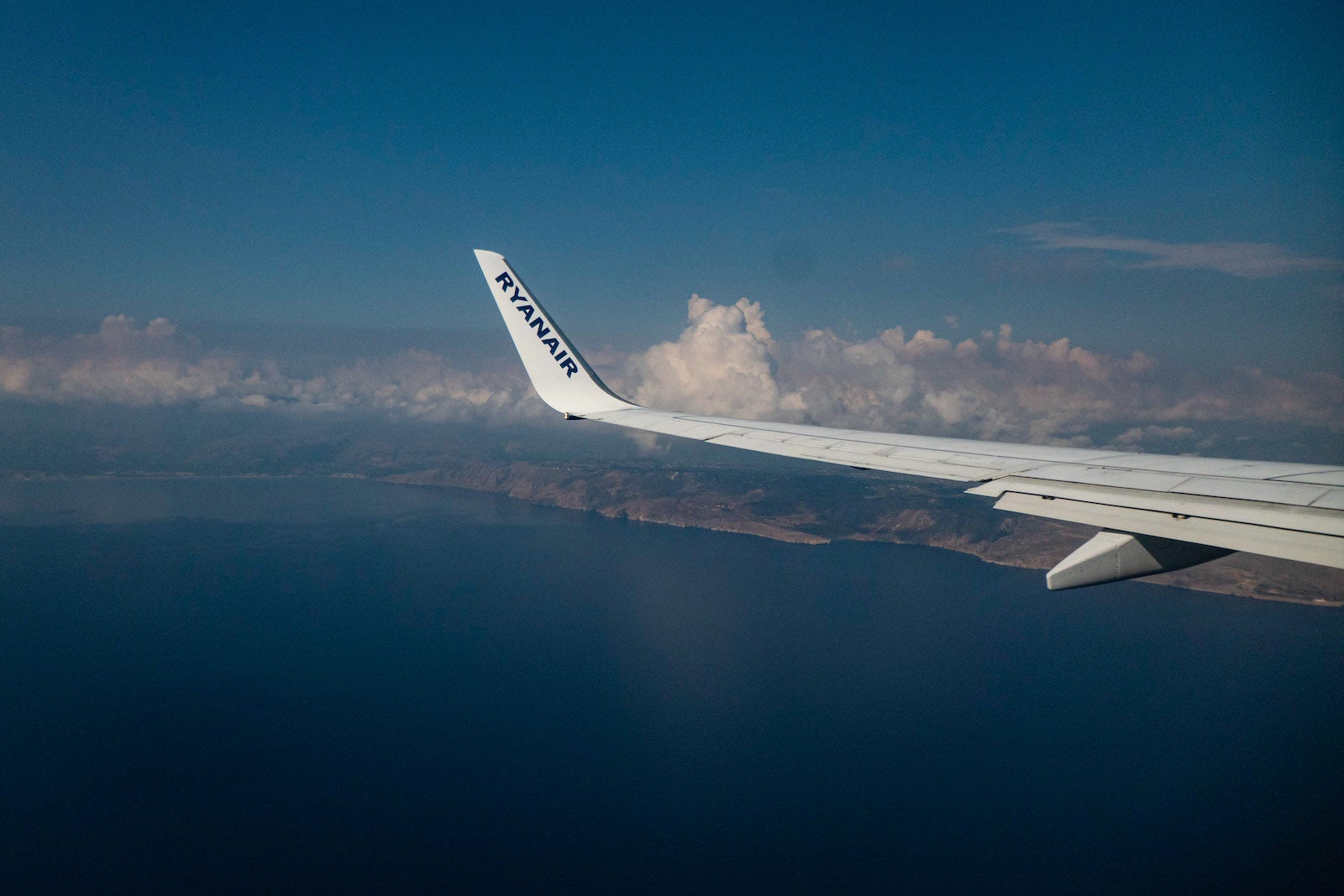
A blended winglet on a Ryanair Boeing 737-800. (Photo by Nicolas Economou/NurPhoto)

Aircraft: Boeing 737-300, -500, -700, -800, -900 and -900ER, Boeing 757-200, -300, Boeing 767-300ER, various corporate aircraft.

Blended winglets came about in the early 1990s as a way to improve upon Whitcomb's angular winglet design. In Whitcomb's original design, winglets transition from the horizontal wing structure to vertical at an obtuse angle. This creates interference drag, a phenomenon that occurs when different airflows on different surfaces mix. By smoothing out that transition, blended winglets cut down on drag and make the winglets more efficient.

Blended winglets were pioneered by a company called Aviation Partners, which later formed a joint venture with Boeing called Aviation Partners Boeing.

The first Boeing 737s flew with blended winglets in 2001 and later became a ubiquitous feature of the type. Blended winglets on the 737 could be retrofit after delivery or installed in Boeing's Renton factory — an option most customers took. Blended winglets later came to the 757 in 2005 and the 767-300 in 2009.

Split scimitar winglet
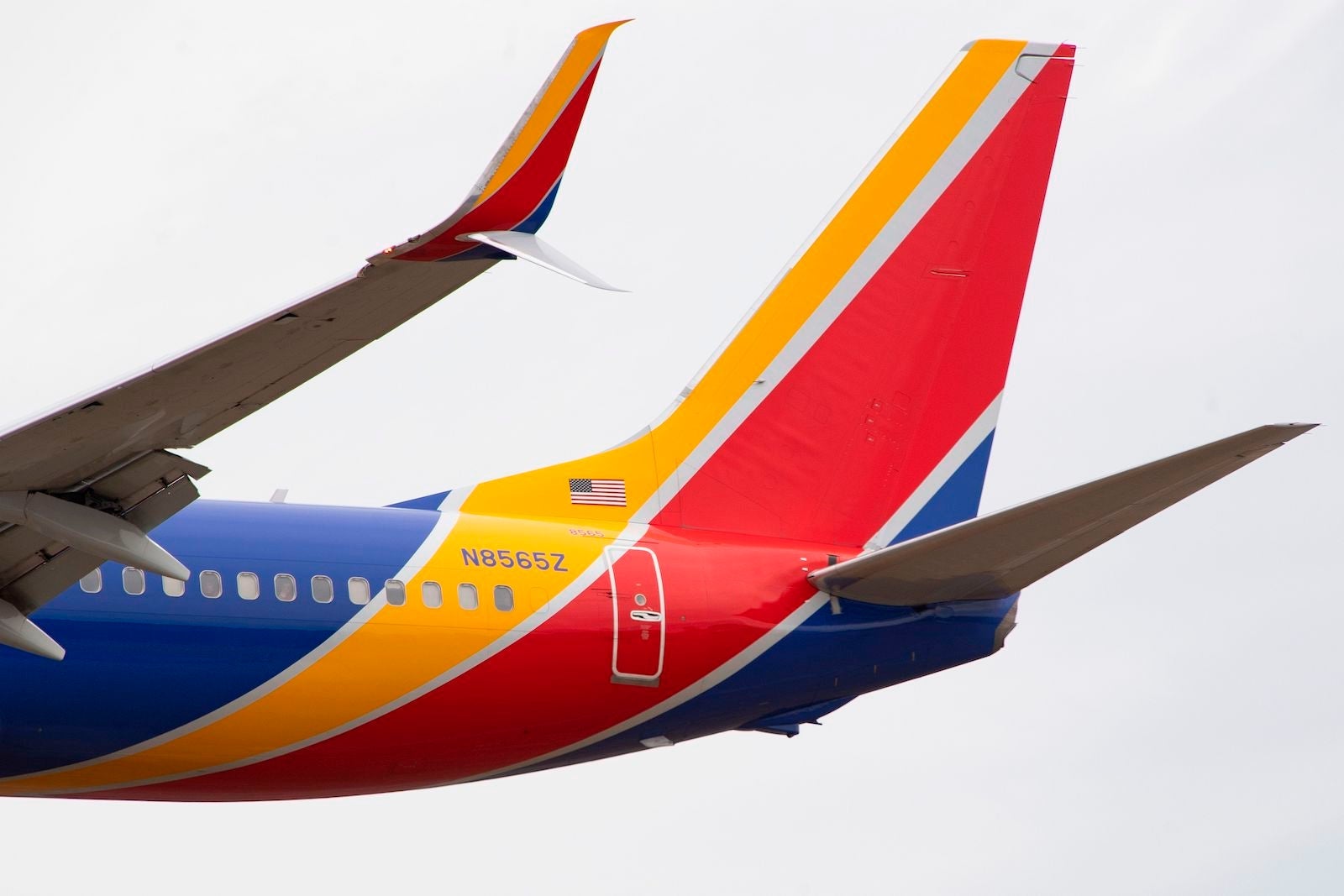
A split scimitar winglet on a Southwest Airlines Boeing 737-800. (Photo by Jim Watson/AFP/Getty Images)

Aircraft: Boeing 737-700, -800, -900, -900ER.

Split Scimitar winglets, another Aviation Partners Boeing product, offer about 2% additional fuel savings over blended winglets and entered service in 2014. Split Scimitar winglets look like blended winglets — with the addition of a downward-facing winglet, called a ventral strake — and are another Aviation Partners Boeing innovation.

Advanced-technology winglet
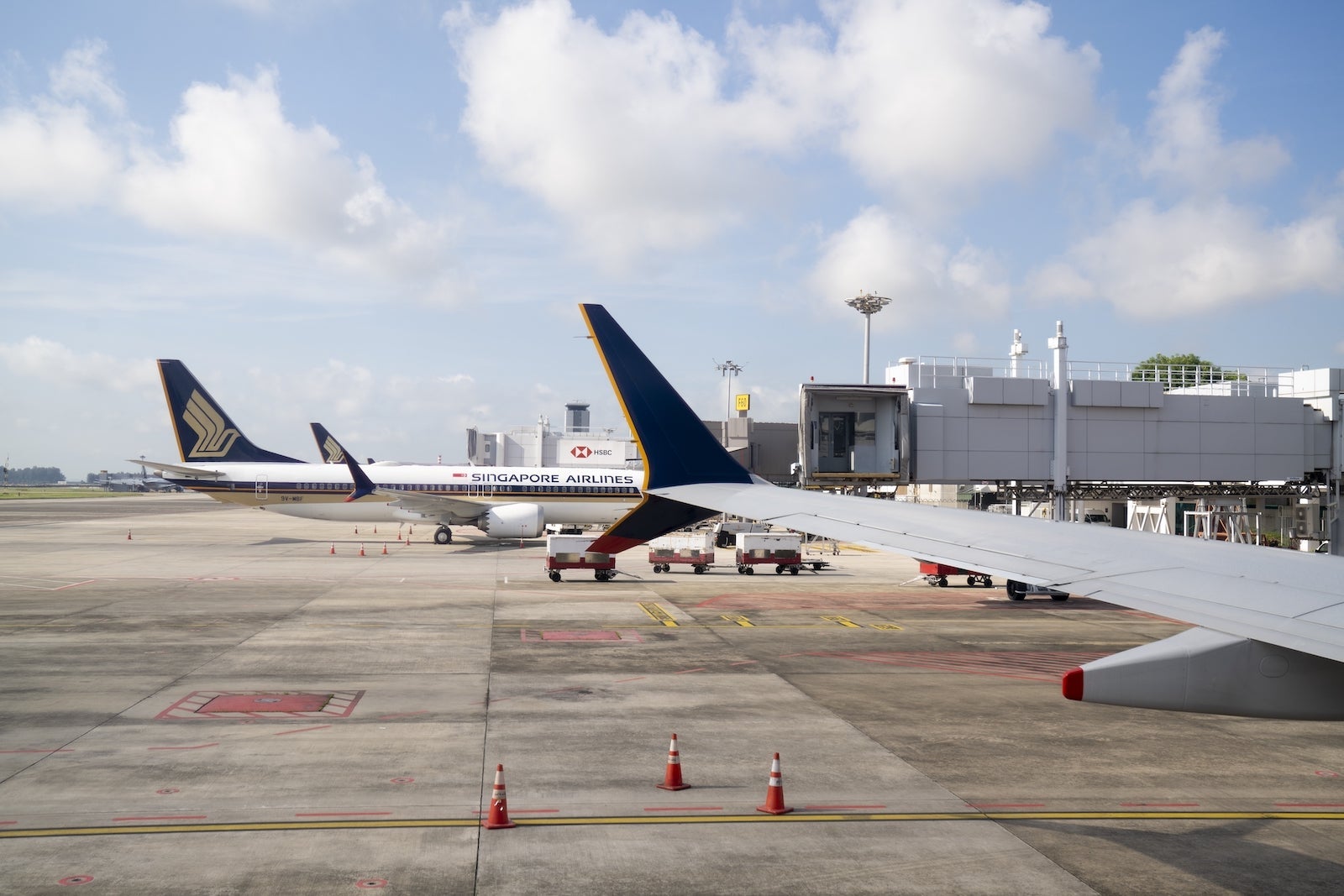
An advanced-technology winglet on a Boeing 737 MAX. (Photo by Ore Huiying/Bloomberg/Getty Images)

Aircraft: Boeing 737 MAX.

From certain angles, this winglet can sometimes look like a split scimitar winglet, but it works a bit differently.

The advanced-technology winglet is found exclusively on the 737 MAX and comes standard. It includes both an upper and a lower airfoil.

The upper airfoil creates a lifting motion toward the fuselage. The lower airfoil creates a lifting motion away from the fuselage, countering the upper airfoil and increasing the efficiency of the wing. (An airfoil is a structure on a plane designed to generate lift.)

Boeing says this winglet increases fuel efficiency by another 1.5% over the winglets found on the 737 NG.

Sharklet
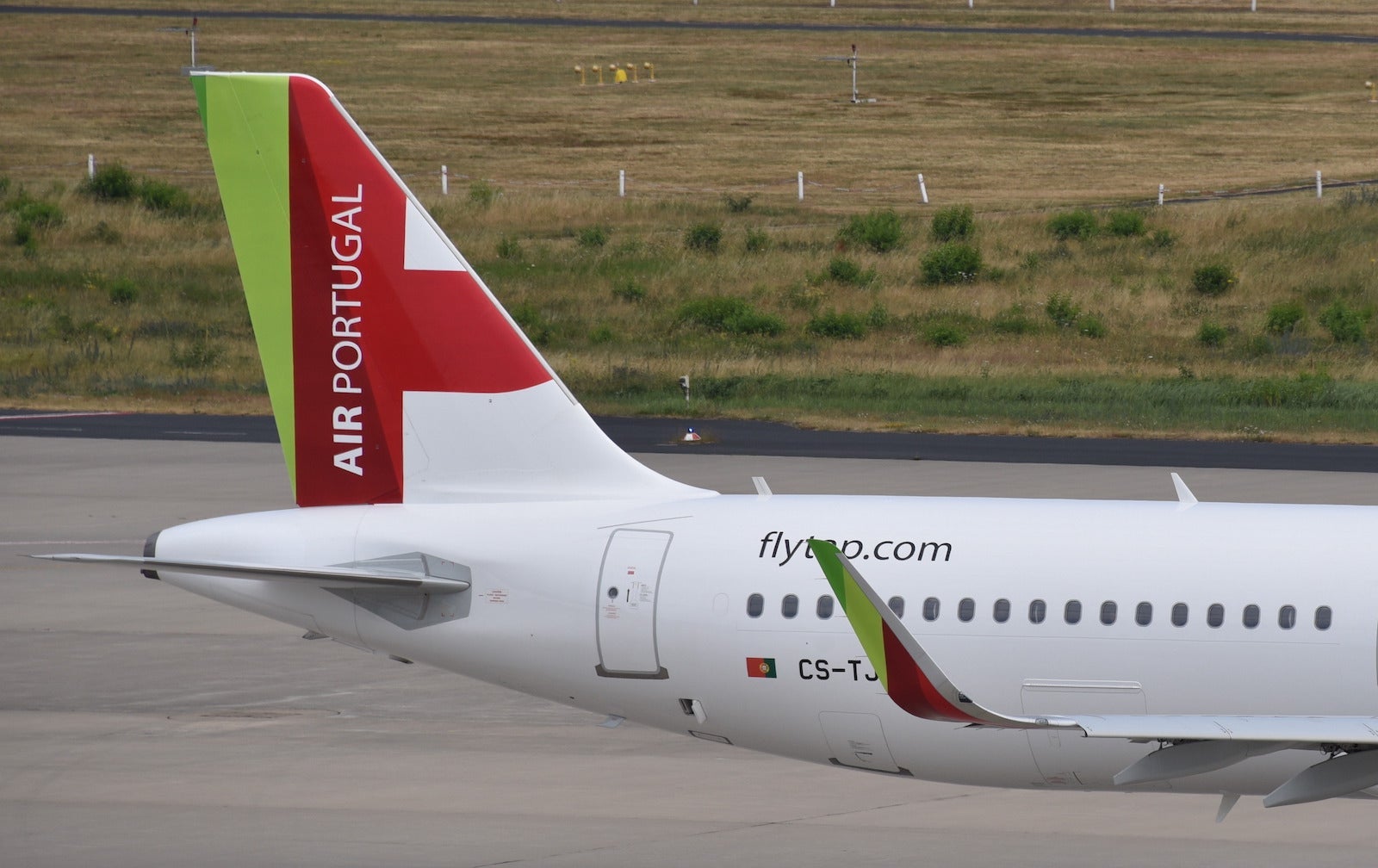
Sharklet on an Airbus A321neo. (Photo by Horst Galuschka/picture alliance/Getty Images)

Aircraft: Newer A320ceo family aircraft, all A320neo family aircraft, A330neo, A350.

Sharklets largely resemble blended winglets — a seamless curve upward — and generally work the same way.

Sharklets are essentially a different term that Airbus coined for blended winglets (Airbus sued Aviation Partners in 2011 over its blended winglet patent and both parties settled the case in 2018). The first sharklet-equipped A320 aircraft was delivered in December 2012. Sharklets come standard on A320neo family aircraft.

When sharklets debuted on the A320, Airbus promised a 4% reduction in fuel burn and a 100 nautical mile range improvement.
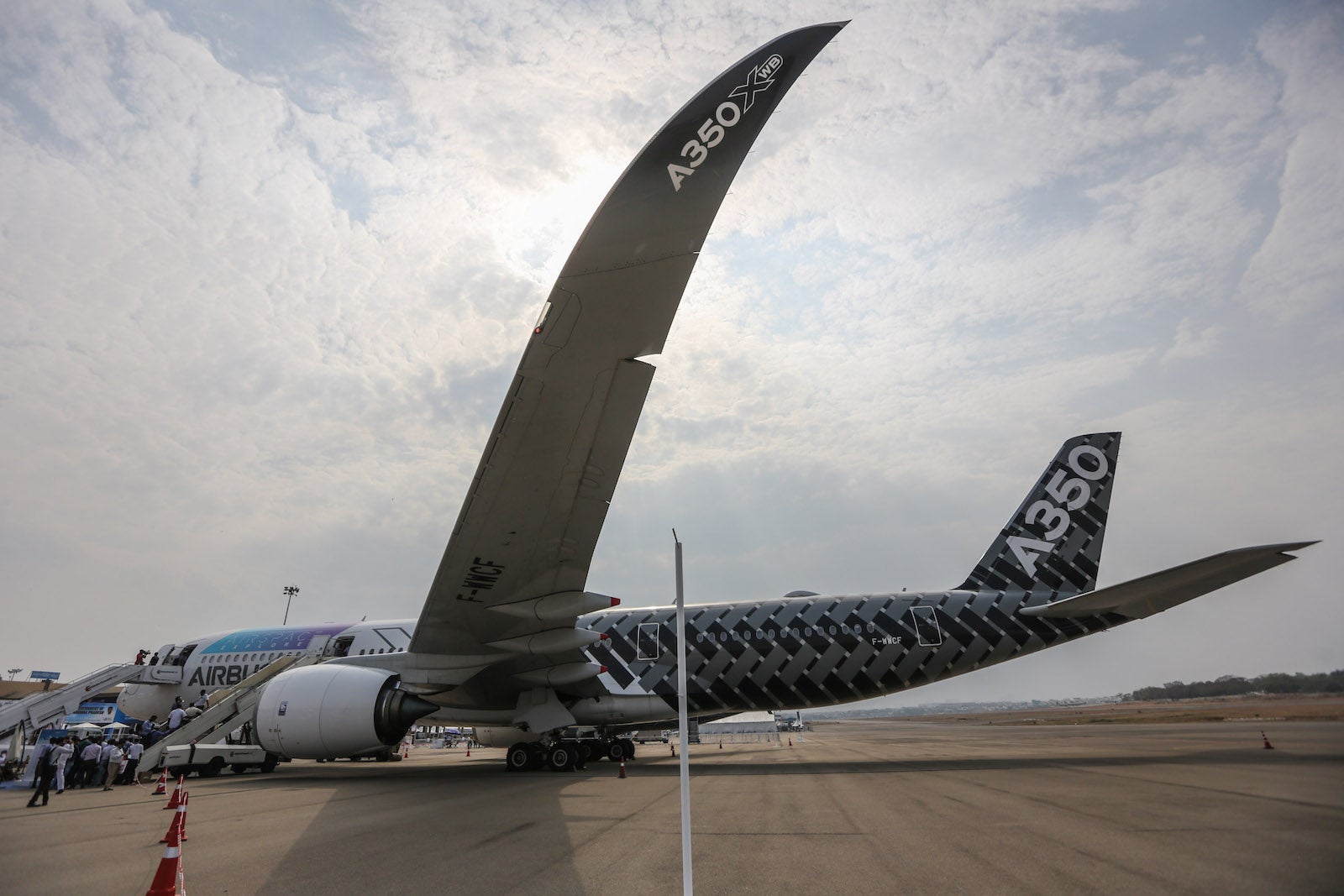
An Airbus A350 sharklet. (Photo by Dhiraj Singh/Bloomberg/Getty Images)

The Airbus A350 comes standard with sharklets as well. However, these sharklets are much larger and have a different shape than the sharklets found on A320 family aircraft.

Wingtip fence
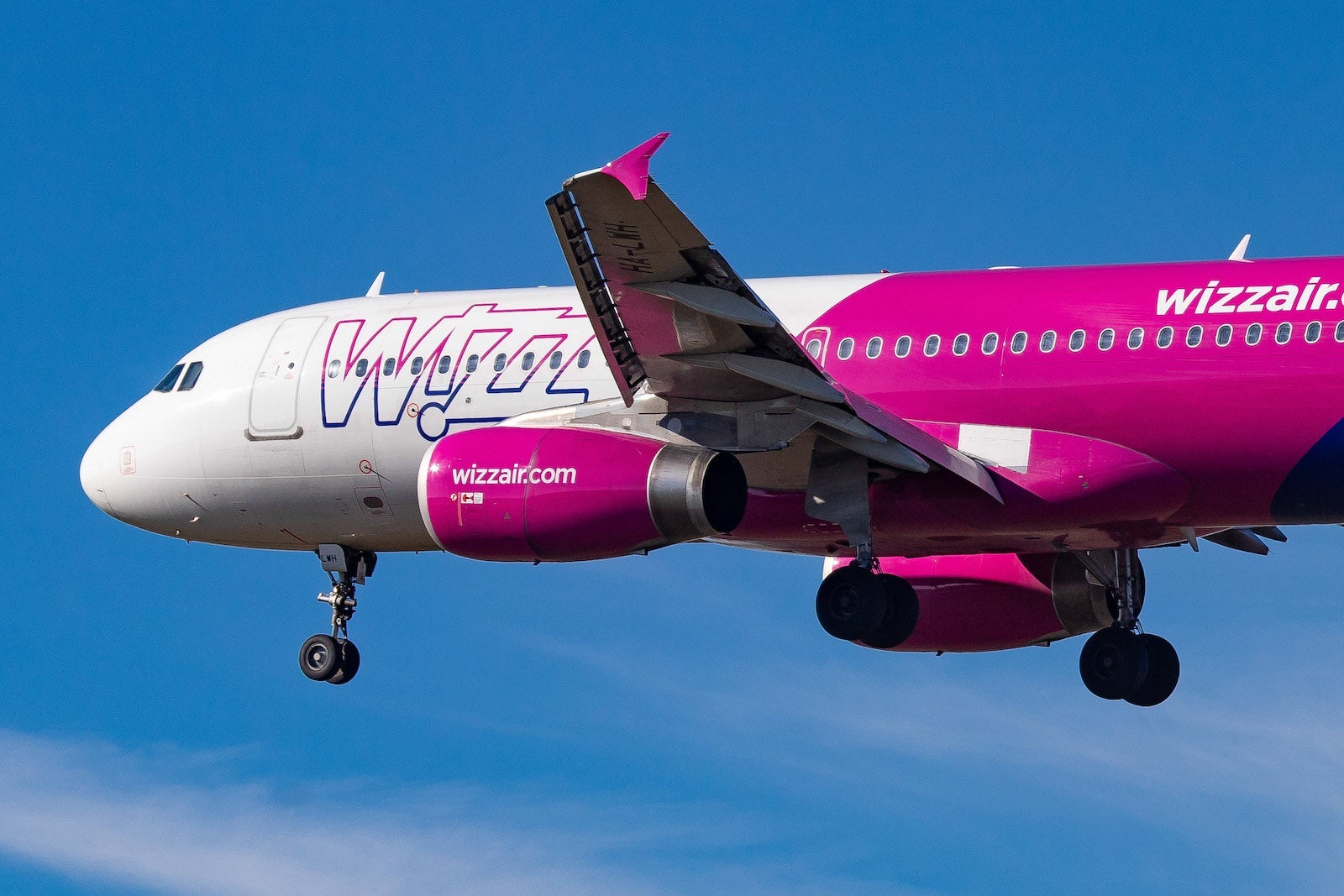
A wingtip fence on an Airbus A320. (Photo by Nicolas Economou/NurPhoto)

Aircraft: Older A320ceo family aircraft, A300-600, A310, A380.

These early-design winglets are made to address wake vortices below the wing, in addition to the aerodynamic benefits that they provide above the wing.

They're a hallmark of 1980s-era Airbus design, though they also appeared in a supersized form a generation later on the A380 superjumbo. Triangular-shaped, these fences meet the wing at a right angle and protrude both above and below the wing.

Bottom line

Next time you're flying and stare out at the wing, you now know what those winglets at the end of it are for, and can identify the type of winglet on your plane.

There are other types of winglets we didn't cover here. Also, aircraft like the Boeing 777 and 787 lack winglets. Adding winglets would have made the 777 too large for some airports, while Boeing engineers determined that the uniquely-shaped 787 wing was efficient enough without winglets.

Boeing's newest jet, the massive 777X, also doesn't include winglets. However, it features folding wingtips that allow it to use smaller gates at airports. It's already a defining feature of this new aircraft, which is slated to enter service in 2025.
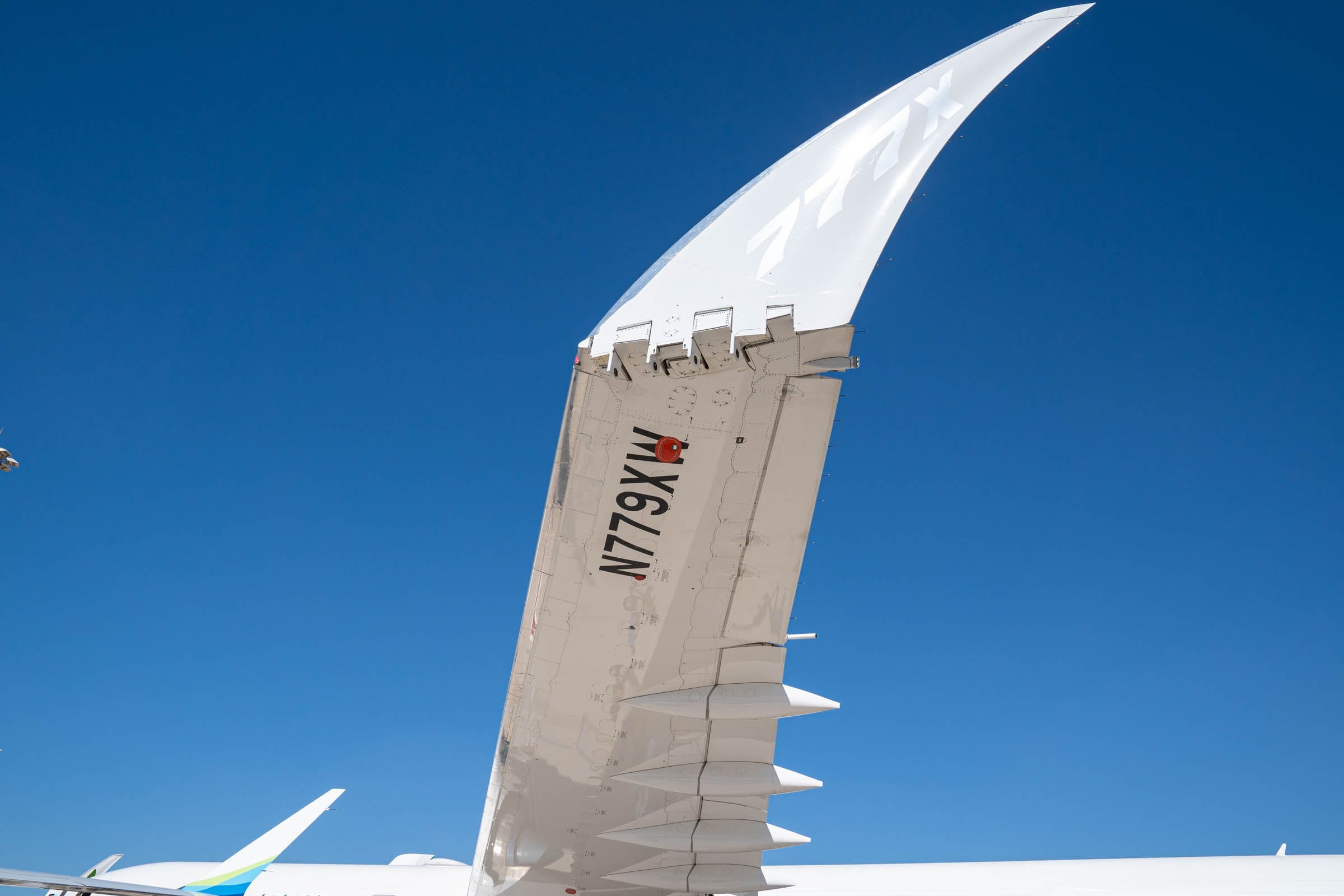
The 777x's folding wingtip. (Photo by David Slotnick/The Points Guy)
Featured image by Getty Images
Editorial disclaimer: Opinions expressed here are the author’s alone, not those of any bank, credit card issuer, airline or hotel chain, and have not been reviewed, approved or otherwise endorsed by any of these entities.

TPG featured card

Best for dining at restaurants
TPG Editor‘s Rating
4 / 5
Go to review
Apply for American Express® Gold Card
at American Express's secure site

Rewards

1 - 4X points

Intro offer

As High As 100,000 points. Find Out Your Offer.

Annual Fee

$325

Recommended Credit

Excellent to Good

Why We Chose It

There’s a lot to love about the Amex Gold. It’s a fan favorite thanks to its fantastic bonus-earning rates at restaurants worldwide and at U.S. supermarkets. If you’re hitting the skies soon, you’ll also earn bonus Membership Rewards points on travel. Paired with up to $120 in Uber Cash annually (for U.S. Uber rides or Uber Eats orders, card must be added to Uber app and you can redeem with any Amex card), up to $120 in annual dining statement credits to be used with eligible partners, an up to $84 Dunkin’ credit each year at U.S. Dunkin Donuts and an up to $100 Resy credit annually, there’s no reason that foodies shouldn’t add the Amex Gold to their wallet. These benefits alone are worth more than $400, which offsets the $325 annual fee on the Amex Gold card. Enrollment is required for select benefits. (Partner offer)

Pros

  • 4 points per dollar spent on dining at restaurants worldwide and U.S. supermarkets (on the first $50,000 in purchases per calendar year; then 1 point per dollar spent thereafter and $25,000 in purchases per calendar year; then 1 point per dollar spent thereafter, respectively)
  • 3 points per dollar spent on flights booked directly with the airline or with amextravel.com
  • Packed with credits foodies will enjoy
  • Solid welcome bonus

Cons

  • Not as useful for those living outside the U.S.
  • Some may have trouble using Uber and other dining credits
  • You may be eligible for as high as 100,000 Membership Rewards® Points after you spend $6,000 in eligible purchases on your new Card in your first 6 months of Card Membership. Welcome offers vary and you may not be eligible for an offer. Apply to know if you’re approved and find out your exact welcome offer amount – all with no credit score impact. If you’re approved and choose to accept the Card, your score may be impacted.
  • Earn 4X Membership Rewards® points per dollar spent on purchases at restaurants worldwide, on up to $50,000 in purchases per calendar year, then 1X points for the rest of the year.
  • Earn 4X Membership Rewards® points per dollar spent at US supermarkets, on up to $25,000 in purchases per calendar year, then 1X points for the rest of the year.
  • Earn 3X Membership Rewards® points per dollar spent on flights booked directly with airlines or on AmexTravel.com.
  • Earn 2X Membership Rewards® points per dollar spent on prepaid hotels and other eligible purchases booked on AmexTravel.com.
  • Earn 1X Membership Rewards® point per dollar spent on all other eligible purchases.
  • $120 Uber Cash on Gold: Add your Gold Card to your Uber account and get $10 in Uber Cash each month to use on orders and rides in the U.S. when you select an American Express Card for your transaction. That’s up to $120 Uber Cash annually. Plus, after using your Uber Cash, use your Card to earn 4X Membership Rewards® points for Uber Eats purchases made with restaurants or U.S. supermarkets. Point caps and terms apply.
  • $84 Dunkin' Credit: With the $84 Dunkin' Credit, you can earn up to $7 in monthly statement credits after you enroll and pay with the American Express® Gold Card at U.S. Dunkin' locations. Enrollment is required to receive this benefit.
  • $100 Resy Credit: Get up to $100 in statement credits each calendar year after you pay with the American Express® Gold Card to dine at U.S. Resy restaurants or make other eligible Resy purchases. That's up to $50 in statement credits semi-annually. Enrollment required.
  • $120 Dining Credit: Satisfy your cravings, sweet or savory, with the $120 Dining Credit. Earn up to $10 in statement credits monthly when you pay with the American Express® Gold Card at Grubhub, The Cheesecake Factory, Goldbelly, Wine.com, and Five Guys. Enrollment required.
  • Explore over 1,000 upscale hotels worldwide with The Hotel Collection and receive a $100 credit towards eligible charges* with every booking of two nights or more through AmexTravel.com. *Eligible charges vary by property.
  • No Foreign Transaction Fees.
  • Annual Fee is $325.
  • Terms Apply.
Apply for American Express® Gold Card
at American Express's secure site
Terms & restrictions apply. See rates & fees
Best for dining at restaurants
TPG Editor‘s Rating
4 / 5
Go to review

Rewards Rate

4XEarn 4X Membership Rewards® points per dollar spent on purchases at restaurants worldwide, on up to $50,000 in purchases per calendar year, then 1X points for the rest of the year.
4XEarn 4X Membership Rewards® points per dollar spent at US supermarkets, on up to $25,000 in purchases per calendar year, then 1X points for the rest of the year.
3XEarn 3X Membership Rewards® points per dollar spent on flights booked directly with airlines or on AmexTravel.com.
2XEarn 2X Membership Rewards® points per dollar spent on prepaid hotels and other eligible purchases booked on AmexTravel.com.
1XEarn 1X Membership Rewards® point per dollar spent on all other eligible purchases.
  • Intro Offer

    As High As 100,000 points. Find Out Your Offer.
  • Annual Fee

    $325
  • Recommended Credit

    Excellent to Good

Why We Chose It

There’s a lot to love about the Amex Gold. It’s a fan favorite thanks to its fantastic bonus-earning rates at restaurants worldwide and at U.S. supermarkets. If you’re hitting the skies soon, you’ll also earn bonus Membership Rewards points on travel. Paired with up to $120 in Uber Cash annually (for U.S. Uber rides or Uber Eats orders, card must be added to Uber app and you can redeem with any Amex card), up to $120 in annual dining statement credits to be used with eligible partners, an up to $84 Dunkin’ credit each year at U.S. Dunkin Donuts and an up to $100 Resy credit annually, there’s no reason that foodies shouldn’t add the Amex Gold to their wallet. These benefits alone are worth more than $400, which offsets the $325 annual fee on the Amex Gold card. Enrollment is required for select benefits. (Partner offer)

Pros

  • 4 points per dollar spent on dining at restaurants worldwide and U.S. supermarkets (on the first $50,000 in purchases per calendar year; then 1 point per dollar spent thereafter and $25,000 in purchases per calendar year; then 1 point per dollar spent thereafter, respectively)
  • 3 points per dollar spent on flights booked directly with the airline or with amextravel.com
  • Packed with credits foodies will enjoy
  • Solid welcome bonus

Cons

  • Not as useful for those living outside the U.S.
  • Some may have trouble using Uber and other dining credits
  • You may be eligible for as high as 100,000 Membership Rewards® Points after you spend $6,000 in eligible purchases on your new Card in your first 6 months of Card Membership. Welcome offers vary and you may not be eligible for an offer. Apply to know if you’re approved and find out your exact welcome offer amount – all with no credit score impact. If you’re approved and choose to accept the Card, your score may be impacted.
  • Earn 4X Membership Rewards® points per dollar spent on purchases at restaurants worldwide, on up to $50,000 in purchases per calendar year, then 1X points for the rest of the year.
  • Earn 4X Membership Rewards® points per dollar spent at US supermarkets, on up to $25,000 in purchases per calendar year, then 1X points for the rest of the year.
  • Earn 3X Membership Rewards® points per dollar spent on flights booked directly with airlines or on AmexTravel.com.
  • Earn 2X Membership Rewards® points per dollar spent on prepaid hotels and other eligible purchases booked on AmexTravel.com.
  • Earn 1X Membership Rewards® point per dollar spent on all other eligible purchases.
  • $120 Uber Cash on Gold: Add your Gold Card to your Uber account and get $10 in Uber Cash each month to use on orders and rides in the U.S. when you select an American Express Card for your transaction. That’s up to $120 Uber Cash annually. Plus, after using your Uber Cash, use your Card to earn 4X Membership Rewards® points for Uber Eats purchases made with restaurants or U.S. supermarkets. Point caps and terms apply.
  • $84 Dunkin' Credit: With the $84 Dunkin' Credit, you can earn up to $7 in monthly statement credits after you enroll and pay with the American Express® Gold Card at U.S. Dunkin' locations. Enrollment is required to receive this benefit.
  • $100 Resy Credit: Get up to $100 in statement credits each calendar year after you pay with the American Express® Gold Card to dine at U.S. Resy restaurants or make other eligible Resy purchases. That's up to $50 in statement credits semi-annually. Enrollment required.
  • $120 Dining Credit: Satisfy your cravings, sweet or savory, with the $120 Dining Credit. Earn up to $10 in statement credits monthly when you pay with the American Express® Gold Card at Grubhub, The Cheesecake Factory, Goldbelly, Wine.com, and Five Guys. Enrollment required.
  • Explore over 1,000 upscale hotels worldwide with The Hotel Collection and receive a $100 credit towards eligible charges* with every booking of two nights or more through AmexTravel.com. *Eligible charges vary by property.
  • No Foreign Transaction Fees.
  • Annual Fee is $325.
  • Terms Apply.