Why spare mental capacity is critical for pilots to stay in control of their aircraft

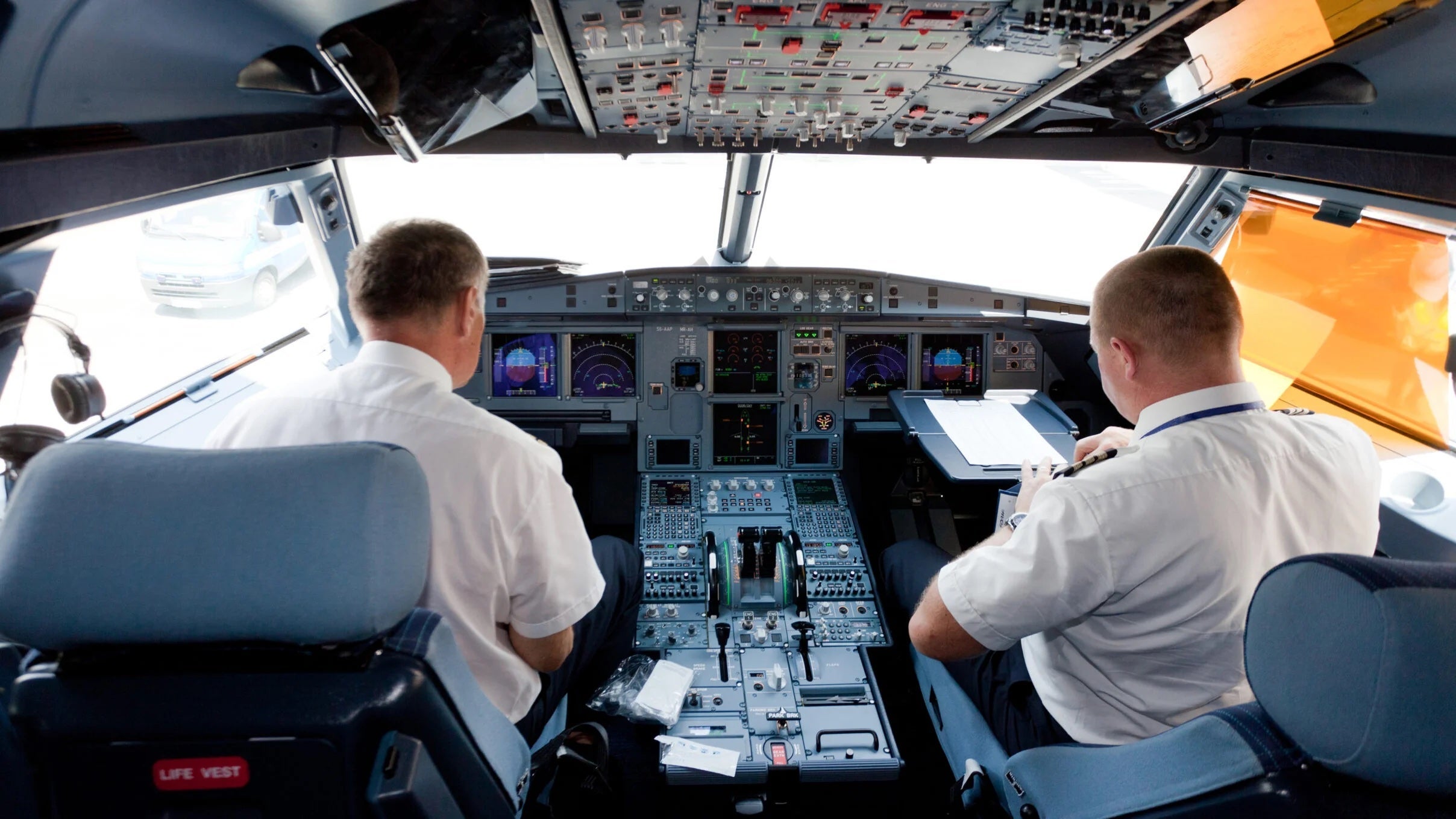
The crew of an A350 landing in Frankfurt, Germany, became disorientated with its position and came within just a few hundred feet of the ground while still several miles from the runway, according to a report this week.
The investigation found that the aircraft descended to the lowest point of 668 feet above the ground when it was 6.43 nautical miles from the runway; the pilots realized their error and performed a go-around. At this point during a normal approach, an aircraft should be roughly 1,900 feet above the ground.
Due to a medical situation with a passenger earlier in the flight, air traffic control gave the crew a priority landing. This allowed the plane to cut the line of other aircraft waiting to land and gave it a shortcut toward the runway.
However, this instruction exposed the crew to "time stress" and resulted in "uncoordinated" actions by the pilots which ultimately resulted in a "loss of situational awareness."
Related: 6 aircraft systems that help pilots keep you safe in an emergency
[table-of-contents /]

Flying a modern airliner is more of a management role than the classic image of a "stick-and-rudder" pilot grappling with the heavy controls of a more simple aircraft.
With hundreds of aircraft systems, most of them controlled by computers, the modern-day airline pilot must understand not only how each system works but also what to do should that system fail. To this, we must add the dynamic environment outside the aircraft — it's a constantly morphing 3D puzzle of other aircraft, weather systems and terrain.
In addition, pilots must be able to manage communication channels and interactions with the array of other people whose jobs, no matter how seemingly small, all have an impact on the safety of the aircraft. From the person who empties the toilet tanks to air traffic control, if one of these people does not do their job properly, the whole house of cards can come tumbling down.

It is because of the dynamic nature of flying an aircraft that time isn't always what it seems. However, you don't have to be a pilot to appreciate this.
Related: Flights without co-pilots? Why this could be bad news for passengers
Capacity bucket
Imagine you're driving your car on a free-flowing motorway on a Saturday around lunchtime. The cruise control looks after your speed and the air conditioning keeps you cool. You're heading to meet some friends, and the sun is shining. Life is good and you're relaxed. You're fully aware of what's going on around you.
As you go to pass the car in front, in your mirror you notice a motorcycle screaming up the outside. Rolling your eyes, you turn off your indicator and wait until it has passed before moving out.
In aviation, we refer to this as having an empty capacity bucket. Since your stress levels are low, you have plenty of spare capacity to deal with any unexpected events. The cruise control was already taking care of your speed, and you were relaxed and comfortable thanks to the A/C; so, when that motorcycle appeared in your mirror, you had the capacity to notice it.
Let's compare this with a Monday morning as you're making your way to work. You're already late and the traffic is crawling. You slept badly and your back is sore. To save time later in the day, you're trying to contact your kid's school to remind them that they'll be off tomorrow as you're going on vacation. Your mind is half on the presentation you're likely to be late for because of the traffic.
You're stressed, you're overworked and as a result, your capacity bucket is full and about to overflow. Then, the motorcycle comes flying up the highway.
Keeping space in our capacity bucket
Keeping some space in our capacity buckets is beneficial in all parts of life, not just when flying an aircraft. By having enough spare capacity, we can deal with new events and situations that may arise in a given scenario.
If we can keep space in our capacity bucket when driving a car, we will be able to see that motocycle racing up outside us. If we can keep space in our capacity bucket when flying an aircraft, we can avoid finding ourselves short of fuel.
As a result, learning how to keep space in our buckets and stopping ourselves from being overloaded is a key skill of a good pilot — whether it's someone who flies a small aircraft on the weekend or a professional who flies a 787.
In order to do this, we employ a number of skills.
Related: How do pilots control an emergency evacuation?
Think ahead
When pilots first learn to fly, they of course learn the basics of controlling an aircraft first — how to climb, how to turn, how to descend and land. After this basic stage, they learn how to navigate by looking out of the window and by using flight instruments.
As part of this stage of flying progress, cadets learn to always think ahead to the next event that they expect to happen during the flight.
For example, they may expect to turn toward the runway or lower the flaps. Or, they could anticipate turning onto a new heading when flying a cross-country navigation exercise.
Whatever the event, pilots should be proactive with their actions instead of reactive. When we are proactive, life is easy. We know what is coming, what to do and when to do it. As a result, our workload is low and there is plenty of space in our capacity buckets.
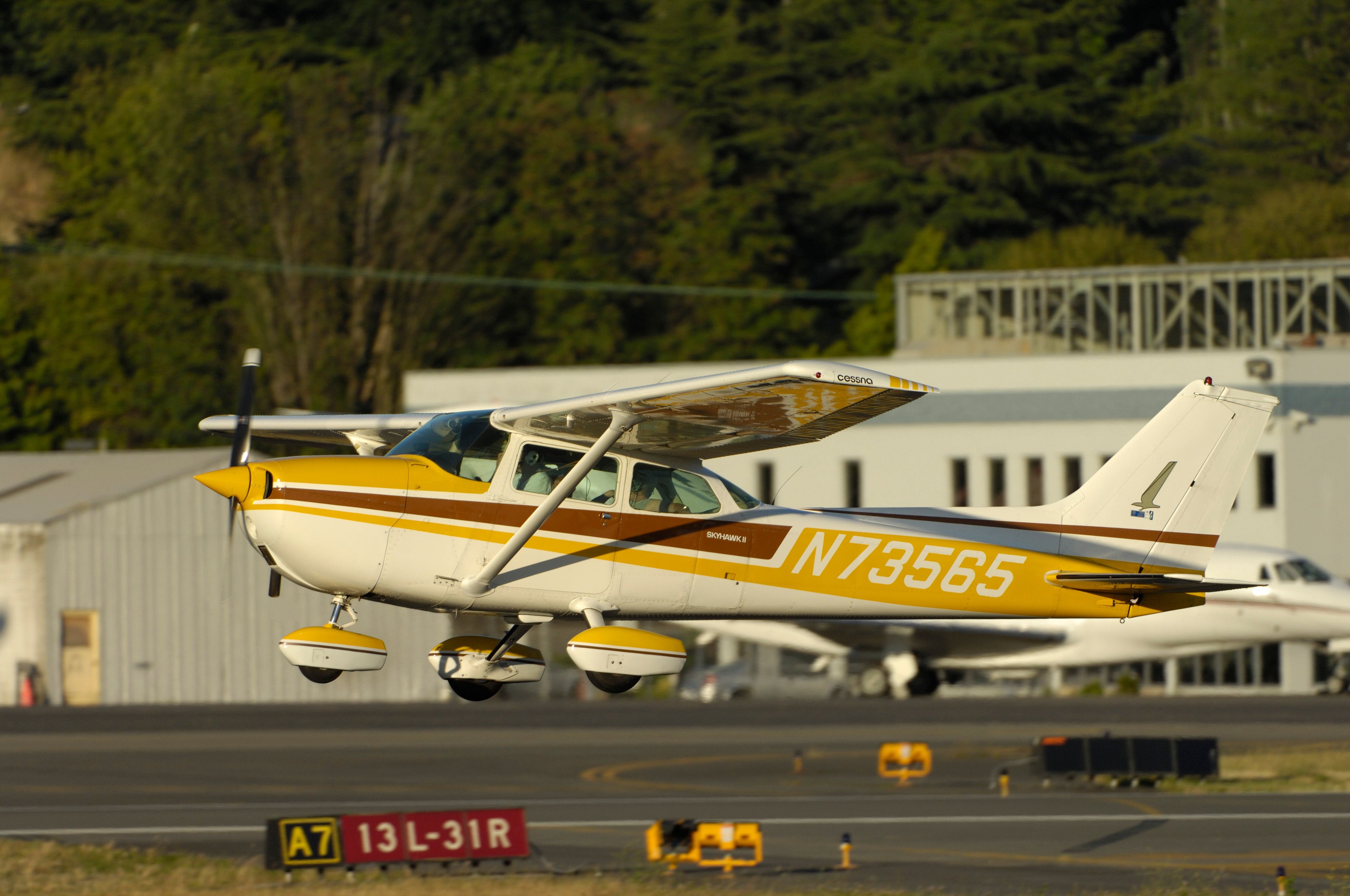
Conversely, when we are reactive, we are always playing catch up. If we suddenly realize we should have made a turn, we will be scrambling around to find what the new heading is. If we forget to lower the flaps, we may find ourselves high on the approach. Our workload is high and our capacity bucket rapidly fills up.
Learning this skill early on is key for a prospective airline pilot.
A small single propeller aircraft travels relatively slowly — around 100 mph. If a pilot on this aircraft fails to think and "gets behind" the aircraft, with some quick thinking, they can get back on top of things before the aircraft has moved on too far.
On an airliner, it's a very different matter.
An aircraft such as the 787 cruises at around 550 mph – or up to 700 mph with a strong tailwind. Even when making an approach to land, we rarely move any slower than 3 miles a minute – 180 mph. As a result, if we get behind the aircraft, things can start to unravel very quickly.
In these situations, the workload escalates rapidly. Our capacity buckets can go from empty to overflowing in a matter of seconds. What takes moments to escalate can take minutes to resolve — minutes that we may not have.
Related: How pilots use flight simulators to prepare for any and all eventualities
Prioritize tasks
Many people say that to be a good pilot you have to be good at multitasking. If you can't multitask, how else are you meant to juggle flying an aircraft, talking on the radio, dealing with an emergency situation and liaising with the cabin crew at the same time?
However, this isn't exactly true. No one can accurately solve many problems at the same time. They may get them done, but they will no doubt suffer in quality — not something that they can afford to do when they have 300 lives in their hands.
As a result, a good pilot will assess all the tasks at hand and prioritize them. Of all the issues, which is the most pressing? Can any of them wait until later? How much time do we have? Is that enough time to deal with all the problems?
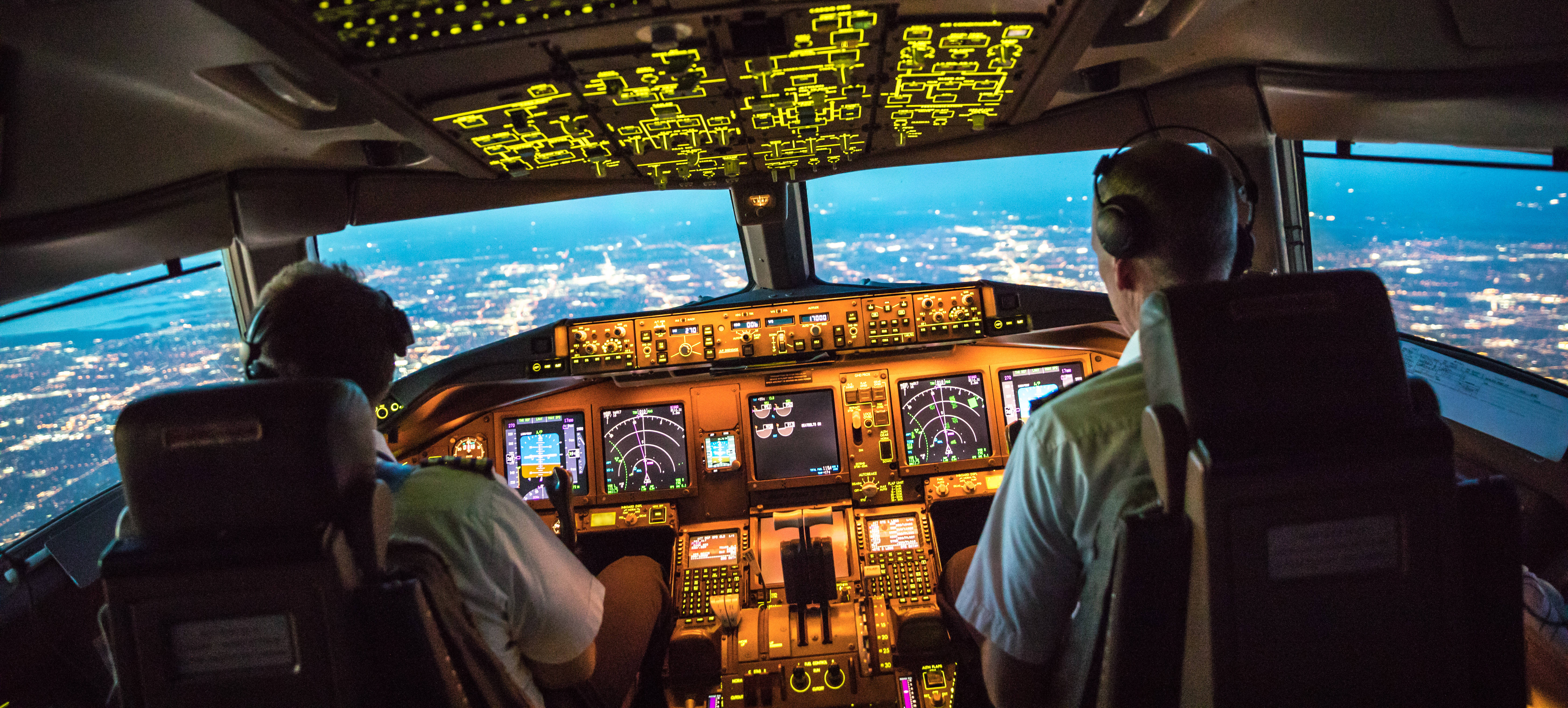
This is where teamwork and coordination skills come to the fore. Between both pilots, we will discuss the situation and share what we think is going on — our mental model.
By doing this, we can understand how the other pilot sees the situation and see how it fits in with how we understand it. A good way to do this is by asking open questions.
Asking, "Do you think we have lost our ability to put the landing gear down?" only gives the other person two options. Yes or no.
Even worse would be to say, "I think we have lost the ability to put the landing gear down. Do you agree?" This tone of questions pushes the other person into an agreement, particularly if the asker is an experienced captain and the responder is an inexperienced first officer.
A better way to phrase this would be, "What do you think the status of the landing gear is?" This allows the responder to voice their thoughts and assessment of the situation. The beauty of this form of questioning is that it allows the responder to speak freely, potentially sharing some information that the question asker had missed.
One of my favorite ways to then rank the priority of the situation is to put it on a scale of 1-10. "On a scale of 1-10, how urgently do you think we need to deal with this?"
If I think it's a three and the other pilot agrees, then our mental models are similar and we can put the task lower down our list. If we both say nine, then we know we need to deal with it more urgently.
If I'm thinking two, but the other pilot says nine then we have a mismatch in our mental models. What have I missed that they feel is so pressing? Or, what have they misunderstood to think it's so urgent? Before we can prioritize the task, we need to resolve the disparity.
Have an escape plan
Sometimes, despite our best efforts to think ahead and prioritize tasks, we can still become overloaded. It's just human nature. However, as long as we are aware of this fallibility, we can still avert a disaster by having an escape plan.
One of the most commonly used escape plans to avert an airplane accident as a result of being overloaded on the approach is by using the stable approach rule.
The rule is that unless certain criteria have been satisfied by the time the aircraft descends to 1,000 feet above the ground, the crew must perform a go-around. This is a last-ditch safety net to prevent any errors that may from turning into something more serious.
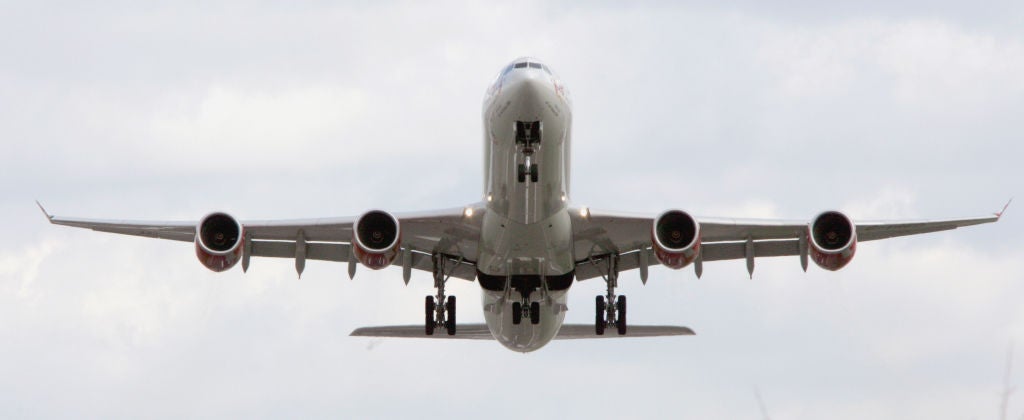
For the most part, the stable approach rule requires that the aircraft be in the landing configuration with the gear down and the landing flap set. It also requires the airspeed is at, or close to, the final approach speed and that the aircraft is on the correct vertical profile for the runway.
Countless accident investigations have proved that if any one of these is not satisfied at 1,000 feet, the chances of the aircraft making a safe landing are drastically reduced. Too fast or too high, the aircraft runs the risk of going off the end of the runway. Too slow or too low, the aircraft could hit the ground short of the runway.
For most professional crews, they will only be "unstable" at 1,000 feet if they have become overloaded. However, if they adhere to the stable approach rule, they can stop an overloaded approach from turning into a fatal approach.
Bottom line
As the poet Alexander Pope wrote, "to err is human." Being aware of our limitations is key in all aspects of life, especially when it comes to flying an airliner. Knowing how to preserve your capacity to stop yourself from becoming overloaded is a key skill of an airline pilot.
By thinking ahead and prioritizing tasks, pilots can do their best to keep space in their capacity buckets to deal with any new events that may add to their workload. If they become overloaded, they need to either offload some of that pressure or make time for themselves. Pilots can achieve this by asking the other pilot to deal with the task or by entering a holding pattern.
If all this still doesn't work, a solid and robust escape plan is the final safety net. It's no shame to get to this point, as long as you use it correctly. It's far better to discontinue the approach and come back around for a second go than land fast and go off the end of the runway.
TPG featured card

at Capital One's secure site
Terms & restrictions apply. See rates & fees.
| 5X miles | Earn 5X miles on hotels, vacation rentals and rental cars booked through Capital One Travel |
| 2X miles | Earn unlimited 2X miles on every purchase, every day |
Pros
- Stellar welcome offer of 75,000 miles after spending $4,000 on purchases in the first three months from account opening. Plus, a $250 Capital One Travel credit to use in your first cardholder year upon account opening.
- You'll earn 2 miles per dollar on every purchase, which means you won't have to worry about memorizing bonus categories
- Rewards are versatile and can be redeemed for a statement credit or transferred to Capital One’s transfer partners
Cons
- Highest bonus-earning categories only on travel booked via Capital One Travel
- LIMITED-TIME OFFER: Enjoy $250 to use on Capital One Travel in your first cardholder year, plus earn 75,000 bonus miles once you spend $4,000 on purchases within the first 3 months from account opening - that’s equal to $1,000 in travel
- Earn unlimited 2X miles on every purchase, every day
- Earn 5X miles on hotels, vacation rentals and rental cars booked through Capital One Travel
- Miles won't expire for the life of the account and there's no limit to how many you can earn
- Receive up to a $120 credit for Global Entry or TSA PreCheck®
- Use your miles to get reimbursed for any travel purchase—or redeem by booking a trip through Capital One Travel
- Enjoy a $50 experience credit and other premium benefits with every hotel and vacation rental booked from the Lifestyle Collection
- Transfer your miles to your choice of 15+ travel loyalty programs
- Top rated mobile app