7 reasons to fly from smaller airports if you want to save time and money


If you're like me, there's nothing that will squash your good vacation vibes faster than a flight home.
Waiting in line to check bags, passing through security and sharing a waiting area with hundreds of other travelers definitely isn't the best way to ease back into real life after a relaxing time away.
That's where smaller airports might be able to help. With thinner crowds, shorter lines and sometimes even lower prices, there's a lot more to smile about if you can find a local gateway that fits your route.
[table-of-contents /]
I realize that, for people living in big cities, flying out of a smaller airport won't always be possible. However, if you're someone who frequently drives to a large airport just because you assume it's the most convenient or has the best prices, you might want to look for flights from smaller airports in the area.
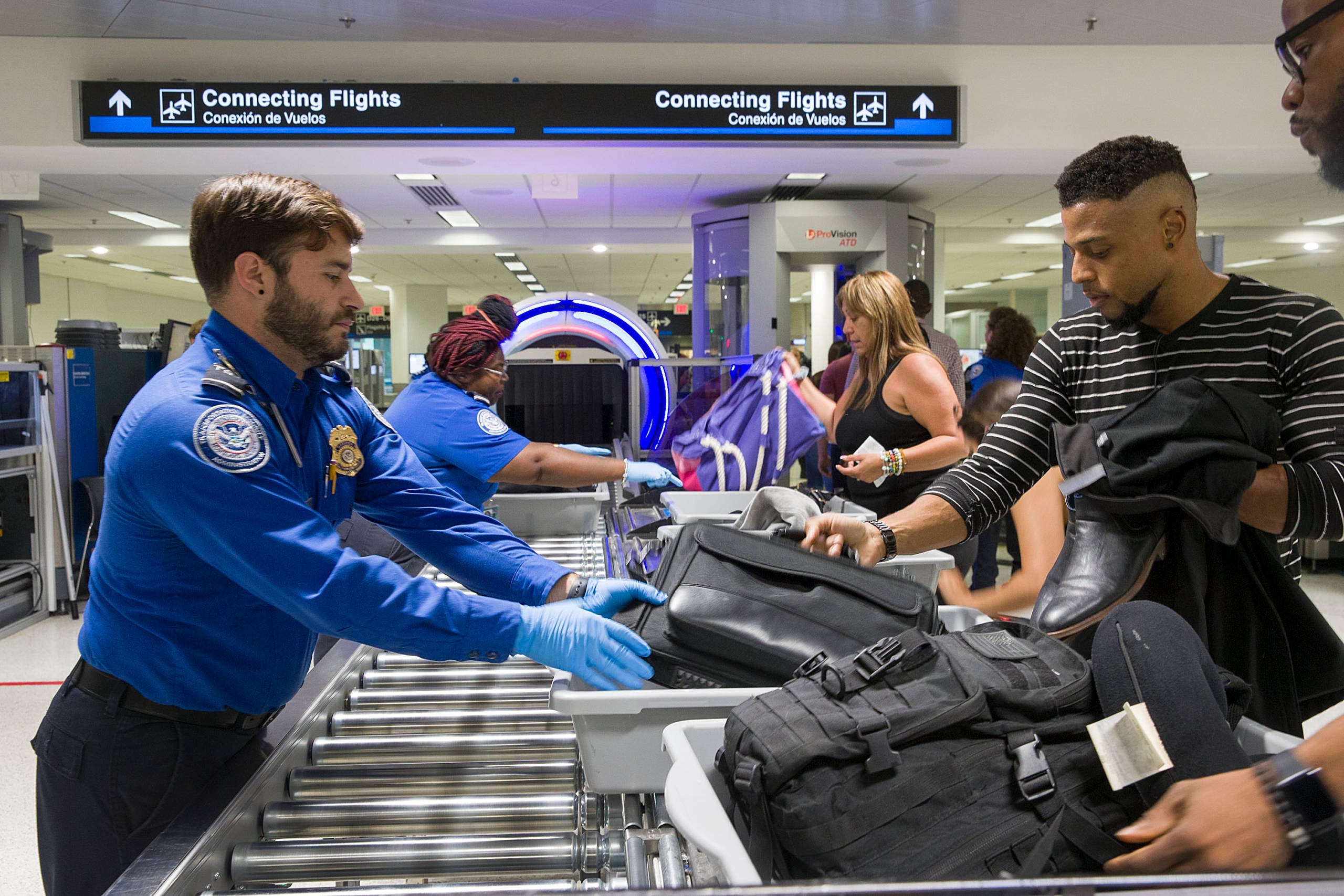
Here, with the help of members of TPG's Facebook group -- who submitted more than 85 different small airports as their favorites -- I share several reasons why a smaller airport might offer you a better experience.
why you should try smaller airports
They often work with low-cost carriers
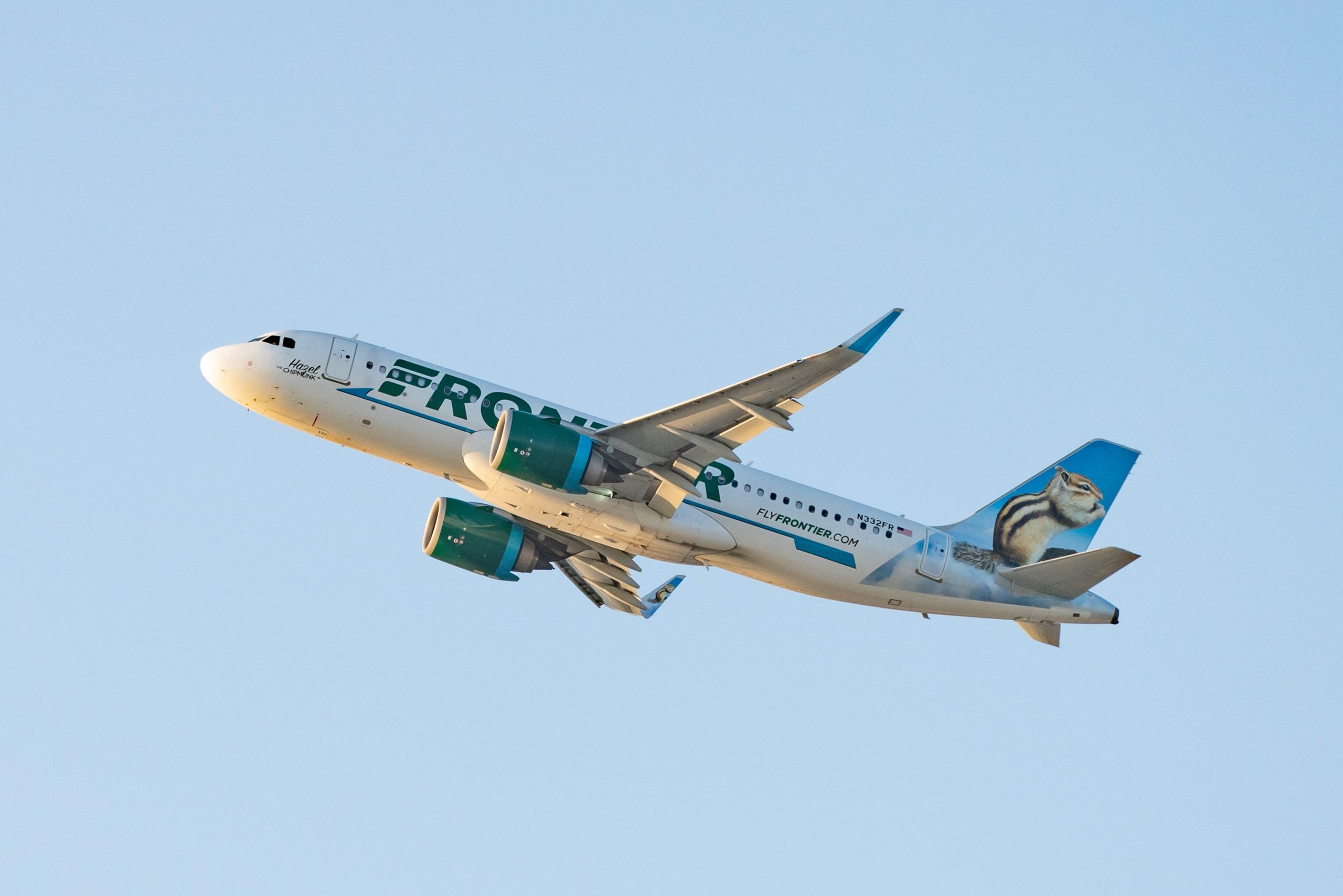
It can be difficult for smaller airlines to secure space at large airports. Regional airports often provide opportunities for lower-cost carriers to set up hubs, which means companies such as Spirit, Southwest, Allegiant, Frontier and others can offer cost savings to passengers.
There are a number of smaller airports that have service on low-cost carriers. For example, two airline budget airlines – Spirit and Breeze – fly from the Akron-Canton Airport (CAK) in Ohio near Cleveland. Tiny Latrobe, Pennsylvania (LBE) – near Pittsburgh (PIT) – has Spirit. And the Eastern Iowa Airport (CID) near Cedar Rapids is served by both Allegiant and Frontier.
In 2018 and 2019, I frequently flew back and forth to Florida from Trenton-Mercer Airport (TTN) in New Jersey and Allentown's Lehigh Valley International Airport (ABE) in Pennsylvania on Frontier and Allegiant, respectively, saving thousands of dollars on fares. Sometimes I snagged flights from as little as $19 each way.

Parking is cheaper (or free)

Forking over hundreds of dollars for parking when you get back from a trip can be a gut punch, especially if you're still on a vacation high. Another perk of smaller airports is that the parking is often much cheaper, if not free.
At Trenton, for example, I paid just $8 per day, which meant I didn't have to budget tons of money for parking or rely on Uber to get me there on time.
TPG reader Kelly Weaver Goley likes Piedmont Triad International Airport (GSO) in North Carolina for its free short-term parking and cost savings. "Park for free at the door," she said. (Long-term parking starts at $8 a day.) "And though you have to connect in CLT most of the time, it's usually hundreds of dollars cheaper than CLT!"
Ellen Jackson tossed her vote to Shenandoah Valley (SHD) in Virginia, where flyers can park their cars completely free of charge.
They could be closer to home
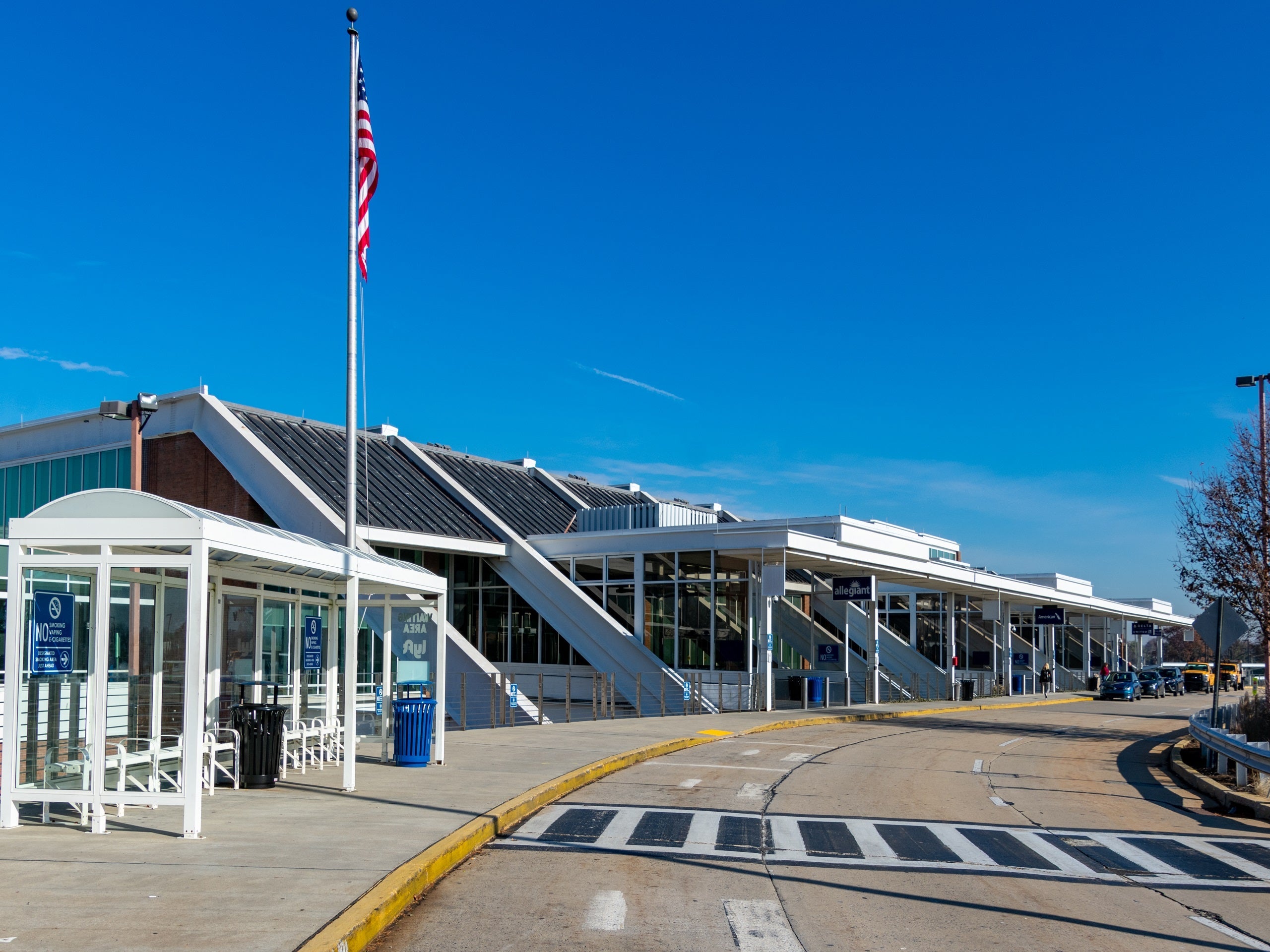
Since a long drive to reach an airport can start the entire trip off on a sour note, finding a smaller local airport that's closer to where you live can go a long way to relieve additional pre- and post-travel stress.
Plus, if it's close enough to home, you can Uber instead of driving, which could be cheaper than paying to park if you'll be gone for a while. Or, even better, ask a friend to drive you for free.
I currently live just 15 minutes from ABE, which is a dream, compared to the 90 minutes it takes me to drive to Newark Liberty International Airport (EWR), which is my large airport of choice. It means I can sleep in longer if I have an early flight, and I don't have to worry about traffic.
The routes are convenient
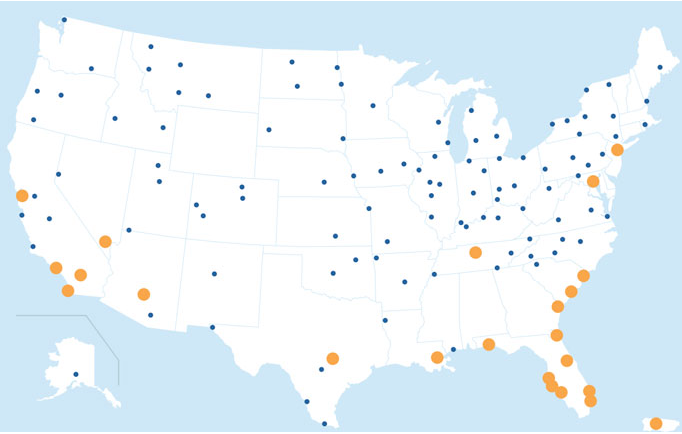
Low-cost carriers that do fly from smaller airports often fly specific routes and connections are not always an option. Sometimes, those specific routes aren't the most popular. However, if you just so happen to live near a small airport with a route exactly where you want to go, it's worth its weight in gold.
One of the biggest reasons I flew so frequently out of TTN is because, at the time, it had nonstop and super cheap flights to Jacksonville International (JAX), where my then-boyfriend lives. I was lucky that the exact route I was looking for was so close to home, allowing us to see each other more frequently than we could have otherwise.
"TOL [Eugene F. Kranz Toledo Express Airport in Ohio to] PIE [St. Pete-Clearwater International Airport in Florida), nonstop via Allegiant!" shared Karen Draves. "This is my route."
And Rogue Valley International-Medford Airport (MFR) in Oregon has routes that are perfect for Stacy Antoniadis, no matter the time of year. "You can get to the [California] redwoods or the Gold Coast of Oregon in the summer and [Mount] Bachelor for ski[ing] in the winter," she said.
Plus, a lot of smaller airlines have been adding new destinations, including from Greenville-Spartanburg International Airport (GSP) in South Carolina. That's Stefanie Mento Croft's preferred airport. "They are adding routes all the time," she told TPG.
There's less congestion

Small airports typically have fewer people, which means thinner crowds and, often, shorter lines and wait times.
And because these airports tend to be smaller in scope, it's unlikely you'll have a long walk anywhere, whether from the parking lot to check-in or from check-in to your gate, and you'll almost never need to take a tram or shuttle.
Another perk? Faster car rental access and returns for when you're in a hurry (if your small airport is large enough to offer rentals, that is).
It's easier to spot your luggage
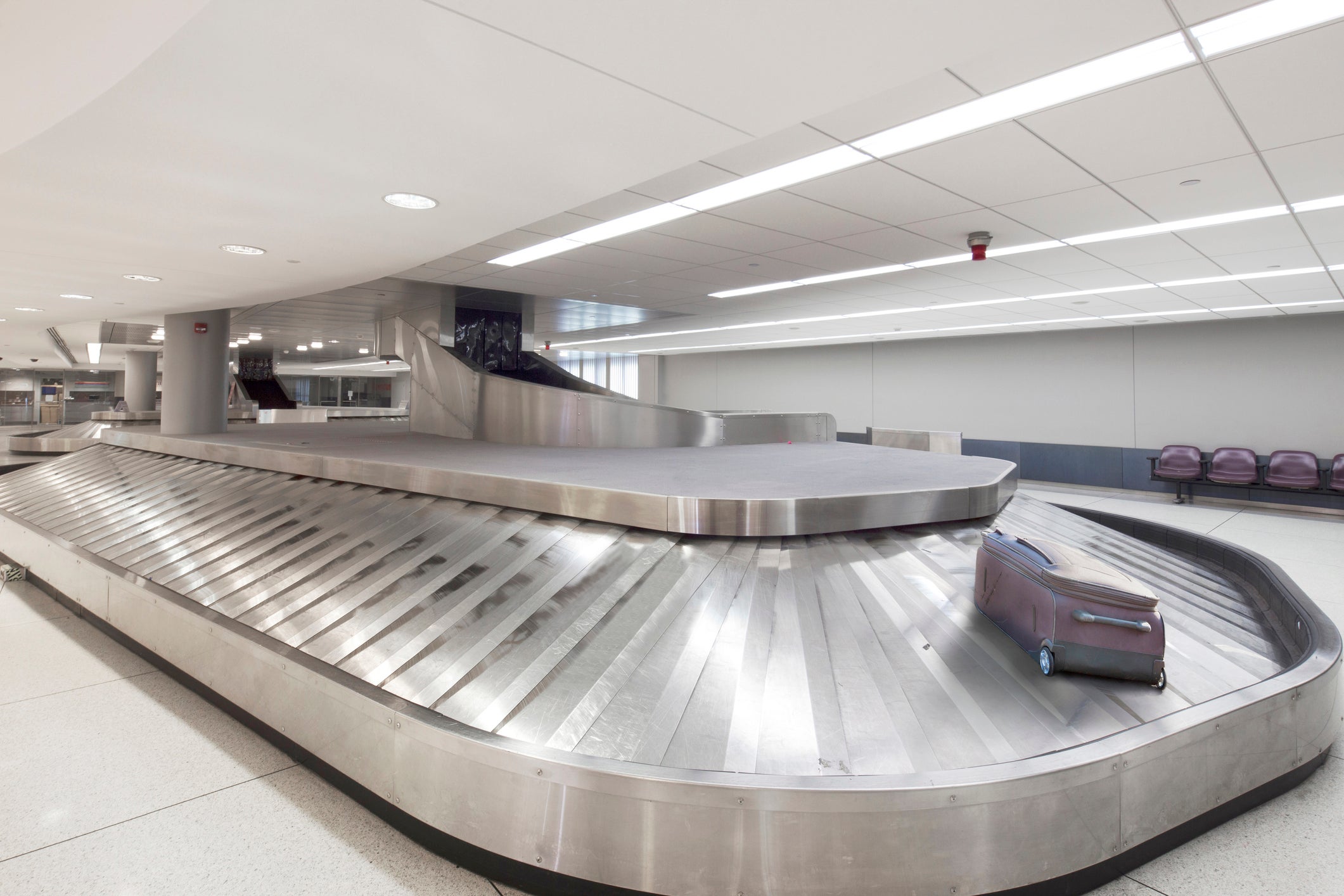
Another perk: For those with checked bags, expect shorter waits for your bags to come out onto the belt at baggage claim than at a busy hub. With fewer planes to unload and fewer luggage carousels to juggle, it's easier for staff to focus on getting your bags to you within a reasonable time.
Plus, smaller planes mean fewer people, which means it will be easier to spot your stuff amongst everyone else's.
During the few times I did check bags, they came out quickly, and I was able to grab them and walk to my car in less than 10 minutes.
Snacks are cheaper

One of my biggest pet peeves at large airports is the price gouging that happens on the other side of security. After you've been forced to dump out your beverages and allow TSA to rifle through your snack stash, you're a captive audience.
If the idea of dropping $8 on a bottle of water and $9 on gummy candies doesn't excite you, consider a smaller airport, where refreshments are usually a fraction of the prices you're used to seeing. Not that you'd base any major flight decisions on the availability of junk food, but it's a nice bonus.
Plus, you can't beat free.
TPG reader Jennifer Wicker McRae said that, in addition to her love of MEI for its proximity to her house, it also offers complimentary drinks. "You get free slushies every day, along with [free] coffee!"
The drawbacks of smaller airports
We all know nothing is perfect, and along with the pros also come some cons.
Although it wasn't my experience, fares offered at smaller often aren't as cheap as what you'll find at larger airports. (This largely depends on the mix of carriers serving the airport. Those with low-cost carriers, perhaps unsurprisingly, have the lowest prices.)
But then there are the nickel-and-diming tactics — carry-on bag fees, charges to pick your seats — used by smaller airlines to generate revenue while still keeping fares low.
Ever the budget traveler, I resent paying for carry-on items. When I discovered it was cheaper to ship an entire box of clothes to my boyfriend's apartment than to bring a single carry-on, that's what I did. Then, each subsequent time, I brought only a backpack as a personal item, which was free.
Another consideration: Flying from a small gateway close to home means you frequently have to add an extra connection you might not otherwise have if you depart from a larger hub.
"I have a love/hate relationship with small-town airports," explained Dawn L. I. Houghton. "My home airport is [Cherry Capital Airport (TVC) [in] Traverse City, Michigan and prior to that [it] was [Appleton International Airport (ATW) [in] Appleton, Wisconsin. You have to love the conveniences: short walks, friendly staff, total simplicity. But then [there are] the challenges: high prices, limited flights, few direct choices, long layovers, remote gates at hubs, weather cancellations [and] missed connections."

Bill Lynch agreed, after having a less-than-favorable experience. "I just flew in and out of Destin [Destin Fort Walton Beach Airport (VPS) in Florida]," he said. " ... [Five]-hour delay on the way out. [The] captain said it's because, with the increased air travel, the FAA opened up routes to Destin, and the airport (which has, like, [six] gates) just can't handle the volume."
Fortunately, I never had a delay or a layover at a small airport (or as the result of flying from one), but I did have some customer service issues when the airline severely damaged a bag I checked. Since I have, unfortunately, had similar experiences at large airports, it wasn't enough to deter me from sticking with smaller airports whenever possible.
Readers' favorite small airports
But, of course, there are tradeoffs. Perhaps you're OK with potential waits or additional connections if it means you can avoid expensive parking or driving for hours to the nearest large airport.

There certainly seems to be no shortage of people dedicated to small, regional locations, at least when they're lucky enough to be located near one. Of the more than 85 airports shouted out in the Facebook group, the most popular were Hollywood Burbank Airport (BUR) and Palm Springs International Airport (PSP). Other common repeat kudos from group members went to:
- Lehigh Valley International Airport near Allentown, Pennsylvania (ABE)
- Northwest Florida Beaches International Airport near Panama City, Florida (ECP)
- Spokane International Airport (GEG)
- Greenville-Spartanburg International Airport (GSP)
- Madison's Dane County Regional Airport (MSN)
- Palm Beach International Airport (PBI)
- St. Petersburg-Clearwater International Airport (PIE)
- Pensacola International Airport (PNS)
- Reno-Tahoe International Airport (RNO)
- Sarasota Bradenton International Airport (SRQ)
- Charles M. Schulz-Sonoma County Airport (STS)
- Cherry Capital Airport near Traverse City, Michigan (TVC)
Whether you have an absolute favorite small airport or you've never tried one before, there are many reasons why they're worth your consideration if there's one near you. They're little, but they'll get you where you need to go in a big way.
TPG featured card

at Capital One's secure site
Terms & restrictions apply. See rates & fees.
| 5X miles | Earn 5X miles on hotels, vacation rentals and rental cars booked through Capital One Travel |
| 2X miles | Earn unlimited 2X miles on every purchase, every day |
Pros
- Stellar welcome offer of 75,000 miles after spending $4,000 on purchases in the first three months from account opening. Plus, a $250 Capital One Travel credit to use in your first cardholder year upon account opening.
- You'll earn 2 miles per dollar on every purchase, which means you won't have to worry about memorizing bonus categories
- Rewards are versatile and can be redeemed for a statement credit or transferred to Capital One’s transfer partners
Cons
- Highest bonus-earning categories only on travel booked via Capital One Travel
- LIMITED-TIME OFFER: Enjoy $250 to use on Capital One Travel in your first cardholder year, plus earn 75,000 bonus miles once you spend $4,000 on purchases within the first 3 months from account opening - that’s equal to $1,000 in travel
- Earn unlimited 2X miles on every purchase, every day
- Earn 5X miles on hotels, vacation rentals and rental cars booked through Capital One Travel
- Miles won't expire for the life of the account and there's no limit to how many you can earn
- Receive up to a $120 credit for Global Entry or TSA PreCheck®
- Use your miles to get reimbursed for any travel purchase—or redeem by booking a trip through Capital One Travel
- Enjoy a $50 experience credit and other premium benefits with every hotel and vacation rental booked from the Lifestyle Collection
- Transfer your miles to your choice of 15+ travel loyalty programs
- Top rated mobile app