The Points Guy believes that credit cards can transform lives, helping you leverage everyday spending for cash back or travel experiences that might otherwise be out of reach. That's why we publish a variety of editorial content and card comparisons: to help you find a great card to turn your goals into reality.
Our site may earn compensation when a customer clicks on a link, when an application is approved, or when an account is opened with our partners, and this may impact how or where these products appear. While we don't cover all available credit cards, our editorial team creates and maintains all of the analysis of these cards, and our content is not influenced nor subject to review by any credit card company, bank or partner prior to (or after) publication. Please view our advertising policy and product review methodology for more information.
Advertiser disclosure
The Points Guy believes that credit cards can transform lives, helping you leverage everyday spending for cash back or travel experiences that might otherwise be out of reach. That's why we publish a variety of editorial content and card comparisons: to help you find a great card to turn your goals into reality.
Our site may earn compensation when a customer clicks on a link, when an application is approved, or when an account is opened with our partners, and this may impact how or where these products appear. While we don't cover all available credit cards, our editorial team creates and maintains all of the analysis of these cards, and our content is not influenced nor subject to review by any credit card company, bank or partner prior to (or after) publication. Please view our advertising policy and product review methodology for more information.
News
How to tell if your backpack counts as a personal or carry-on item
Featured image by CATHERINE FALLS COMMERCIAL/GETTY IMAGES
A classically trained journalist, Caroline Tanner covers news and travel for TPG. She is a dual-journalism graduate of Mizzou and Northwestern.
March 17, 2025 • 9 min read
The cards we feature here are from partners who compensate us when you are approved through our site, and this may impact how or where these products appear. We don't cover all available credit cards, but our analysis, reviews, and opinions are entirely from our editorial team. Terms apply to the offers listed on this page. Please view our advertising policy and product review methodology for more information.Editorial disclaimer: Opinions expressed here are the author's alone, not those of any bank, credit card issuer, airline or hotel chain, and have not been reviewed, approved or otherwise endorsed by any of these entities.
Comments
By commenting, you agree to our Community Guidelines to help create a positive space for conversation. The responses below are not provided or commissioned by the bank advertiser, our partners, or The Points Guy (“TPG”). They have not been reviewed, approved, or otherwise endorsed by any of these parties. All responses are submitted by individual contributors, and neither the bank advertiser, our partners, nor TPG are responsible for ensuring that all posts and/or questions are answered.
Related stories
Quick summary
A recent policy change means Southwest Airlines will now charge most passengers for checked bags, though its carry-on policy remains unchanged for now.
Carry-on and personal item allowances vary significantly by airline and fare type, with basic economy fares often the most restrictive.
Most airlines define a personal item as something that fits under the seat, such as a small backpack or purse, while larger bags must fit overhead within specific size limits.
International airlines typically enforce weight limits for carry-on bags, unlike most domestic carriers.
What to consider
Carry-on size and weight restrictions differ by airline, and some basic economy fares only allow a single personal item.
Certain travelers, such as those with elite status or traveling with infants, may receive additional carry-on allowances or exemptions.
Bringing an oversized or extra carry-on item may result in additional fees, especially for basic economy fares.
What you'll miss from the article
A detailed airline-by-airline breakdown of current carry-on and personal item policies, including specific size and weight limits for major domestic and international carriers.
Generated by AI with support from our editorial team.
The travel world was shocked last week when Southwest Airlines reversed its long-standing policy of allowing all travelers to check two bags on all flights, free of charge. At the time of writing, it still remains to be seen whether the Dallas-based carrier will add carry-on bag fees.
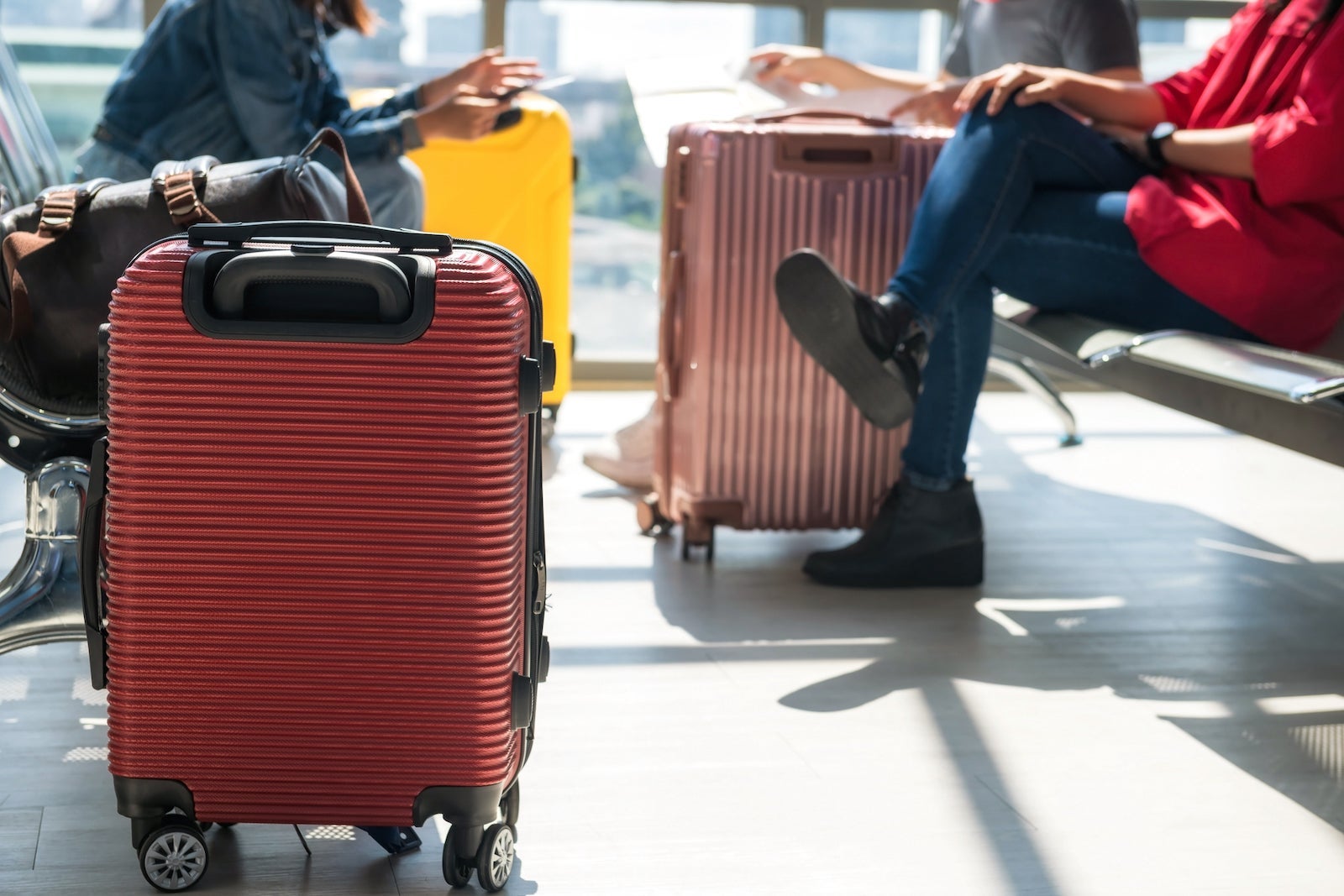
Regardless of which airline you fly, each one sets its own policies regarding checked baggage and carry-on luggage. Depending on the fare type, airlines generally permit travelers two carry-on items — one that fits underneath the seat in front of you, considered a personal item, and a second item that fits overhead. However, you must meet certain dimension thresholds, which vary by airline.
This guide outlines the current carry-on baggage policies for 10 major airlines, including restrictions on what constitutes a carry-on bag suitable for storage underneath the seat in front of you versus the overhead bin.
Domestic carry-on policies
A good rule of thumb is that if your carry-on bag fits under the seat in front of you, it’s considered a personal item. This includes small backpacks, purses, briefcases, laptop bags, etc. Larger bags, including suitcases, must fit in the overhead bin compartment, as determined by the dimensions outlined by airlines.
Southwest Airlines
Up until last week, Southwest stood out among carriers for allowing passengers two free carry-on bags and two free checked bags on all fare types. But as of May 28, most Southwest passengers will be required to pay to check bags.
However, the airline has not indicated that these changes will affect its carry-on baggage policy. As of March 13, carry-on items stored overhead must meet or be smaller than 24 by 16 by 10 inches. Personal items for under the seat — including purses, briefcases, cameras, food containers, laptops and backpacks — cannot be larger than 16 1/4 by 13 1/2 by 8 inches.
“Your personal item must be stored under the seat in front of you,” per Southwest. “If it doesn’t fit or if there’s no seat in front of you, we’ll ask you to place it in an overhead bin.”
Delta Air Lines
“Each passenger flying with Delta can bring 1 carry-on bag and 1 personal item free of charge (such as a purse, laptop bag or item of similar size that will fit underneath the seat in front of you),” according to Delta. “If you plan to bring roll-aboard luggage or a large bag to store in the overhead bin,” note the below size restrictions.
Approved personal items include a purse, briefcase, small backpack, camera bag, diaper bag, laptop bag or other similarly sized item.
The combined length, width and height of carry-on baggage should be less than 45 inches. Individual items must be less than 22 by 14 by 9 inches.
All Delta fare types, including basic economy, allow both a full-size carry-on item and a personal item.
American Airlines
Basic economy passengers on American Airlines are also allowed one full-size carry-on and one personal item, such as a purse or backpack.
“Your personal item, like a purse or small handbag, must fit under the seat in front of you,” American states on its website, noting that the dimensions must be under 18 by 14 by 8 inches.
Unlike some other carriers, American does not count certain items carried on for babies — such as diaper bags — as one of your carry-on items.
“Diaper bags (1 per child), soft-sided cooler bags with breast milk, child safety seats, strollers and medical or mobility devices don’t count as your personal item or carry-on,” they say.
American considers an overhead bin item to be a bag, meaning it must be less than 22 by 14 by 9 inches (including handles and wheels) and fit in the sizer at the gate.
United Airlines
UNITED
United’s basic economy fare is among the most restricted fare types. For most flights, basic economy passengers can only travel with one personal item that fits under the seat and measures 9 by 10 by 17 inches. That means if you brought a backpack on board with this fare type, it would be your one and only item allowed.
For basic economy, "Carry-on bags are not included unless you're flying to Canada, South America, across the Atlantic or on an international flight across the Pacific," notes United.
If you need to bring a second bag for the overhead bin, you’ll have to pay $60 round-trip to upgrade to economy. In economy class and above, carry-on bags, including handles and wheels, cannot exceed 9 by 14 by 22 inches.
JetBlue
Travelers flying JetBlue’s Blue Basic are only granted one personal item that can fit underneath the seat in front of you — specifically, an item measuring less than 17 by 13 by 8 inches, handles and wheels included. Again, this would include backpacks or comparable items that must suffice as your only piece of luggage.
Any Blue Basic traveler who brings a full-size carry-on bag to the gate will incur a $65 fee to check their first or second bag or $180 for their third bag.
Blue fare types and above allow carry-on luggage that fits in the overhead bin, specifically bags not exceeding 22 by 14 by 9 inches.
There are a few exceptions to JetBlue’s carry-on policy to allow certain customers in Blue Basic to carry on a full-size bag, including for Mosaic status holders, unaccompanied minors, active U.S. military members and customers traveling to and from London.
International carry-on policies
British Airways
BRITISH AIRWAYS
Like JetBlue and United, British Airways’ basic economy fare only permits travelers to bring hand luggage up to 16 by 12 by 6 inches. Economy and premium economy fares afford passengers one full-size cabin bag measuring 22 by 18 by 10 inches. All bags must weigh less than 51 pounds.
“On busy flights, you may be asked to check in your larger cabin bag,” British Airways advises.
Emirates
EMIRATES
Although Emirates also restricts economy passengers when it comes to carry-on baggage, you can bring one full-size bag, including one that can fit in the overhead bin, as long as it does not exceed 22 by 15 by 8 inches or weigh more than 15 pounds.
“All carry-on baggage must fit either under the seat in front of you or in one of the overhead lockers,” per Emirates. “Baggage may not be placed behind your legs, in the aisles, or in front of emergency exits.”
Singapore Airlines
Like Emirates, Singapore Airlines allows premium- and economy-class passengers one piece of luggage on board, under 15 pounds, with a combined length, width and height of up to 45 inches. This could be a backpack or a more traditional piece of luggage.
“In addition to the limitations stated here, you must also be able to stow your baggage securely in the overhead compartment or under the seat in front of you,” the airline explains.
Cathay Pacific
Unlike the other international carriers mentioned, Cathay Pacific allows all customers one piece of carry-on luggage and one additional smaller item, including handbags, laptop bags, small backpacks, camera bags and briefcases, according to its website.
This policy applies to all fare types, starting with Economy Light. It allows for one full-size item measuring 14 by 9 by 22 inches and a personal item with dimensions not exceeding 16 by 16 by 12 inches, both of which must weigh less than 15 pounds.
Virgin Atlantic
All people flying in economy classes on Virgin, which includes Light, Classic and Delight, and those flying in premium cabins may bring one carry-on item that can fit in the overhead bin as long as it weighs less than 22 pounds.
If you want to carry on a second bag, you need to book an Upper Class fare, which entitles you to two bags under 35 pounds combined.
“Whichever cabin you’re in, the size of your bag needs to be a maximum of 23 cm by 36 cm by 56cm (that’s around 9 by 14 by 22 inches),” as noted by Virgin Atlantic.
Bottom line
CRAIG HASTINGS/GETTY IMAGES
Whether you are entitled to both a full-size carry-on item suitable for the overhead bin and a personal item, such as a backpack, depends on the airline and fare type booked. Certain elite status holders may be granted additional carry-on leniency regardless of cabin class.
Although most domestic airlines do not have weight restrictions for carry-on bags, some do for specific routes, and all of the international carriers specify a weight requirement.
Airlines generally do not consider certain items carried on as part of luggage, such as a jacket, umbrella or food bought at the airport.
By commenting, you agree to our Community Guidelines to help create a positive space for conversation. The responses below are not provided or commissioned by the bank advertiser, our partners, or The Points Guy (“TPG”). They have not been reviewed, approved, or otherwise endorsed by any of these parties. All responses are submitted by individual contributors, and neither the bank advertiser, our partners, nor TPG are responsible for ensuring that all posts and/or questions are answered.