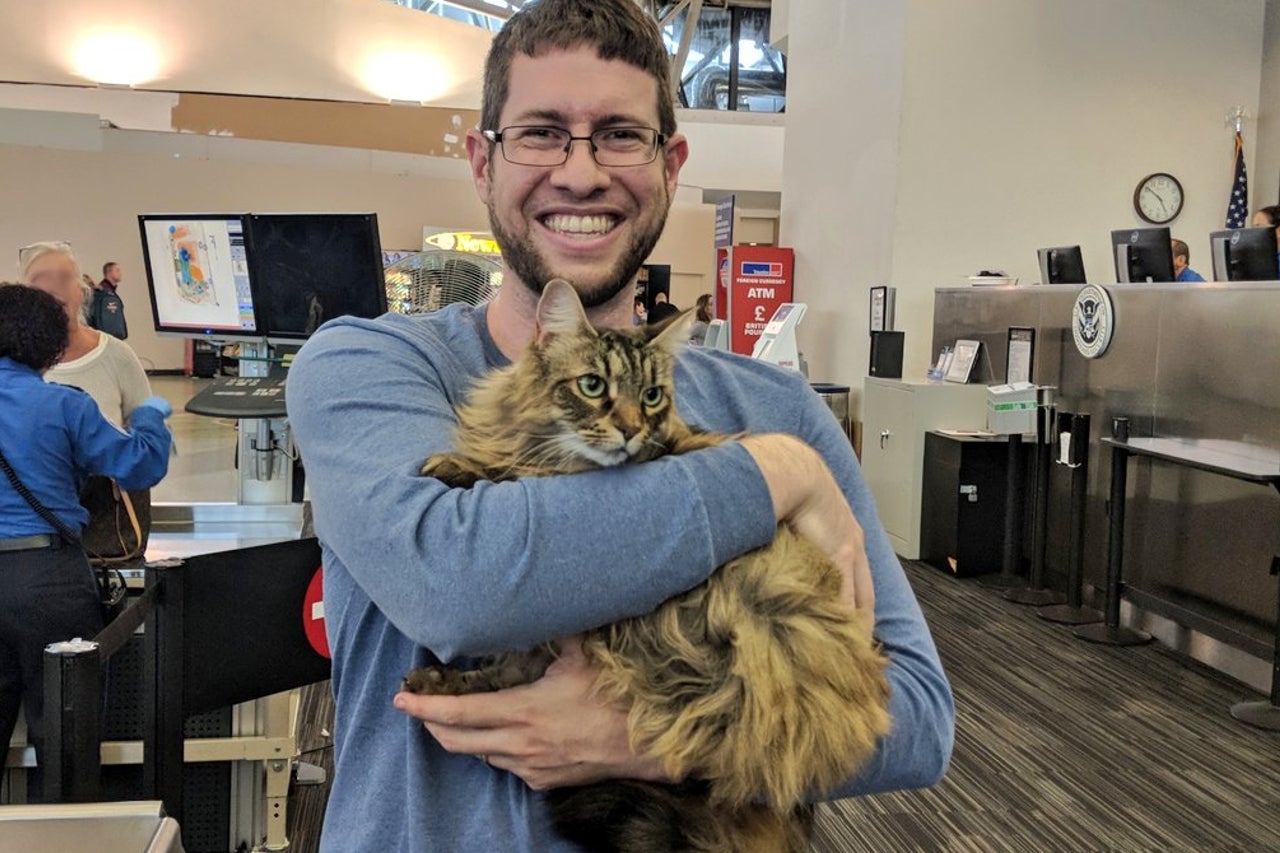
My husband JT and I recently started traveling full-time with our cat, Grace. As was covered on a recent TPG Instagram takeover, we recently flew with Grace on Lufthansa from Tampa, FL (TPA) to Frankfurt, Germany (FRA). I did a lot of research before this flight on how to keep Grace happy and safe during the flight. Here are some tips and considerations from this research and recent flight.
Before the Flight
- Pick an airline that allows pets on board. Don't check your pet into the hold if you can avoid it. If your pet is too large or heavy to carry on board, consider driving or leaving your pet with a friend or relative.
- Notify the airline. Call the airline within 24 hours of booking your ticket to get information and reserve space for your pet on board. If there's no space or regulations have changed, you can usually cancel the ticket within 24 hours of booking. Understand what paperwork, if any, will be needed to travel with your pet. Ask about fees and how they need to be paid.
- Pick a reasonable itinerary. If we hadn't been flying with Grace, we'd have connected onward to Berlin. However, we decided this connection would be too long for Grace so we spent the night in Frankfurt and took a train to Berlin the next day.
- Determine regulations. Depending on where you're traveling, you might need to have particular paperwork for your pet. The USDA website has ample information for both domestic and international travel.
- Talk with your vet. See if your vet has any concerns about your pet traveling. Ask for recommendations and whether they recommend any medications for the flight. If they do recommend medications, see if they recommend giving your pet a test dose sometime before the flight so you know how it'll affect them. The vet recommended a calming agent for Grace, which we think made the flight more comfortable for her.
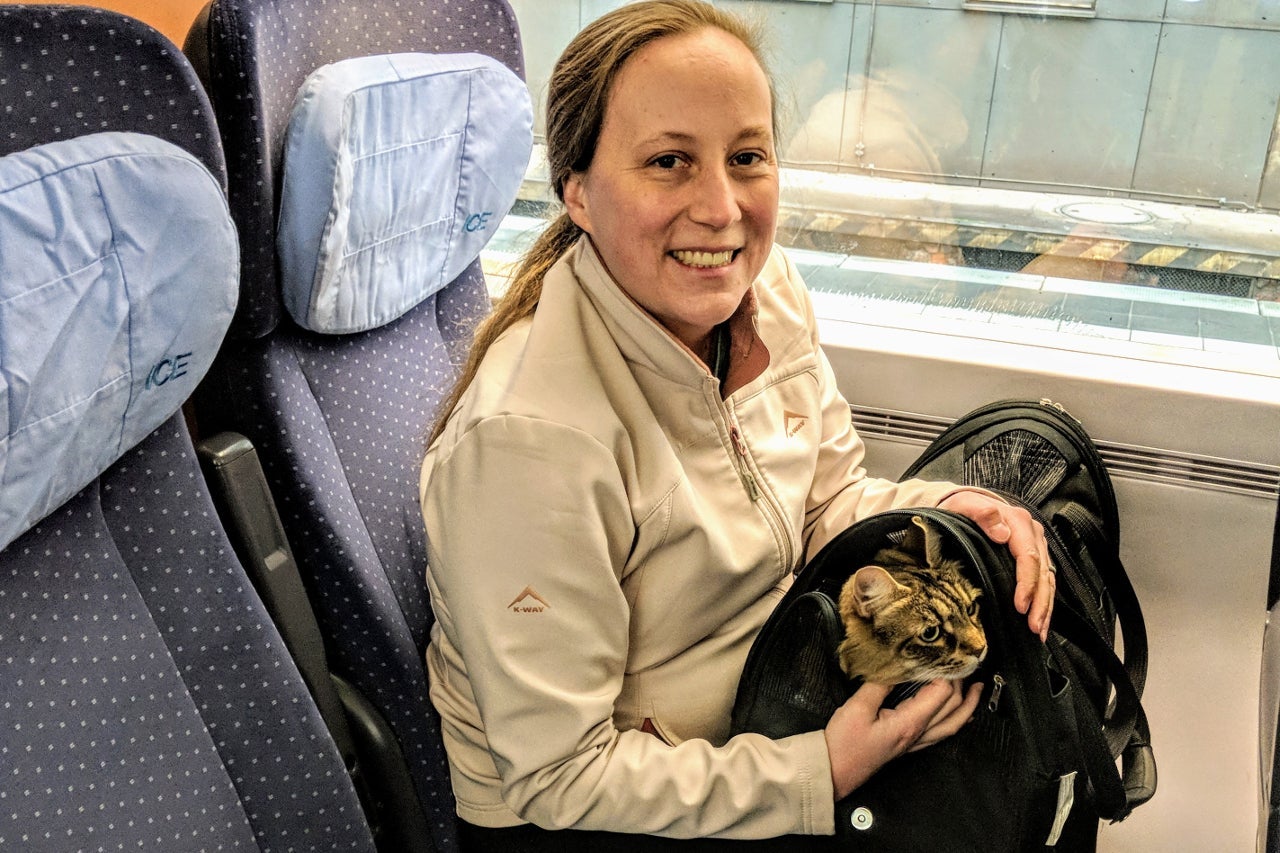
- Use a soft carrier and acclimate your pet to the carrier. Although some airlines allow hard sided carriers, use a soft sided carrier since it'll fit under a wider variety of seats. Line the bottom of the carrier with pet pads and a familiar blanket or shirt.
On the Day of the Flight
- Go for a long walk. This'll give your dog exercise and ample opportunity to empty their bowels. Ideally, go for a walk in a pet area once you get to the airport, too. There's less you can do for cats, besides making sure their litter box is clean and available before putting them into the carrier.
- Leave time for check-in. Although you might want to arrive at the airport at the last minute to limit how long your pet is in the carrier, make sure to allow time for airport check-in. At check-in, you might need to show a health certificate and rabies vaccinations. You'll usually pay a pet fee at this point and your pet and carrier might need to be weighed. Double check that you're not seated in a bulkhead or exit row.
- Use a collar or harness (and bring a leash). Even though your pet will be in a carrier for the flight, you'll need to carry your pet through the metal detector during security. Having a collar or harness to hold on to will help you maintain control of your pet.
- Put the carrier through first. When at security, put the carrier through the x-ray machine first. This way it'll be the first item to exit the scanner. Grace wanted nothing more than to get back into the carrier after security.
- Board with your group. You'll want to make sure you have room to put your carry-on in the overhead bin.
During the Flight
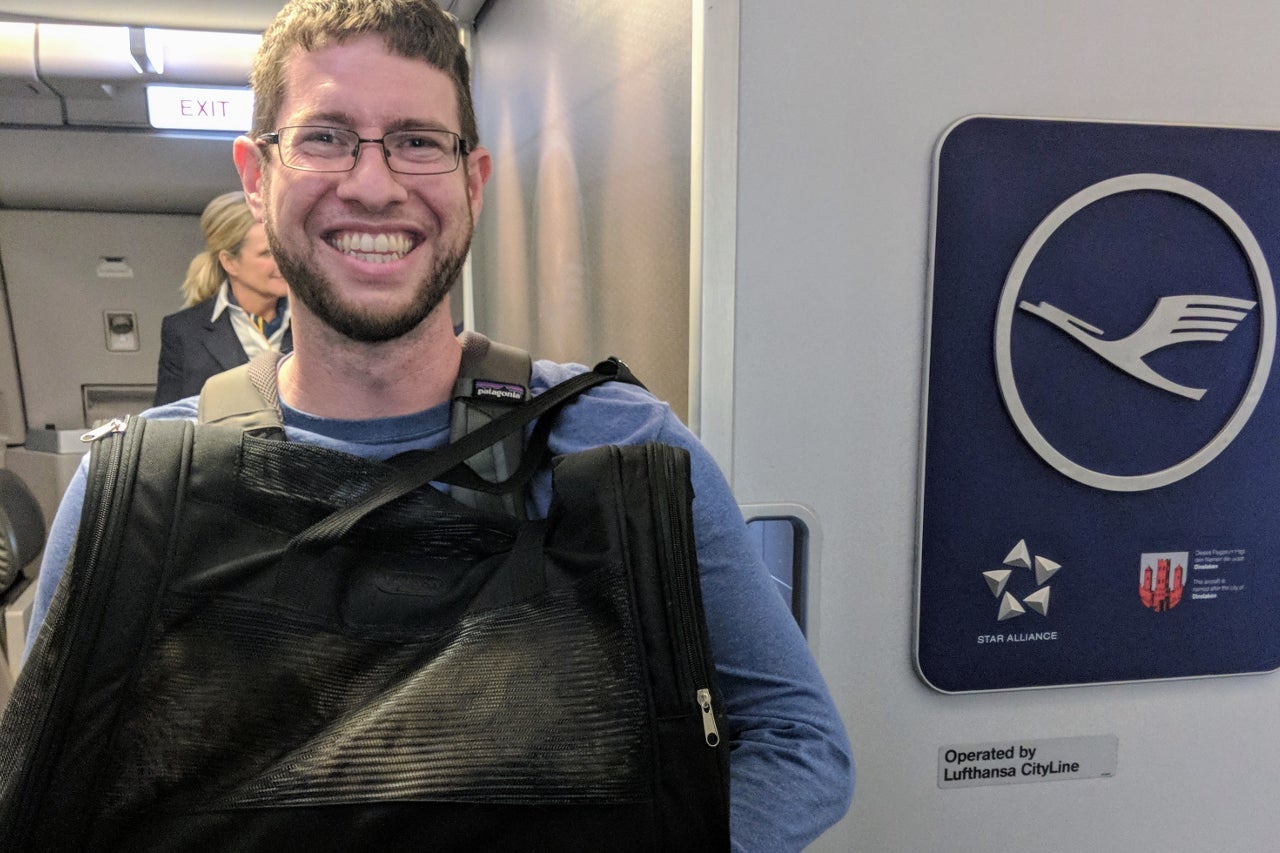
- Keep your pet in its carrier and under the seat. I know the temptation is high to want to hold your pet. But other passengers on board might be scared of or allergic to your pet, so play by the rules.
- Provide comfort. This being said, you can lean down and comfort your pet. Especially during take-off and landing, I tried to comfort Grace because these times are likely really scary to pets.
- Have snacks, water and toys ready. Grace started meowing near the end of our flight, but treats seemed to placate her. A favorite toy can also relieve boredom. Collapsible silicon bowls are light and can often clip to the outside of the carrier when not in use.
- Have additional pet pads. If you sense that your pet had an accident, get pet pads from your carry-on and take your pet and its carrier to the lavatory. Clean up in the lavatory before returning to your seat.
- Know your rights. Other passengers might not be happy that you have a pet on board. If you have an issue with a fellow passenger, call for a flight attendant. In some cases the complaining passenger can be reseated, while in other cases you might be reseated. No matter what, don't compromise the safety of yourself or your pet.
After the Flight
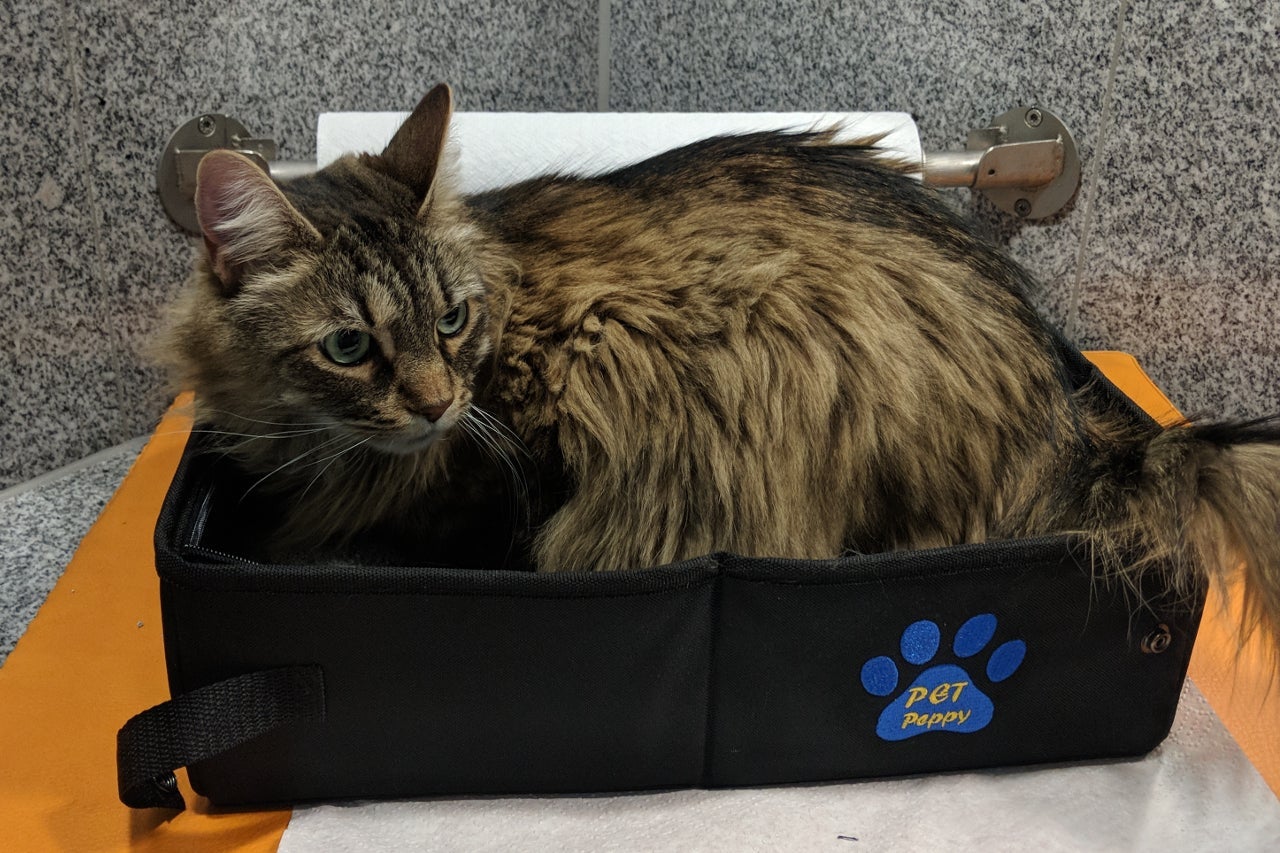
- Find a pet relief area. For dogs, this could be a pet relief room or a designated outside area. For cats, you'll need a portable liter box and liter. Grace wasn't interested in using this when we got to FRA, but we gave her the opportunity.
- Declare your pet, if needed. If traveling internationally or to select states, you'll need to declare your pet and show the appropriate paperwork at customs or an agricultural counter. Grace had her paperwork to enter Germany, but the customs agent waved us through as soon as we started to get the paperwork out.
- Get to your destination. Head directly to your hotel, house or wherever you're staying. If you're arriving extremely early, consider booking an extra night or contacting the lodging ahead of time about early check-in. Quickly set up food, water and anything else you have for your pet. If you have a dog, go for a walk. If you have a cat, give it time to explore.
Bottom Line
Certainly airline crews should be trained on pet safety, so they are administering the correct instructions to passengers.