An Emirates A380 Came Very, Very Close to the Ground Before Landing at JFK

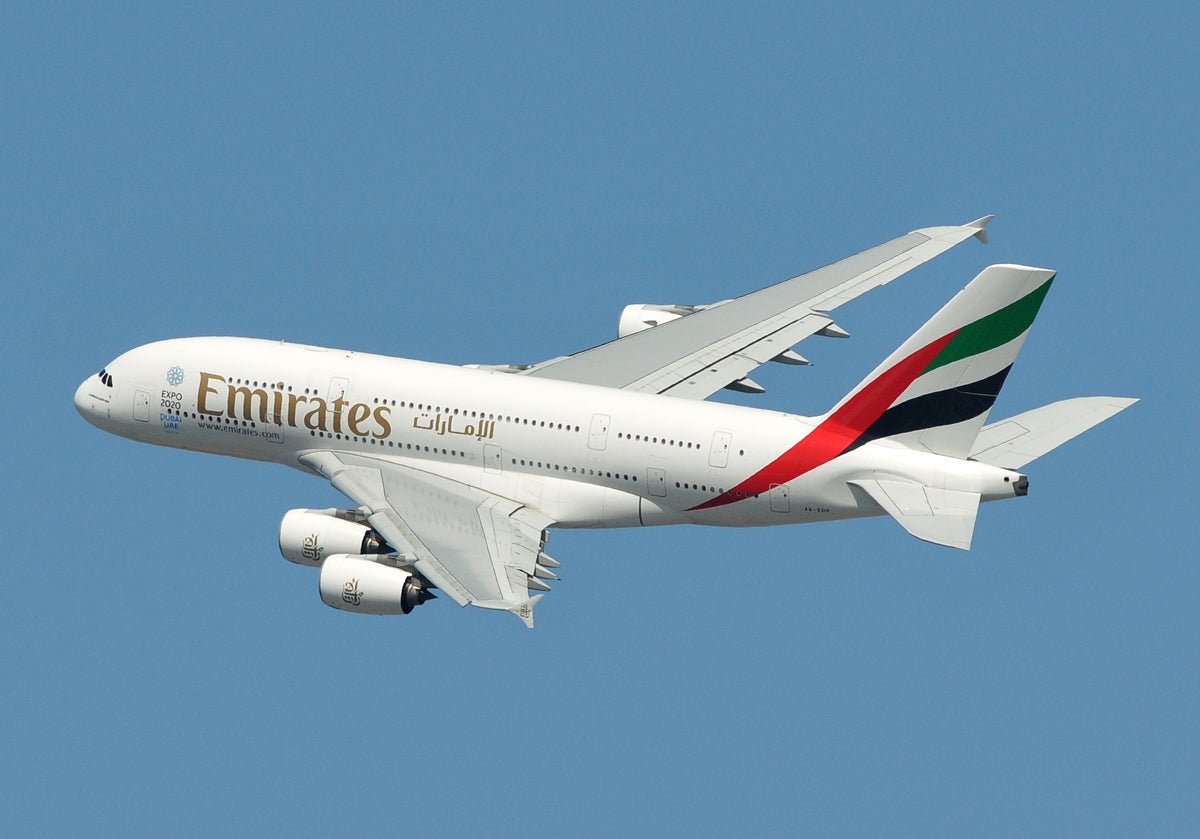
Commercial aviation is incredibly safe. We are almost to the end of an eighth straight year with zero deaths from accidents on a US-flagged airline, an incredible record when these airlines carry more than 2.2 million passengers per day on average.
This isn't a fluke. Airlines and aviation authorities in the US and across the world work tirelessly to ensure that air travel is safe. An accident doesn't just mean a possible loss of the passengers, crew, cargo and aircraft, but can degrade travelers' trust in the system and lead to a significant drop in revenue and profits.
Aviation authorities put significant effort into analyzing any accident to learn what went wrong and how it can be avoided in the future. This creates a system that has backups and safety nets to avoid accidents. It seems that one of these safety nets may have just saved an Emirates A380 full of passengers.
The Incident
According to an Aviation Herald report published Saturday, on Monday, December 4, an Emirates Airbus A380 on approach into New York's JFK airport runway 13L came just hundreds of feet from the ground while still three miles (five kilometers) from the runway.
Air traffic control radar caught the exceptionally low altitude, triggering an air traffic controller to alert the crew that "you appear to be extremely low on approach." The pilots immediately initiated a go-around and Emirates flight EK207 landed safely on runway 22L, 10 minutes later.
Just How Low?
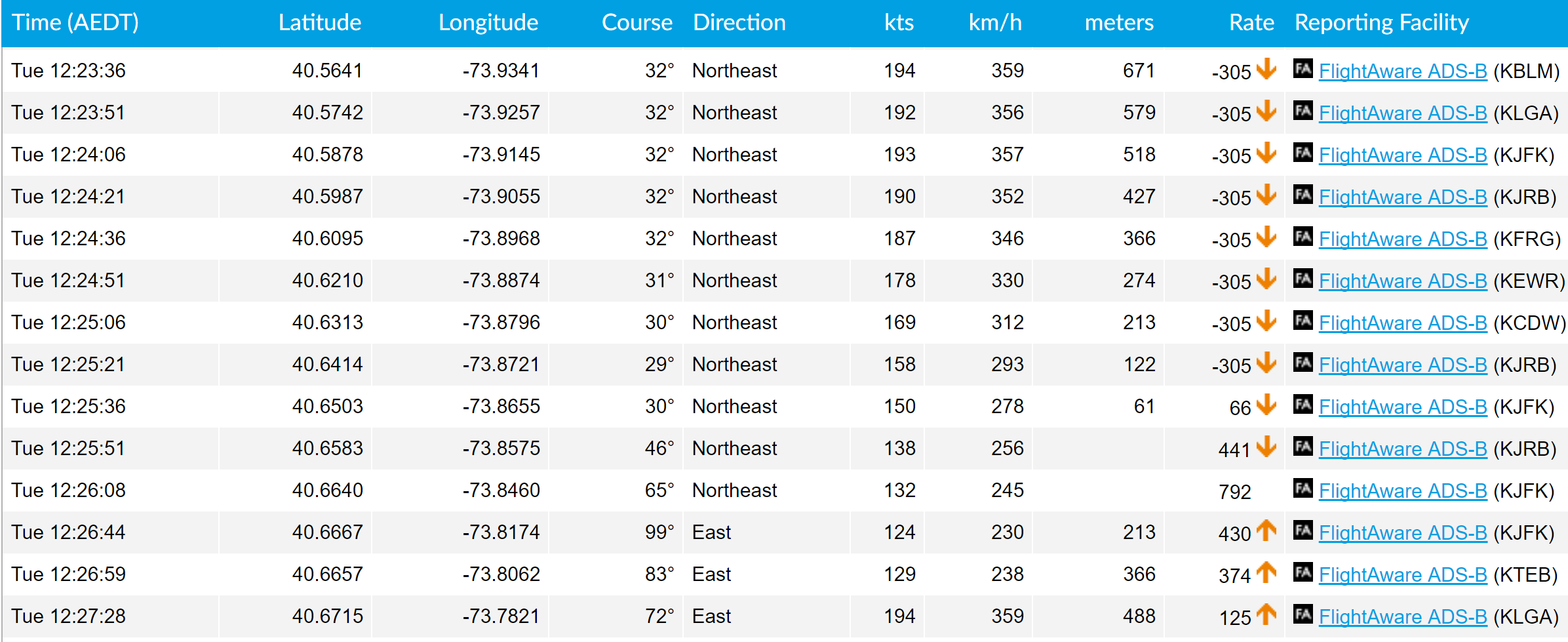
Three different altitude measurements conclude that the aircraft was under 500 feet from the ground when making the 90° right-hand turn to align with the runway which concludes the so-called "Canarsie approach" into JFK's runway 13L.
The Aviation Herald reports:

The FAA radar data suggest the aircraft was at 200 feet [Above Ground Level] at the lowest point. The Webtrak data produced by the airport authority show the aircraft at 338 feet [Mean Sea Level] at its lowest point.
The aircraft's ADS-B system reports the altitude of the aircraft dropped to zero. However, this altitude is based on standardized pressure. As Aviation Herald notes, 467 feet need to be added to this due to the atmospheric pressure of 30.43 inches at the time.
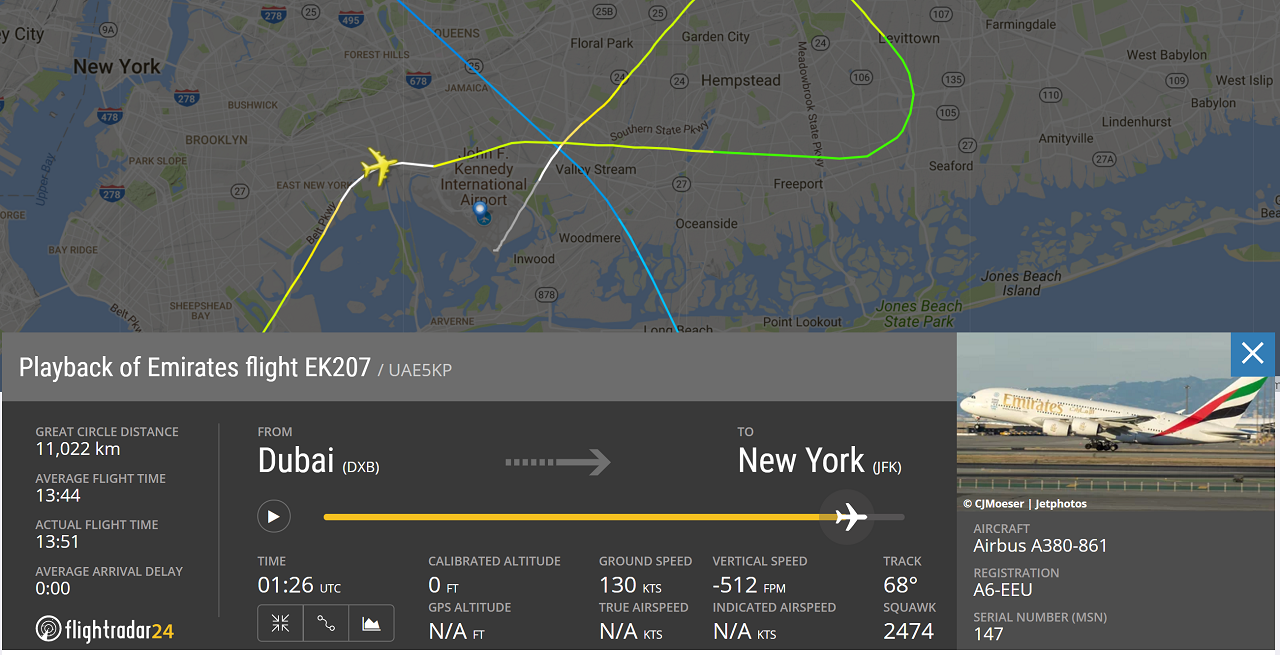
Visualized, FlightRadar24 shows much of the turn in white, indicating an altitude under 100 meters (328 feet) with parts of the turn showing a "calibrated altitude" of zero feet:
Keep in mind that the Airbus A380 has a massive 80 meter (262 foot) wingspan. Due to the turn, the right wing was even lower to the ground than the measurements would indicate.
What Does It Mean?
Clearly, this was a close call. There's no way of knowing what would have happened if the JFK air traffic controller hadn't alerted the crew; perhaps the pilots would have noticed the exceptionally low altitude before it was too late. However, it's possible that the pilots weren't properly monitoring the situation for their aircraft to have come so close to the ground.
Unless an investigation is conducted, by the US Federal Aviation Administration and/or by Emirati authorities, we will not know why a jet that can carry 500 people came just seconds from hitting the ground. However, there is no indication that an investigation into this incident has been initiated. The FAA Aviation Safety Information Analysis and Sharing (ASIAS) database does not show a report for this incident, which would indicate an investigation has begun. We have reached out to the FAA to clarify whether the incident is being investigated.
What we do know is that in September, another Emirates A380 came too close to the ground while on approach to Moscow's Domodedovo airport (DME) and also aborted the landing, went around, and landed safely. That accident is still being investigated by Russian and Emirati aviation authorities.
A previous version of this story stated that an Emirates A380 came close to hitting the ground while approaching Moscow's Sheremetyevo airport, while in fact it was at Domodedovo, another Moscow airport. The story has been corrected.
TPG featured card

at Capital One's secure site
Terms & restrictions apply. See rates & fees.
| 5X miles | Earn 5X miles on hotels, vacation rentals and rental cars booked through Capital One Travel |
| 2X miles | Earn unlimited 2X miles on every purchase, every day |
Pros
- Stellar welcome offer of 75,000 miles after spending $4,000 on purchases in the first three months from account opening. Plus, a $250 Capital One Travel credit to use in your first cardholder year upon account opening.
- You'll earn 2 miles per dollar on every purchase, which means you won't have to worry about memorizing bonus categories
- Rewards are versatile and can be redeemed for a statement credit or transferred to Capital One’s transfer partners
Cons
- Highest bonus-earning categories only on travel booked via Capital One Travel
- LIMITED-TIME OFFER: Enjoy $250 to use on Capital One Travel in your first cardholder year, plus earn 75,000 bonus miles once you spend $4,000 on purchases within the first 3 months from account opening - that’s equal to $1,000 in travel
- Earn unlimited 2X miles on every purchase, every day
- Earn 5X miles on hotels, vacation rentals and rental cars booked through Capital One Travel
- Miles won't expire for the life of the account and there's no limit to how many you can earn
- Receive up to a $120 credit for Global Entry or TSA PreCheck®
- Use your miles to get reimbursed for any travel purchase—or redeem by booking a trip through Capital One Travel
- Enjoy a $50 experience credit and other premium benefits with every hotel and vacation rental booked from the Lifestyle Collection
- Transfer your miles to your choice of 15+ travel loyalty programs
- Top rated mobile app