After the Fires: The Revival of California Wine Country

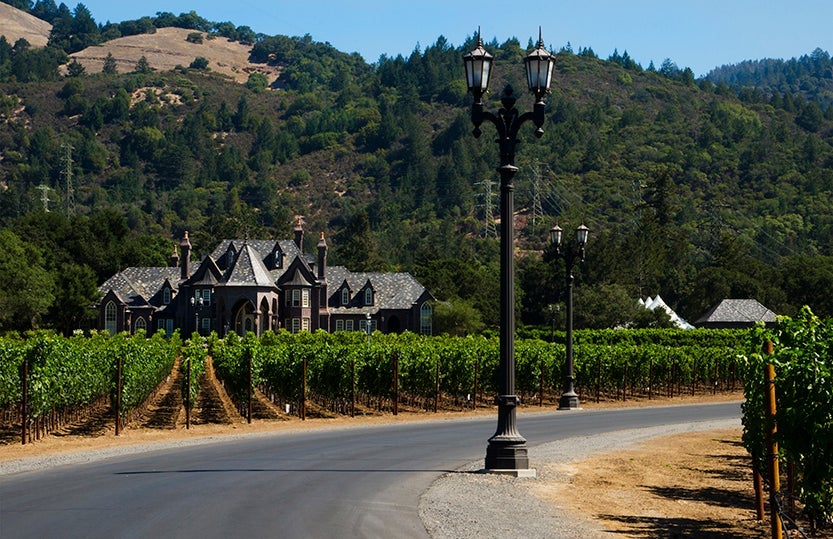
The view from the patio at Regusci Winery in the Napa Valley is one of those panoramic vistas travelers dream about. Rows and rows of vineyards, as far as the eye can see. Rolling hills in the distance. Sky so blue it's almost inconceivable, often punctuated with fluffy clouds that seem to hang over the countryside like halos.
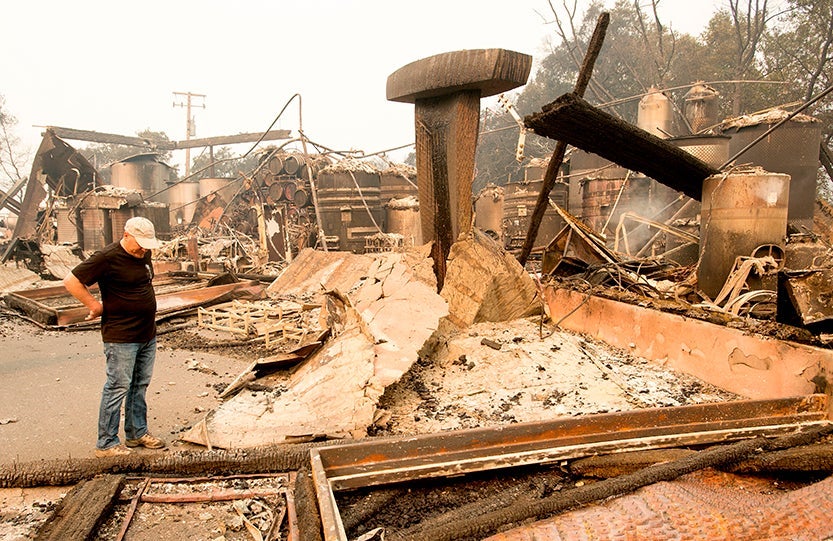
As you swirl a glass of estate zinfandel from the comfy bench, soaking up the vibe, it's hard to believe this picture-perfect spot was nearly destroyed by fire last month. In fact, if not for the efforts of owner Jim Regusci and a handful of employees, the place might not even be standing today.
[table-of-contents /]
"The fire came on us like a freight train," Regusci said in a recent interview. "We only beat it because we had the right people with the right equipment in the right place at the right time."
They were among the lucky ones; all told, the wildfires that consumed Napa, Sonoma, and Mendocino counties — the trio that comprises California wine country — in early October killed 39 people, destroyed more than 8,300 structures and homes, and wreaked more than an estimated $3 billion in damage.
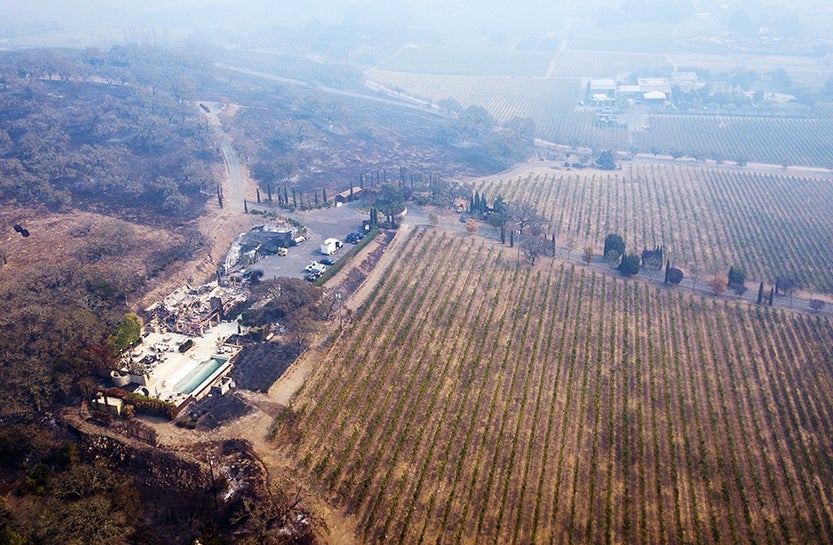
Yet despite those gruesome statistics, most of the region is just fine. The fires burned about 199,000 acres, or about 5.3% of the 3.7 million acres of land. The bulk of the area devastated by fire was rural or residential — all told, only three wineries were destroyed, and fewer than 10 others were damaged to the point of having to close. Of those that did close, all have reopened.
Now, of course, the challenge is twofold: Rebuilding but also combatting the misconception that the fires turned wine country into a barren swath of rubble.
"Are we as a region suffering? Absolutely," said Steve Ledson, owner of Ledson Winery, which had a close call with fires that tore through the Sonoma Valley. "The reality is that most of the tourist-facing portion of this entire area is back to business as usual. Now we just need people to visit."
What Happened
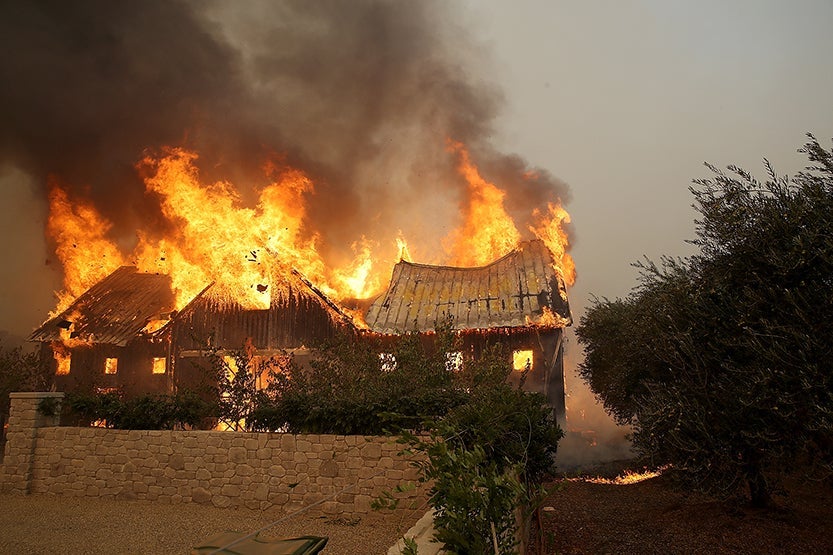
Nobody knows what started the fires, though many speculate the conflagrations began when 80 mph winds hurled tree branches at power lines, effectively yanking the lines out of transformers and creating sparks in the process. Theories have it that those same winds, coupled with dry underbrush, made the fires spread quickly — like a freight train, as Regusci put it.

There were five major fires across the three counties: fires on either side of the Napa Valley, a fire in the Sonoma Valley, a fire in the Mayacamas Mountains between Napa and Sonoma, and a fire in the Redwood Valley, up north.
"Year after year, you hear about fires happening elsewhere and you think, 'That's never going to happen here,'" said Angela Jackson, director of media relations at Visit Napa Valley. "Well it can, and it did, and it happened in a way that we'll be talking about forever."
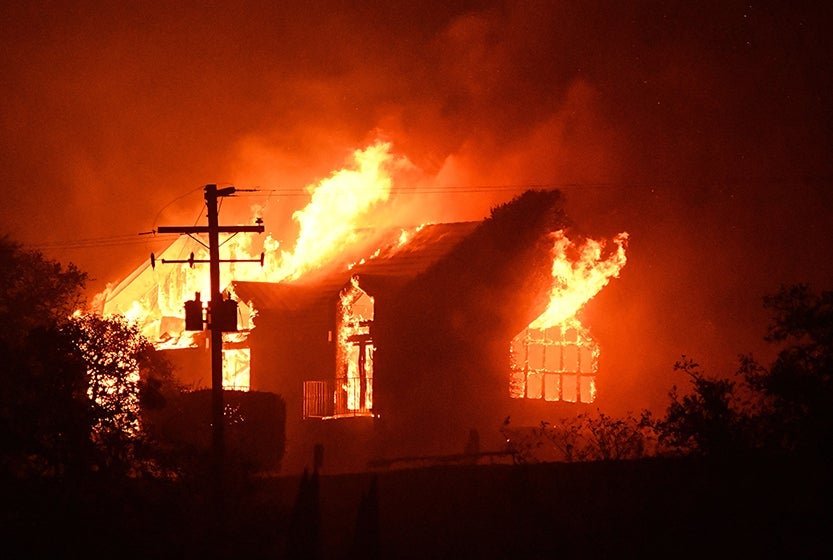
At first, because the flames moved into the area after 11:00pm on a Sunday night, information about the fires was spotty — this winery had burned; no, that one. Then, gradually, the facts became clear. Just as Jackson heard about the heroism at Regusci, she got bad news about one of Regusci's neighbors, Signorello, which was completely destroyed.
Around the same time, over in the Mayacamas, a separate fire whooshed through a high-end residential neighborhood called Fountaingrove, leveling most of the facilities buildings at Paradise Ridge Winery in the process.
Walter Byck, who co-owns Paradise Ridge, was in Copenhagen when the fire overtook his property, and awoke the next morning to see his daughter, Sonia Byck-Barwick, on CNN.
"I'm just glad our employees got out safely," Byck, 85, said. "Life is precious; buildings, we can rebuild."
The fire that destroyed Paradise Ridge continued down the mountain, overtook the Hilton Sonoma Wine Country and a historic round barn, hopped the 101 Freeway and obliterated Coffey Park, a residential area. Pictures from this burned-out neighborhood were blasted all over the world; these images, coupled with stories of the Redwood Valley fire that destroyed Frey Vineyards in mere minutes, are why so many people thought the flames had consumed everything.
Coming Together
During the fires, local restaurateurs and hoteliers helped as best they could, offering first responders and evacuees free meals and free or discounted accommodations until the situation calmed down.
For instance, Erik Johnson, chef and co-owner of The Trading Post restaurant in Cloverdale, cooked free meals for about 200 people at the local evacuation center. In Santa Rosa, the DoubleTree by Hilton Sonoma Wine Country offered bargain-basement rates and fed all guests for free.
"We're in the business of calming people," said Steve Jung, manager of the hotel. "If ever there was a time when people needed calming, it was [during these fires]."
Once evacuation orders were lifted, and once the fires were mostly contained, the community continued the teamwork, setting up charities and relief funds, and launching "free stores" where victims could "shop" for new and gently used items that others had donated.
Wineries backed these efforts in a big way. On the Sonoma side, Noah and Kelly Dorrance, owners of Reeve Wines, got friends to donate big-ticket travel prizes and held a raffle for fire relief, raising $220,000 along the way. In Napa, Honig Vineyards and Winery teamed up with a half-dozen other wineries to donate tasting fees from specific days to victims, raising tens of thousands of dollars.
Since then, a number of wineries have joined the cause. Among the dozens of wineries donating portions of sales to fire relief efforts: Trinchero Family Estates and Peju Province wineries in Napa, and Trattore Farms and Benovia Winery on the Sonoma side.
Restaurants and hotels have gotten involved in recent weeks, too.
Celebrity chefs Thomas Keller, Christopher Kostow and Kyle Connaughton teamed up to prepare a Dec. 2 dinner benefit, with ticket sales benefitting the Napa & Sonoma Relief fund. What's more, restaurants throughout wine country are participating in a fundraiser called ChefsGiving from Nov. 13 to 19. As part of this effort, they'll offer special menus, and all of the proceeds will benefit Tipping Point Emergency Relief Fund and Restaurants Care.
On a smaller scale, restaurants such as Campo Fina in Healdsburg and Compline in Napa are donating a certain percentage of proceeds from special benefit dinners to fire relief.
Among hotels, the Hotel Healdsburg and sister property h2hotel will donate 5% of every reservation to North Bay Fire Relief and the Community Foundation of Sonoma County's Resilience Fund, while Auberge du Soleil, a luxury resort in St. Helena, will match an optional guest donation of $5 per night through the end of the year to benefit the Napa Valley Community Foundation.
Michael Palmer, former general manager of the Meritage Inn and Spa, which offered standard rooms to first responders and evacuees for $99 following the fires, put this activism into perspective.
"We saw big groups and conventions cancel but we're trying to stay positive, stay involved," he said. "When people do start coming back to Napa and Sonoma, they're going to need places to stay, and we know we need to be ready."

The Consequences
Considering that the last of the fires was extinguished in late October, it's way too soon to get a sense of how quickly Napa, Sonoma and Mendocino counties will be able to rebuild.
Still, there undoubtedly will be some lingering effects.
For starters, the already competitive housing market is going to take a hit. Wine country was running low on housing supply before the fires — now that thousands of homes have been destroyed and locals need to wait to rebuild, the housing situation likely will get worse before it gets better, a sad reality that might impact people who work in the tourism industry.
Viticulturists also wonder how — or if — the fires will impact the taste of area wine. Surveys from the region immediately following the devastation indicated that wineries in all three counties completed roughly 90% of their respective harvests before the conflagrations began. That means that most of the fruit already had been crushed and fermented, reducing the likelihood of a smoky flavor, or smoke "taint."
Fred Swan, an instructor with the San Francisco Wine School, said the 2017 vintage still could have a certain degree of smoke taint — especially if wine had been fermenting in open-top tanks.
"There are so many variables; it's really going to be one of these things that you have to evaluate on a case-by-case basis," he said. Looking forward, Swan added that there's no telling the extent to which the fires may impact the 2018 vintage until buds sprout next year.
"We'll have to wait and see," he said.
Finally, of course, is how long it will take to rebuild the local infrastructure: how long it'll take to repave roads, splice new power, cable and telephone lines and rebuild schools and businesses.
On the surface, these last few realities might seem like they won't directly affect tourism. In truth, however, many of the people who will benefit from these improvements are the same people who work at wineries, hotels and restaurants. Just as the tragedy impacted everyone, so, too, will the recovery.
"This is the kind of situation that touches everyone," said Karissa Kruse, president of the Sonoma County Winegrowers and one of the people in Santa Rosa's Fountaingrove neighborhood who lost their homes. "We're in it together, and the only way we're going to get out of it is if we band together as a community, as well."
What You Can Do Now
That doesn't mean there's not a place for tourists; within the context of the challenges that await wine country, there are a number of ways visitors and fans of the region can assist in recovery efforts.
First, buy local wine. A good part of every dollar spent on Napa, Sonoma and Mendocino county wines goes straight to the vintners, meaning that buying it supports local wineries that might otherwise struggle to make ends meet. In particular, consider supporting the wineries that were destroyed in the fire: Paradise Ridge still has a tasting room on Highway 12 in Kenwood, and Frey's wines are available online.
"Every dollar people spend on our wine will help us rebuild that much faster," said Katrina Frey, one of the winery's co-owners. "This is one of those rare situations where people have the opportunity to help us by showing loyalty toward our wines and supporting us."
Another option: donate to charity. In the aftermath of the fires, about a dozen different charities sprang up — so many that it became difficult to navigate. Some options to consider include the Community Foundation of Sonoma County's Resilience Fund, the Redwood Credit Union's North Bay Fire Relief Fund and the Napa Valley Community Disaster Relief Fund. A fourth charity is the Santa Rosa Junior College Fire Relief Fund, which helps some of the 500 faculty, staff and students displaced from the region's largest two-year-school.
But the best way to help wine country's recovery is to visit. Stay in local hotels. Eat at local restaurants. Shop at local, family-owned stores. When you do, look beyond the charred hillsides and take in the undaunted, indomitable spirit of a region.
"At the end of the day, fires are part of nature, and nature is a huge part of what we in the wine business deal with every day," Jim Regusci said. "We still have beautiful days. We still have great wine. We still offer unbeatable luxury experiences. We just need people to come back."
TPG featured card

at Capital One's secure site
Terms & restrictions apply. See rates & fees.
| 5X miles | Earn 5X miles on hotels, vacation rentals and rental cars booked through Capital One Travel |
| 2X miles | Earn unlimited 2X miles on every purchase, every day |
Pros
- Stellar welcome offer of 75,000 miles after spending $4,000 on purchases in the first three months from account opening. Plus, a $250 Capital One Travel credit to use in your first cardholder year upon account opening.
- You'll earn 2 miles per dollar on every purchase, which means you won't have to worry about memorizing bonus categories
- Rewards are versatile and can be redeemed for a statement credit or transferred to Capital One’s transfer partners
Cons
- Highest bonus-earning categories only on travel booked via Capital One Travel
- LIMITED-TIME OFFER: Enjoy $250 to use on Capital One Travel in your first cardholder year, plus earn 75,000 bonus miles once you spend $4,000 on purchases within the first 3 months from account opening - that’s equal to $1,000 in travel
- Earn unlimited 2X miles on every purchase, every day
- Earn 5X miles on hotels, vacation rentals and rental cars booked through Capital One Travel
- Miles won't expire for the life of the account and there's no limit to how many you can earn
- Receive up to a $120 credit for Global Entry or TSA PreCheck®
- Use your miles to get reimbursed for any travel purchase—or redeem by booking a trip through Capital One Travel
- Enjoy a $50 experience credit and other premium benefits with every hotel and vacation rental booked from the Lifestyle Collection
- Transfer your miles to your choice of 15+ travel loyalty programs
- Top rated mobile app