So You Want to Learn to Fly? Here’s How I Got Started

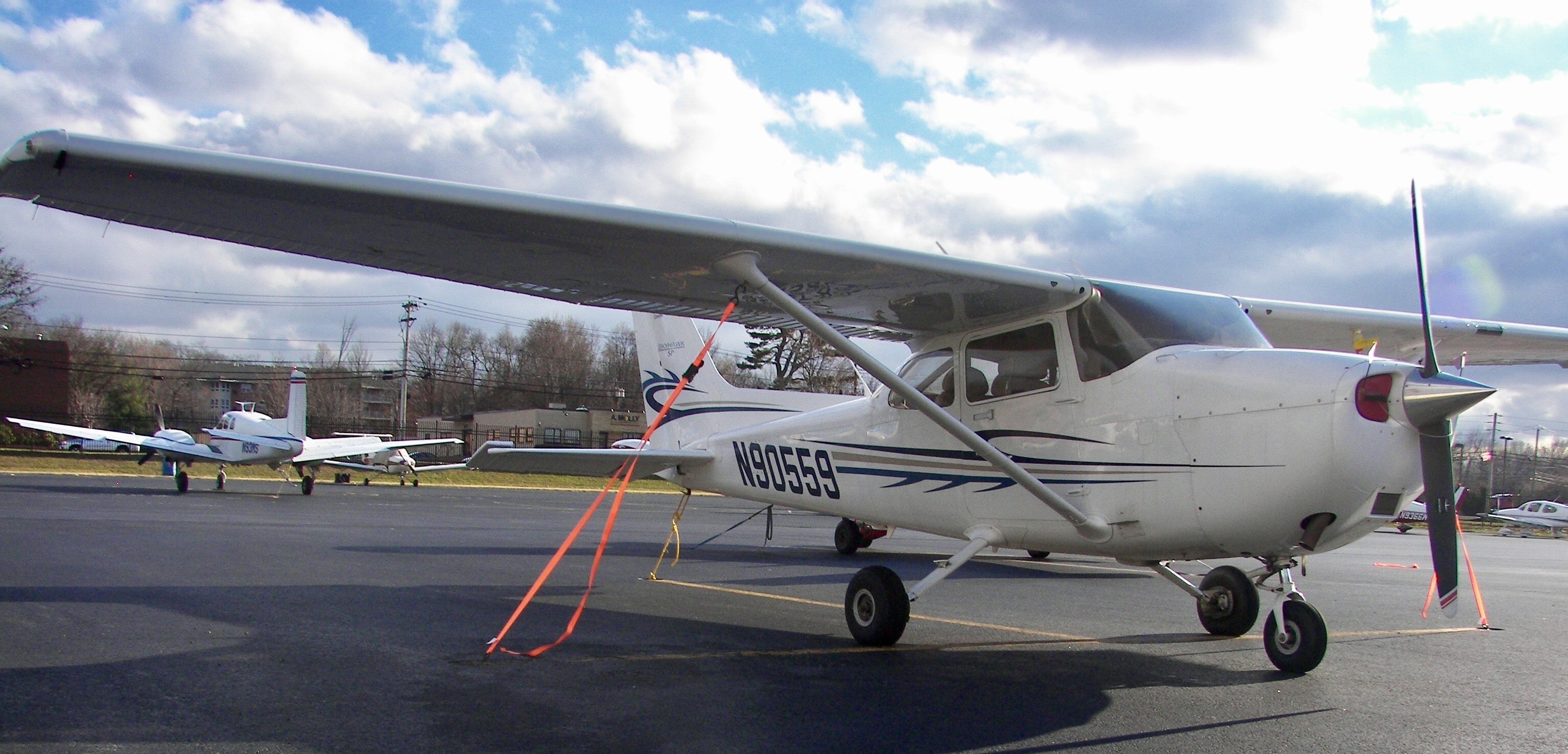
Shortly after my 30th birthday in April, I decided to get my toes wet by fulfilling a long-time dream of mine: learning to fly. Besides being obsessed with aviation and all things travel to begin with, I also just so happened to live in vicinity of a dozen airports and flight-training schools. I had all the tools in front of me and still made every excuse to do it "some day."
"Some day" finally came when I found a LivingSocial deal for a two-hour introductory flight lesson, which included one full hour of flying for $235 at a small airport only a few miles from home. Truthfully, the one thing that always made me put off pursuing the flying lessons to begin with was the commitment involved — in terms of finances and, of course, time and dedication. I wouldn't want to waste anyone's time before knowing if I would even enjoy flying to begin with.
The Introductory Flight Lesson
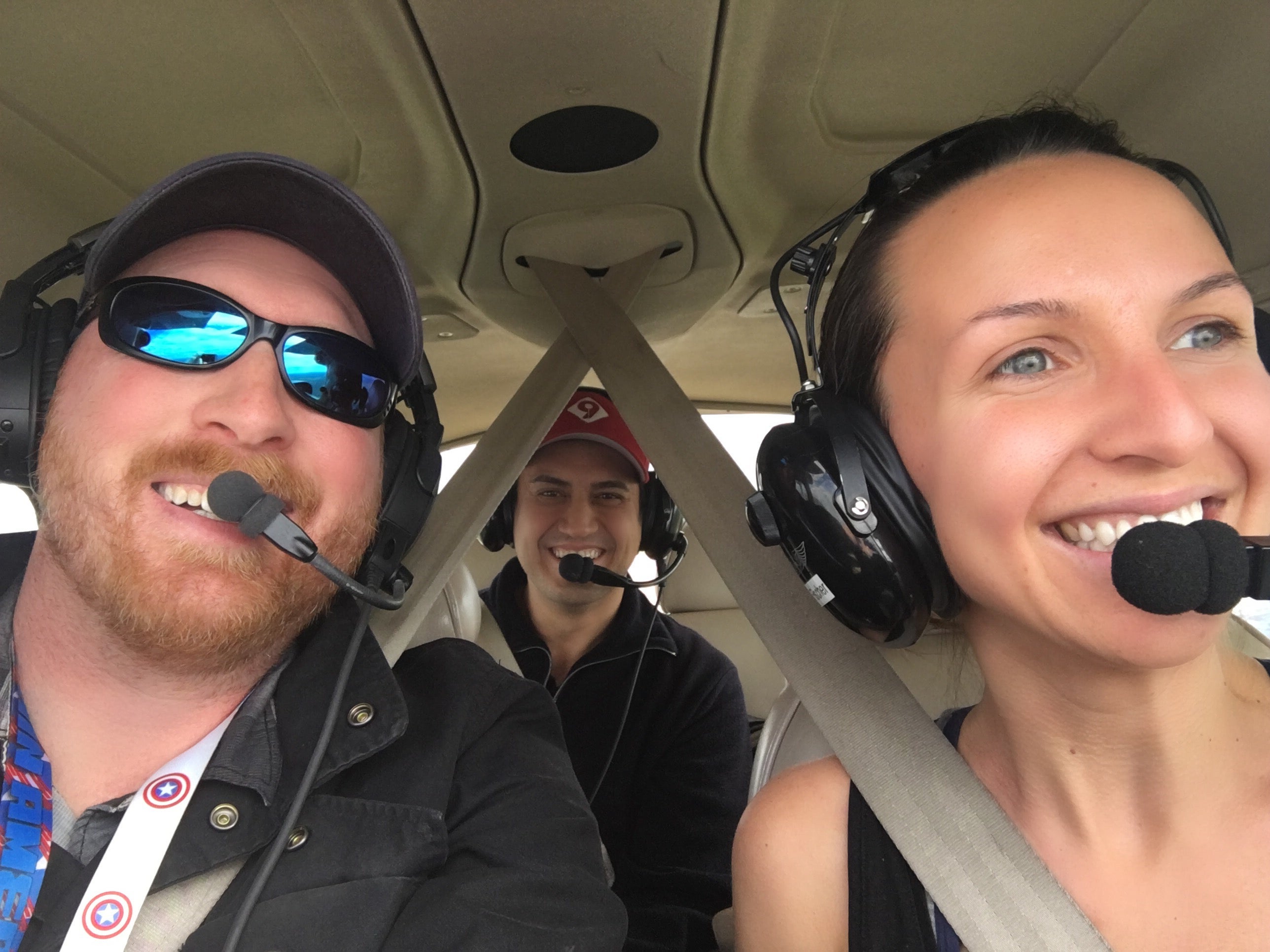
After four or five weather and wind-related reschedules, I finally had my lesson. I started off with a one-hour ground briefing, which covered aircraft pre-flight inspection, cockpit control familiarization and basic in-flight aircraft control. The hour zipped by and soon it was time for me to pilot a Cessna 172 G1000.
Was I really going to fly a plane after just one hour of instruction? What about time practicing in a simulator? (Come on, not even five minutes?) My adrenaline was pumping and I was both nervous and stoked, but relieved to know that I had a pilot with me to save the day — and to help me take off and land.
Once the plane was in my control, to say the feeling of flying is incredible is an understatement. It was simply a magical, invigorating experience from start to finish. After a few shaky minutes on my own, I felt at ease and got the hang of it. We kept a cruising altitude of 2,500 feet knowing that the big commercial jets would be coming in low around 3,000 feet as they made their decent into surrounding airports (specifically EWR, LGA and JFK). From an aviation geek's perspective, it was so awesome to essentially "plane spot" from the sky!
My pilot Dave was pleasantly surprised by how comfortable I became, so he decided to have fun by showing me what a G1, G2 — and ultimately a G0 — felt like. Luckily, I'm a bit of an adrenaline junkie, and it was an awesome treat.

Before I knew it, it was time to start heading back to the runway and we were safely on the ground in no time. The experience definitely piqued my interest to pursue more training and to obtain pilot certification. While I don't have any immediate plans to jump into a career of piloting, pursuing a passion and learning a new skills is a fun way to keep life fresh.
What It Takes to Get a Pilot License
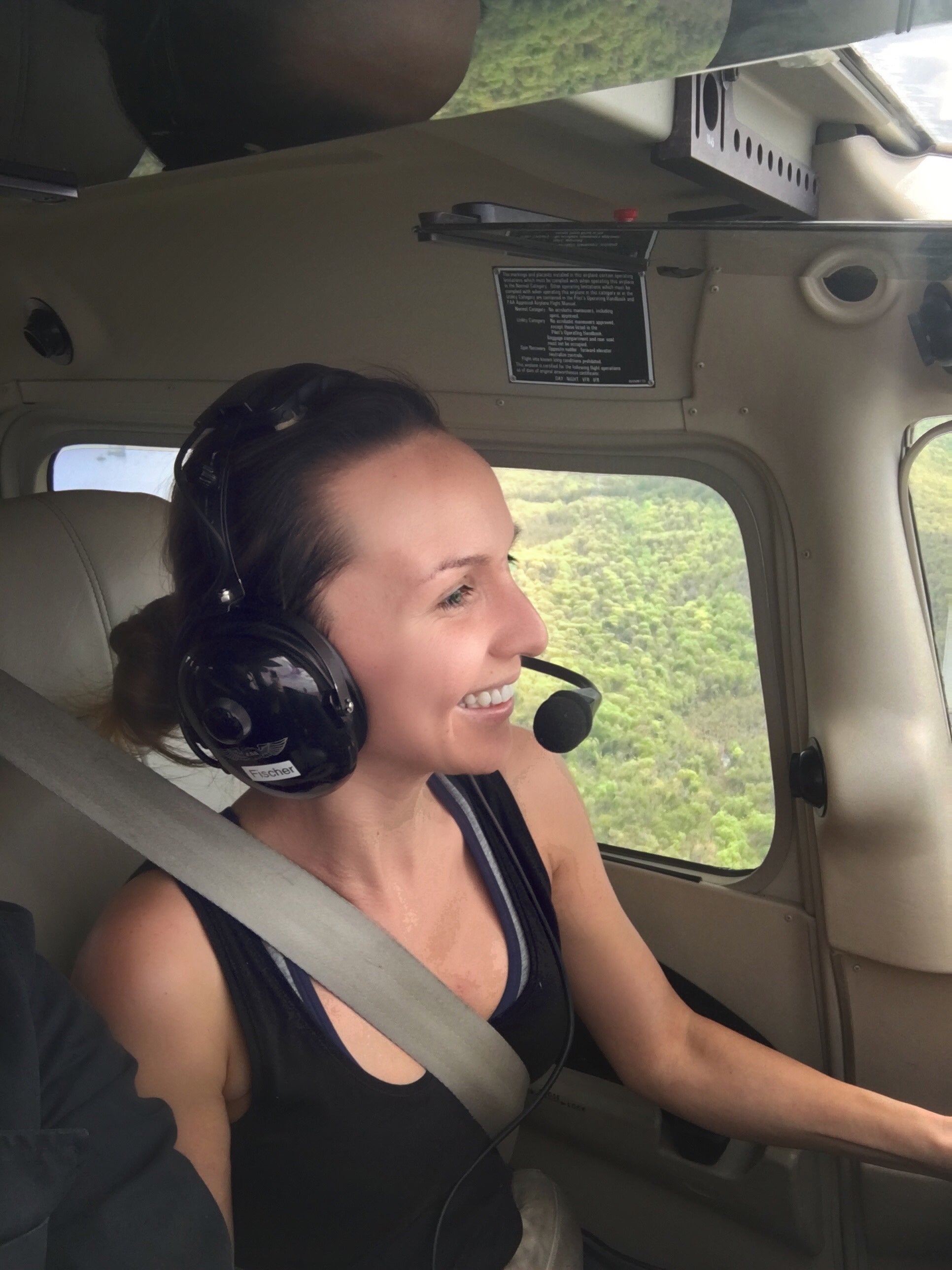
Introductory flight lessons allow aspiring aviators to have a firsthand experience of flying an airplane. It still amazes me that from the moment you strap yourself into the seat and get ready to take off, the dream of flying truly becomes a realty.
During a typical first lesson, you'll ride with a certified flight instructor will who conduct the take-off and landing (phew), but once airborne, it's typically all on you. During my lesson, as soon as we hit an altitude of 800 feet, the plane was in my hands and it was my job to keep the plane straight and level and make turns, climbs and descents. I also learned that generally, by lesson three or four, you can take off on your own and by lesson 20, you can "attempt" a landing.
To obtain a private pilot certificate in the United States, you must be at least 17 years old and complete 35 flight hours in an FAA part 141-approved school, at minimum. A non-approved school will require 40 hours; however, from a national average standpoint, the typical student pilot tends to complete about 70 hours of training, regardless of the type of school, to earn a private-pilot license.
As with any type of training, the more you put into it, the faster you will complete your goal. In addition to the hours in the plane, you'll be required to pass the FAA private pilot written examination — a 60-question multiple choice test — and a check-ride with an FAA or FAA Designated Examiner. There are also physical health requirements, too. If you're under 40, you must pass a third-class medical exam with an FAA-approved doctor every five years; those who are over 40 must pass every two years.
Bottom Line
Sometimes fulfilling your passions starts with the smallest step. It was great that I was able to buy a LivingSocial deal that had me flying an airplane in an hour, giving me a taste of what it would be like to continue learning — without making a huge commitment. It's smart to take a trial run before investing the thousands of dollars required for training to obtain your pilot license.
Have you ever taken flight lessons or have you obtained your pilot license? Share your stories with us, below.
Angelina Aucello covers family travel for TPG and writes the popular blog, Angelina Travels. Follow along with all her travel adventures on Twitter and Instagram.
All images by the author.
TPG featured card

at Capital One's secure site
Terms & restrictions apply. See rates & fees.
| 5X miles | Earn 5X miles on hotels, vacation rentals and rental cars booked through Capital One Travel |
| 2X miles | Earn unlimited 2X miles on every purchase, every day |
Pros
- Stellar welcome offer of 75,000 miles after spending $4,000 on purchases in the first three months from account opening. Plus, a $250 Capital One Travel credit to use in your first cardholder year upon account opening.
- You'll earn 2 miles per dollar on every purchase, which means you won't have to worry about memorizing bonus categories
- Rewards are versatile and can be redeemed for a statement credit or transferred to Capital One’s transfer partners
Cons
- Highest bonus-earning categories only on travel booked via Capital One Travel
- LIMITED-TIME OFFER: Enjoy $250 to use on Capital One Travel in your first cardholder year, plus earn 75,000 bonus miles once you spend $4,000 on purchases within the first 3 months from account opening - that’s equal to $1,000 in travel
- Earn unlimited 2X miles on every purchase, every day
- Earn 5X miles on hotels, vacation rentals and rental cars booked through Capital One Travel
- Miles won't expire for the life of the account and there's no limit to how many you can earn
- Receive up to a $120 credit for Global Entry or TSA PreCheck®
- Use your miles to get reimbursed for any travel purchase—or redeem by booking a trip through Capital One Travel
- Enjoy a $50 experience credit and other premium benefits with every hotel and vacation rental booked from the Lifestyle Collection
- Transfer your miles to your choice of 15+ travel loyalty programs
- Top rated mobile app