What to do when your ears won't pop on a plane

Editor's note: This is a recurring post, regularly updated with new information.
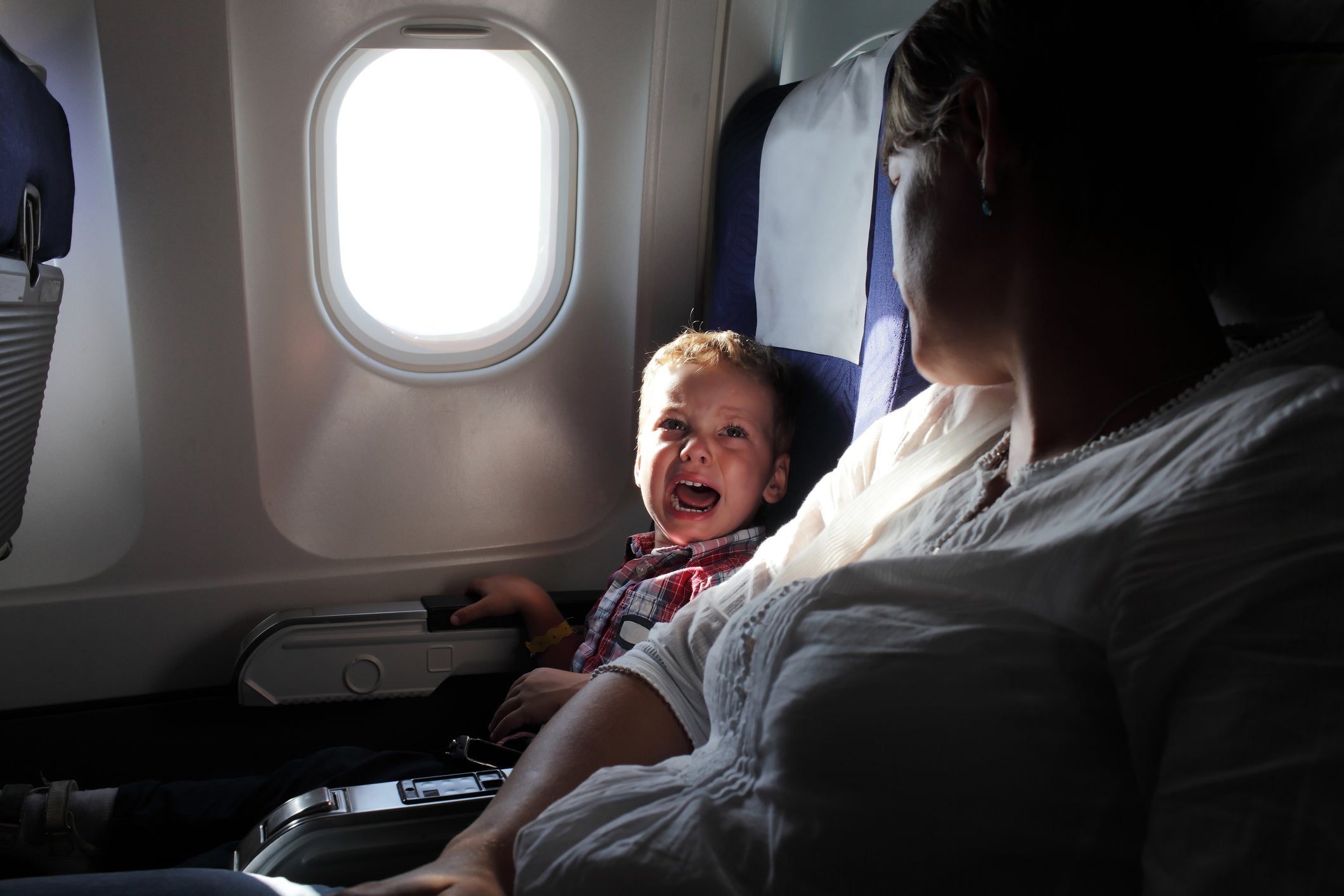
The pilot announces it's time to strap in for landing. The plane begins to descend and, sure enough, the pressure starts building in your ears. And if you're traveling with a baby or toddler, here comes the wail of pain.
Then you land, start down the aisle and your ears pop — or not. Sometimes they don't pop for hours or even days. What's going on?
How air travel affects our ears
It's all about the Eustachian tube, a cocktail-straw-sized passage that connects the middle ear, which contains the eardrum, to the nose and back of the throat, according to Dr. Ana Kim, an otolaryngologist and neurotologist at ColumbiaDoctors Midtown and associate professor of otolaryngology and head and neck surgery at Columbia University Medical Center in New York. The tube has a significant role in equalizing pressure on both sides of the eardrum.
"When you're flying, especially during landing and takeoff, there's a rapid change in the barometric pressure, which causes a collapse of the Eustachian tubes and interferes with the normal airflow from the nose to the ear," says Kim. "When the Eustachian tube collapses, it interferes with airflow and there's not sufficient space around the eardrum."
That popping sensation you feel is the Eustachian tube opening up again. But as we all know, that doesn't always happen immediately.
What to do when your ears won't pop
Your goal is to move the muscles of your mouth to open the airway. Swallowing and yawning (even fake yawning, with your mouth open wide) are the first things to try, and you can also chew gum or suck on candy. "When you move the muscles of your mouth and throat, it moves the eardrum, which is made of a cellophane-like material," says Kim. "And when you move the eardrum, you're making more air space."
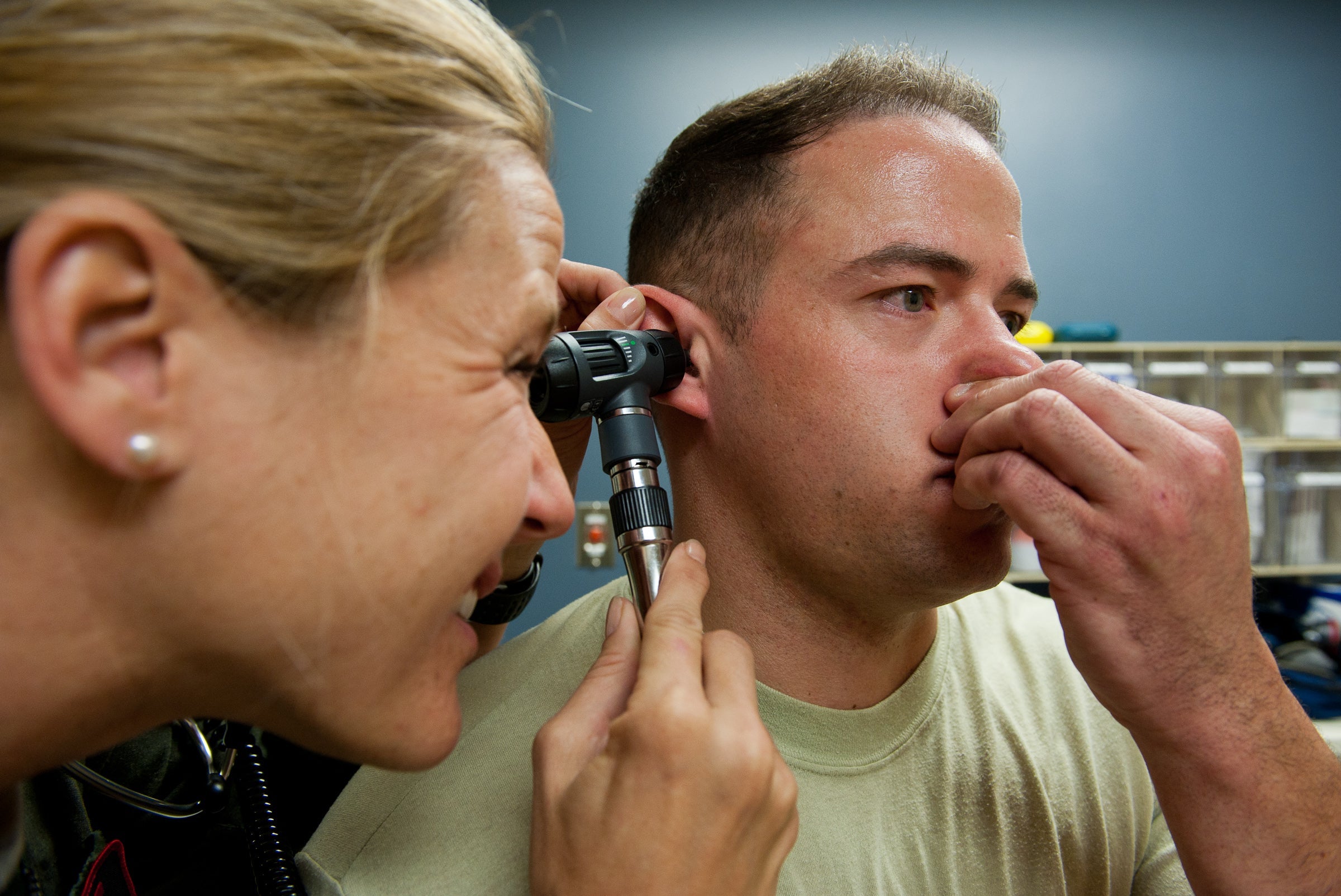
But the most effective maneuver is to take a deep breath and go through the motion of expelling the air while you hold your nostrils tight and keep your mouth closed, a technique called the Valsalva maneuver.
Of course, these instructions aren't going to work for a baby or toddler, but you can encourage them to swallow by nursing or offering a bottle or pacifier. With older toddlers and preschoolers, you can try encouraging them to yawn, doing so yourself in exaggerated fashion so they can copy you.

When your ears feel blocked, it's easy to think that removing excessive earwax can help. But be careful — when you use a cotton swab or other method to remove earwax, you risk actually pushing it farther in and packing it harder.
My ears still won't pop — now what?
In most cases, there's nothing serious to worry about and you can safely wait to see if the problem clears up on its own. "In general I would wait a couple of days, depending on the level of discomfort. But if you're in pain or the problem is affecting your hearing, I would go (to the doctor) right away," says Kim. "Your doctor can provide medications such as steroids, which are powerful anti-inflammatories, and can make sure that your hearing is OK." This is important, she says, because inflammation can cause long-term hearing loss.
Sometimes the problem involves fluid buildup, but that's likely the result of having a cold or infection, not just from the airplane trip itself. If you're experiencing fluid that's unable to drain on its own, your doctor can do an in-office procedure that involves making a small incision and vacuuming fluid from the middle ear. In some cases, tubes are then left in to drain. "The cut closes in a day, but if we want continuous airflow to dry up the fluid, we put in temporary tubes to keep the air moving," Kim says.
How to prevent future problems
To remind yourself to swallow during takeoff and landing, travel with gum or candy and pop them in as soon as you feel the pressure begin to change. When flying with a baby or toddler, give them a bottle or pacifier. Nursing babies and toddlers works well too. If you don't want to give small children gum or candy, try a snack like a fruit leather that involves prolonged sucking and swallowing.
It can also help to use a long-acting decongestant like Afrin or Sudafed. Start using it a half-hour before takeoff or landing.
Beware of conditions that can predispose you to have problems with ear-popping. "Someone who gets frequent sinus infections can be more at risk for this because if the lining of the nose is inflamed and swollen, it can interfere with airflow," Kim says.
Likewise, having a cold or being stuffed up because of allergies can leave you susceptible as well: "The ear is actually a very sensitive gauge of what's happening in the nose," she says. In these cases, you definitely want to take a decongestant before you fly.
It's a different situation, though, in the case of ear infection which, as moms know, babies and toddlers are particularly susceptible to. "If you or your child or baby has an ear infection, we advise you not to fly," says Kim.
Bottom line
In most cases, an ear that fails to pop is just a routine travel annoyance that can be handled with patience. Have you or your children encountered this problem after flying? What helped? Let us know in the comments.
TPG featured card
at American Express's secure site
Terms & restrictions apply. See rates & fees.
| 4X | Earn 4X Membership Rewards® points per dollar spent on purchases at restaurants worldwide, on up to $50,000 in purchases per calendar year, then 1X points for the rest of the year. |
| 4X | Earn 4X Membership Rewards® points per dollar spent at US supermarkets, on up to $25,000 in purchases per calendar year, then 1X points for the rest of the year. |
| 5X | Earn 5X Membership Rewards® points on prepaid hotel stays booked through AmexTravel.com or the Amex Travel App™. |
| 3X | Earn 3X Membership Rewards® points on flights booked through AmexTravel.com, the Amex Travel App™, or purchased directly from airlines. |
| 2X | Earn 2X Membership Rewards® points on prepaid car rentals booked through AmexTravel.com or the Amex Travel App™ and cruises booked and paid through AmexTravel.com. |
| 1X | Earn 1X Membership Rewards® point per dollar spent on all other eligible purchases. |
Pros
- Valuable dining and food-related credits
- Flexible rewards with airline and hotel transfer partners
- Multiple travel and purchase protections
- No foreign transaction fees
- Access to Amex Offers for additional savings (enrollment required)
Cons
- Not as useful for those living outside the U.S.
- Some may have trouble using Uber and other dining credits
- You may be eligible for as high as 100,000 Membership Rewards® Points after you spend $8,000 in eligible purchases on your new Card in your first 6 months of Card Membership. Welcome offers vary and you may not be eligible for an offer. Apply to know if you’re approved and find out your exact welcome offer amount – all with no credit score impact. If you’re approved and choose to accept the Card, your score may be impacted.
- Earn 4X Membership Rewards® points per dollar spent on purchases at restaurants worldwide, on up to $50,000 in purchases per calendar year, then 1X points for the rest of the year.
- Earn 4X Membership Rewards® points per dollar spent at US supermarkets, on up to $25,000 in purchases per calendar year, then 1X points for the rest of the year.
- Earn 5X Membership Rewards® points on prepaid hotel stays booked through AmexTravel.com or the Amex Travel App™.
- Earn 3X Membership Rewards® points on flights booked through AmexTravel.com, the Amex Travel App™, or purchased directly from airlines.
- Earn 2X Membership Rewards® points on prepaid car rentals booked through AmexTravel.com or the Amex Travel App™ and cruises booked and paid through AmexTravel.com.
- Earn 1X Membership Rewards® point per dollar spent on all other eligible purchases.
- Pay It® lets you tap in the American Express® App to quickly pay for small purchase amounts throughout the month and still earn rewards the way you usually do. Plan It® gives you the option to split up big purchases into equal monthly payments with a fixed fee. You’ll know upfront exactly how much you’ll pay.
- $120 Dining Credit: Earn up to a total of $10 in statement credits monthly when you pay with the Gold Card at Grubhub (including Seamless), Buffalo Wild Wings, Five Guys, The Cheesecake Factory, and Wonder. This can be an annual savings of up to $120. Enrollment required.
- $100 Resy Credit: Get up to $100 in statement credits each calendar year at over 10,000 qualifying U.S. Resy restaurants after you pay for eligible purchases with the American Express® Gold Card. That’s up to $50 in statement credits semi-annually. Enrollment required.
- $84 Dunkin' Credit: Earn up to $7 in monthly statement credits after you pay with the American Express® Gold Card at U.S. Dunkin’ locations. Enrollment required.
- $120 Uber Cash on Gold: Enjoy up to $120 in Uber Cash annually with your Gold Card. Just add your Card to your Uber account and you'll get $10 in Uber Cash each month to use on orders and rides in the U.S. when you select an Amex Card for your transaction.
- Enjoy complimentary Hertz Five Star® Status benefits like skipping the counter at select locations, adding an additional driver at no additional cost*, and vehicle upgrades**. Benefit enrollment and Hertz Gold+ registration are required. *Additional drivers must meet standard rental qualifications and must be a spouse or domestic partner to qualify as complimentary. Other additional drivers subject to fees. **Benefits are subject to availability and vary by location. Additional Hertz program Terms and Conditions including age restrictions apply.
- Book two nights or more with The Hotel Collection through AmexTravel.com or the Amex Travel App™ and receive a $100* credit towards eligible charges at over 1,400 upscale hotels worldwide. *Eligible charges vary by property.
- Book your travel through the Amex Travel App™ with added peace of mind – backed by American Express® service and support. Only for American Express® Card Members.
- Whenever you need us, we're here. Our Member Services team will ensure you are taken care of. From lost Card replacement to statement questions, we are available to help 24/7.
- No Foreign Transaction Fees.
- Annual Fee is $325.
- Terms Apply.