The Points Guy believes that credit cards can transform lives, helping you leverage everyday spending for cash back or travel experiences that might otherwise be out of reach. That's why we publish a variety of editorial content and card comparisons: to help you find a great card to turn your goals into reality.
Our site may earn compensation when a customer clicks on a link, when an application is approved, or when an account is opened with our partners, and this may impact how or where these products appear. While we don't cover all available credit cards, our editorial team creates and maintains all of the analysis of these cards, and our content is not influenced nor subject to review by any credit card company, bank or partner prior to (or after) publication. Please view our advertising policy and product review methodology for more information.
Advertiser disclosure
The Points Guy believes that credit cards can transform lives, helping you leverage everyday spending for cash back or travel experiences that might otherwise be out of reach. That's why we publish a variety of editorial content and card comparisons: to help you find a great card to turn your goals into reality.
Our site may earn compensation when a customer clicks on a link, when an application is approved, or when an account is opened with our partners, and this may impact how or where these products appear. While we don't cover all available credit cards, our editorial team creates and maintains all of the analysis of these cards, and our content is not influenced nor subject to review by any credit card company, bank or partner prior to (or after) publication. Please view our advertising policy and product review methodology for more information.
The cards we feature here are from partners who compensate us when you are approved through our site, and this may impact how or where these products appear. We don't cover all available credit cards, but our analysis, reviews, and opinions are entirely from our editorial team. Terms apply to the offers listed on this page. Please view our advertising policy and product review methodology for more information.Editorial disclaimer: Opinions expressed here are the author's alone, not those of any bank, credit card issuer, airline or hotel chain, and have not been reviewed, approved or otherwise endorsed by any of these entities.
Comments
By commenting, you agree to our Community Guidelines to help create a positive space for conversation. The responses below are not provided or commissioned by the bank advertiser, our partners, or The Points Guy (“TPG”). They have not been reviewed, approved, or otherwise endorsed by any of these parties. All responses are submitted by individual contributors, and neither the bank advertiser, our partners, nor TPG are responsible for ensuring that all posts and/or questions are answered.
Related stories
Quick summary
The article provides an in-depth guide to Amtrak's extensive U.S. rail network, highlighting its 33 routes across 46 states and select Canadian cities.
Train travel offers unique benefits such as scenic views, convenience and avoidance of airport hassles, making the journey part of the adventure.
Major Amtrak routes are described, including high-speed, scenic and regional options connecting over 500 destinations.
Tips are included for maximizing rewards when booking train travel, with an overview of earning and redeeming points through loyalty programs.
What to consider
Some offers mentioned in the article are no longer available, so current deals may differ.
Amtrak's network is divided into six regions and includes both daily and limited-frequency routes, so schedules and availability vary.
Rewards can be earned and redeemed through Amtrak's loyalty program or fixed-value points programs, but earning rates and redemption options may differ by program.
What you'll miss from the article
A detailed breakdown of each Amtrak route, plus expert advice on using loyalty programs to maximize value for train travel.
Generated by AI with support from our editorial team.
Update: Some offers mentioned below are no longer available. View the current offers here.
All aboard! For the entire month of September at The Points Guy, we'll be exploring the world of train travel with reviews, features, deals and tips for maximizing your trip by rail.
When it comes to getting from point A to point B, most travelers choose to either drive or fly.
It's easy to overlook train travel as a viable option in the U.S. because, in today's hectic world, most people opt for efficiency above all else. But there's something to be said about the benefits of traveling by train: being able to fully enjoy the scenery along the way; not having to stop for food or for bathroom breaks; and never needing to worry about those dreaded TSA lines, to name a few.
And though train travel is hardly as popular in the U.S. as it is abroad, in say Europe or Japan, you may be closer to a train than you think.
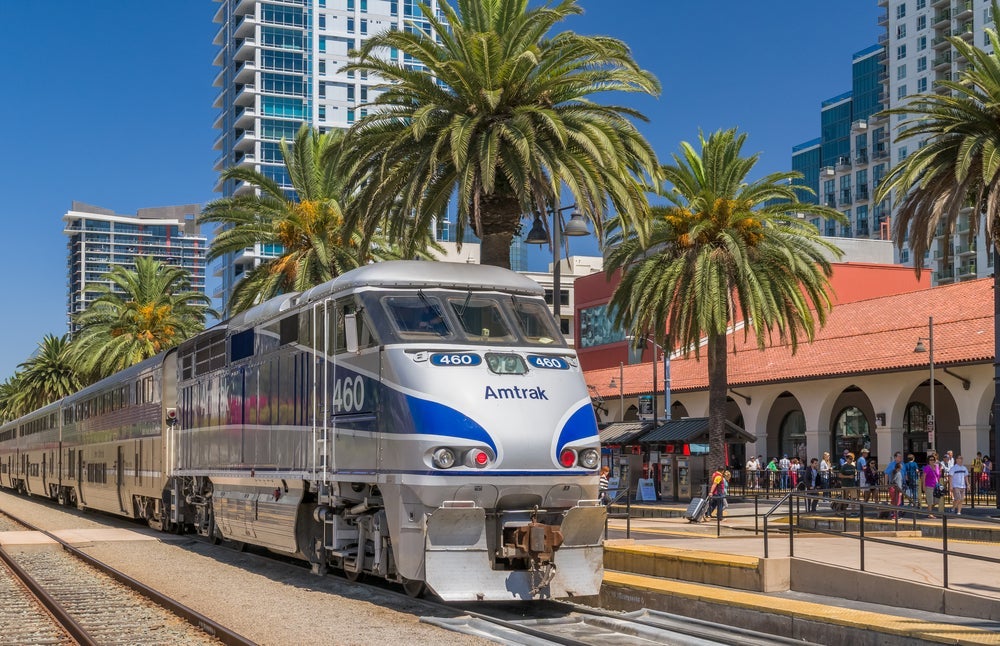
Established in 1970 by the Congressional Rail Passenger Service Act, Amtrak consolidated the existing passenger railroads in the US into one. At the time, they operated 21 routes across 43 states. Since then, they've grown to serve 33 routes (two of which made our list of the most scenic train routes on earth) across 46 different states and a handful of cities in Canada, too.
Photo courtesy of Amtrak
It's a more than 21,000 mile system that runs every which way, from north to south, east to west and to lots of destinations in between. The network is split into six regions: California, Midwest, South, Northeast, Northwest and West. And it connects over 500 destinations, including big cities like Boston, Chicago, Las Angeles, Miami, New York, Portland, Salt Lake City, Seattle, Washington, D.C. and more.
On a train trip, the journey is actually part of the adventure. So, to help you get more acquainted with train travel, we've put together a guide to Amtrak's extensive network, along with tips for earning and using rewards for Amtrak travel.
Amtrak routes
Acela
The higher speed Acela, which actually has reliable Wi-Fi, shuttles business travelers between Boston and New Haven, New York City, Philadelphia, Baltimore and Washington, D.C.
Adirondack
The Adirondack runs once daily in both directions between Montreal and New York City, with major stops in Westport, Saratoga Springs and Albany.
Amtrak Cascades
Connects Vancouver, British Columbia with Seattle, Tacoma, Portland and Eugene.
Auto Train
The only one of its kind in the US, travelers can take their cars with them from Lorton, Virginia to Sanford, Florida, near Orlando-area attractions.
California Zephyr
Operates daily routes between Chicago, Omaha, Denver, Salt Lake City and Emeryville, in the San Francisco Bay Area. The more than 51-hour trip passes through the Rockies and the Sierra Nevadas, making it one of Amtrak's most famous routes.
Capitol Corridor
Multiple daily departures connect the Sacramento and Bay areas. The Capitol Corridor runs between Auburn, Sacramento, Emeryville (in the San Francisco Bay Area), Oakland and San Jose.
Capitol Limited
Following the historic B&O line, the Capitol Limited runs daily between Washington, D.C. and Chicago with stops in major cities such as Pittsburgh, Cleveland, Toledo and South Bend.
Cardinal
Operating three days a week, this Amtrak route connects New York City and Chicago with major stops including Washington, D.C., Charleston, West Virginia, Cincinnati and Indianapolis.
Carolinian / Piedmont
Actually considered two routes, the Piedmont connects Charlotte and Raleigh, in North Carolina. The Carolinian route extends the service along the East Coat to New York City with stops in Richmond, Philadelphia and Washington, D.C.
City of New Orleans
This route covers 900 miles from Chicago to New Orleans, with stops in Champaign/Urbana, Carbondale, Memphis and Jackson.
Coast Starlight
Linking some of the most prominent cities on the West Coast, the 35-hour-long daily route links Seattle and Los Angeles via Tacoma, Portland, Sacramento and the San Francisco area.
Crescent
Connects New York City, Washington, D.C., Charlottesville, Charlotte, Atlanta, Birmingham and New Orleans.
Downeaster
Five daily round-trips connect Brunswick, Maine and Boston via Freeport, Portland and Saco in Maine, and Exeter and Dover in New Hampshire.
Empire Builder
Follow along major sections of the Lewis and Clark trail from Chicago to Portland/Seattle with stops in Milwaukee, St. Paul/Minneapolis and Spokane.
Connects Niagara Falls, Buffalo, Rochester, Syracuse, Albany and New York City.
Ethan Allen Express
This daily route from Rutland, Vermont to New York City glides through upstate New York with stops in Albany and Saratoga Springs.
Heartland Flyer
This daily route runs from Oklahoma City to Fort Worth, Texas.
Hiawatha
From Monday through Saturday, 14 daily trains fly between Milwaukee and Chicago. A dozen operate on Sundays.
Illinois Service
There are 28 downstate cities on the Illinois Service schedule from Chicago to Quincy / St. Louis / Carbondale.
Keystone Service
Traverse the Pennsylvania Corridor on multiple daily departure between New York City and Harrisburg, with stops in Downingtown, Lancaster and Philadelphia.
Lake Shore Limited
Follow the shorelines of Lake Michigan, the Erie Canal and the Mohawk River from New York/Boston to Chicago.
Maple Leaf
Running daily across the border, the Maple Leaf connects Toronto with Niagara Falls, Syracuse, Albany and New York City.
Michigan Services
Includes the Pere Marquette (Chicago to Grand Rapids); the Blue Water (Chicago to Port Huron) and the Wolverine (Chicago to Detroit).
Missouri River Runner
Connects St. Louis and Kansas City, Missouri via Sedalia, Independence and Jefferson City.
Northeast Regional
Connects major downtown cities along the Northeast Corridor, from Boston, Massachusetts to Providence, Rhode Island; Hartford, New Haven and Bridgeport, Connecticut; New York City, Newark, New Jersey; Philadelphia, Wilmington, Delaware; and Washington, D.C.
Pacific Surfliner
Hug the coast and skip the traffic between San Luis Obispo to Santa Barbara, Los Angeles, Anaheim and San Diego.
Pennsylvanian
Get from New York City to Pittsburgh with stops in Philadelphia, Lancaster, Harrisburg and Altoona.
Multiple daily departures run between the San Francisco Bay Area and Sacramento to Bakersfield/Southern California.
Silver Service / Palmetto
Ride the Silver Star (limited meal service) and Silver Meteor (traditional dining car meals) between New York City and Tampa/Miami.
Southwest Chief
Explore the American West from Chicago to Los Angeles via Kansas City, Missouri; Albuquerque, New Mexico; and Flagstaff, Arizona.
Sunset Limited
Amtrak's southernmost route connects New Orleans to Houston, San Antonio and El Paso, Texas; Tucson, Arizona; and Los Angeles, California. The train runs three days a week.
Texas Eagle
The Texas Eagle operates from Chicago to San Antonio (over 32 hours) and operates daily service. The connection from San Antonio to Los Angeles on the Sunset Limited operates three times per week.
Vermonter
Popular with snow bunnies, the Vermonter connects St. Albans - Essex Junction (Burlington) to Washington, D.C. via New York City, Philadelphia and other major East Coast cities.
Earning and using rewards for Amtrak travel
If you're planning an Amtrak trip, be sure to use a credit card that earns additional points for train ticket purchases. The Capital One Venture Rewards Credit Card and Chase Sapphire Preferred Card both earn 2x points/miles on train trips, while the Chase Sapphire Reserve and Citi Premier® Card both earn 3x points on travel.
For travelers who put in serious miles on U.S. trains, consider one of the best credit cards for train tickets: the Amtrak Guest Rewards World Mastercard. It offers 3x points for Amtrak travel, including onboard purchases, and 2x points on all other travel purchases.
By commenting, you agree to our Community Guidelines to help create a positive space for conversation. The responses below are not provided or commissioned by the bank advertiser, our partners, or The Points Guy (“TPG”). They have not been reviewed, approved, or otherwise endorsed by any of these parties. All responses are submitted by individual contributors, and neither the bank advertiser, our partners, nor TPG are responsible for ensuring that all posts and/or questions are answered.