Have a Look Inside the Airbus A321LR Test Aircraft

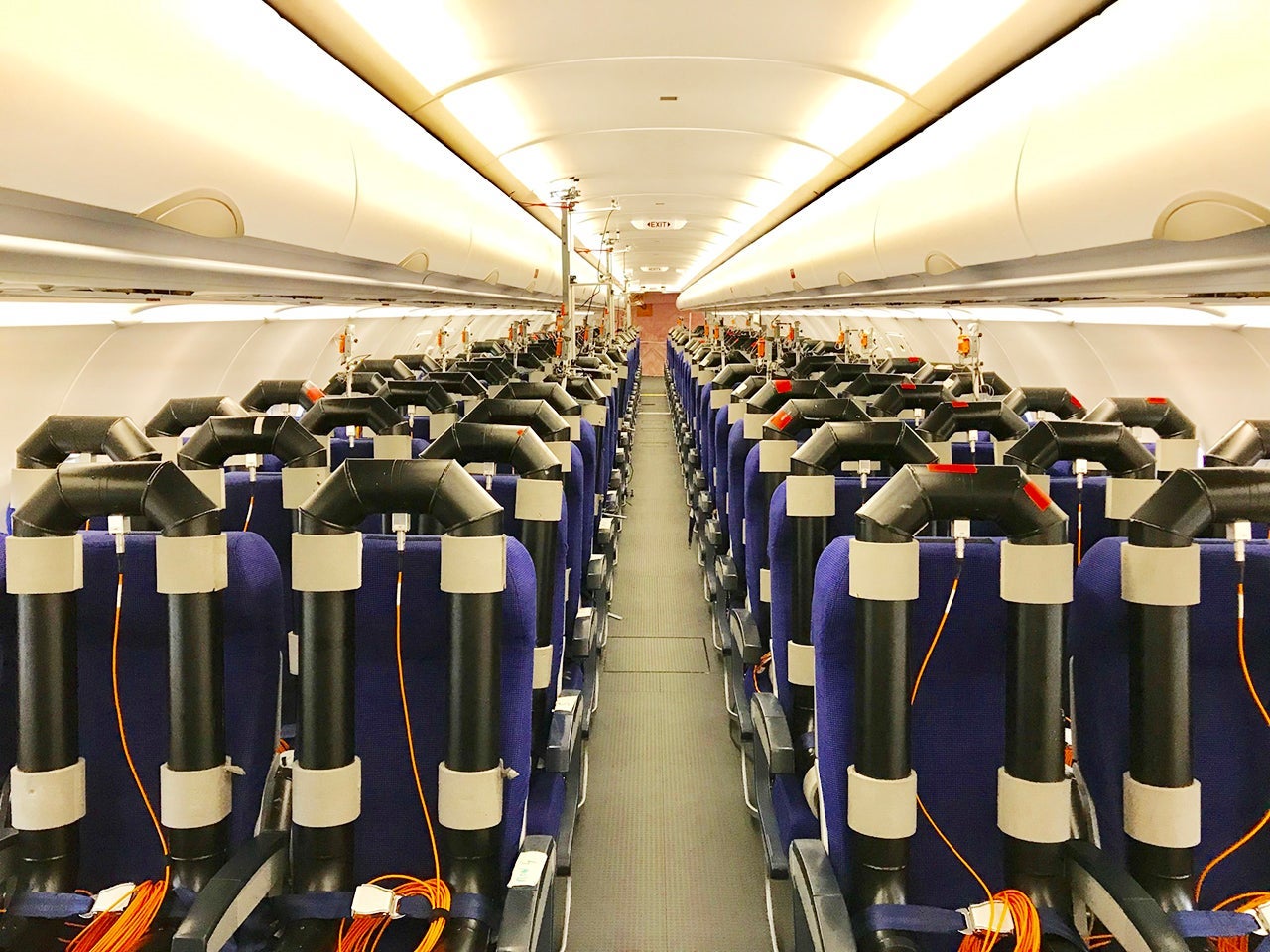
The A321LR, Airbus' newest single-aisle jet, has just made its first flight. Before entering service, it's going to go through a cycle of rigorous tests to explore how it fares in any conceivable flight situation. Airbus tells us that the jet will visit the US in the coming weeks in the course of its flight tests.
The new jet has one big selling point: as its LR moniker indicates, it's a long range plane, meant to take up to 240 people on routes up to 4,000 miles. This used to be the province of twin-aisle, heavy jets only, but the A321LR can go far without the added costs of a much bigger airplane.
But before doing any of that in commercial service, it needs to be deemed safe, after a campaign of tests. The A321LR is fundamentally an A321, but with a different door layout and an extra fuel tank, plus several improvements to extend its range.
TPG got a chance to board the first and so far only LR flying in Hamburg, at the Finkenwerder airport (XFW) where Airbus has one of its two European assembly plants. Here it is, sitting on the ramp by an enormous A380 from the latest batch about to be delivered to Singapore Airlines.
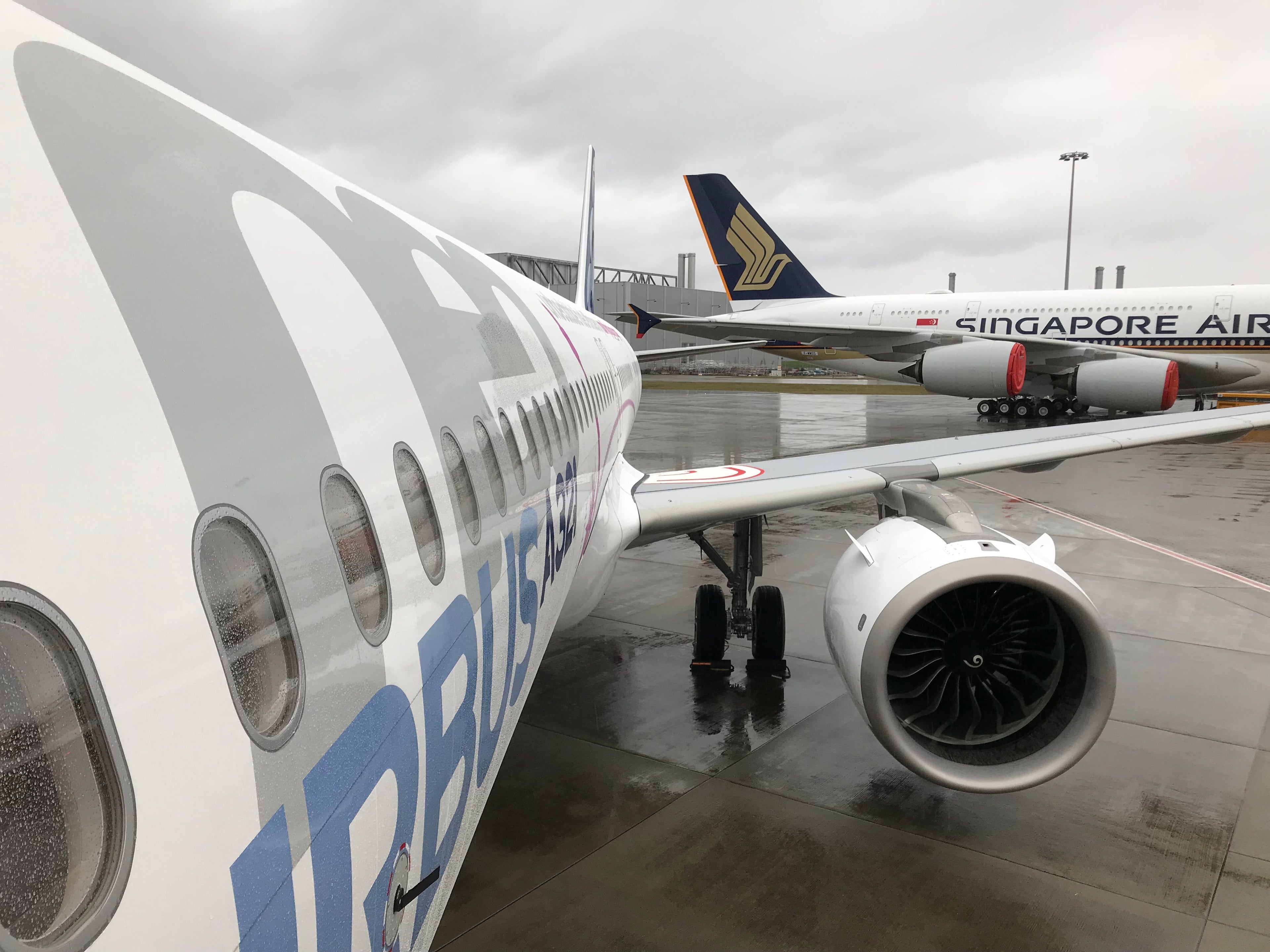
The first sign that this is not an A321 like the others is on the flight-attendant panel by the forward galley. The second diagram from the left will strike any crew member (and passengers) used to A321s as weird. There's a door missing! A321s generally have four exit doors forward of the wing and two behind, and no emergency exits over the wing. Not this one. The LR has only one door in front of the wing (it's the one we came through, in red in the diagram to show it's open) but compensates by adding two small overwing emergency exits. That way, it can seat more people than the standard A321 within the same fuselage, and can still evacuate them all safely.
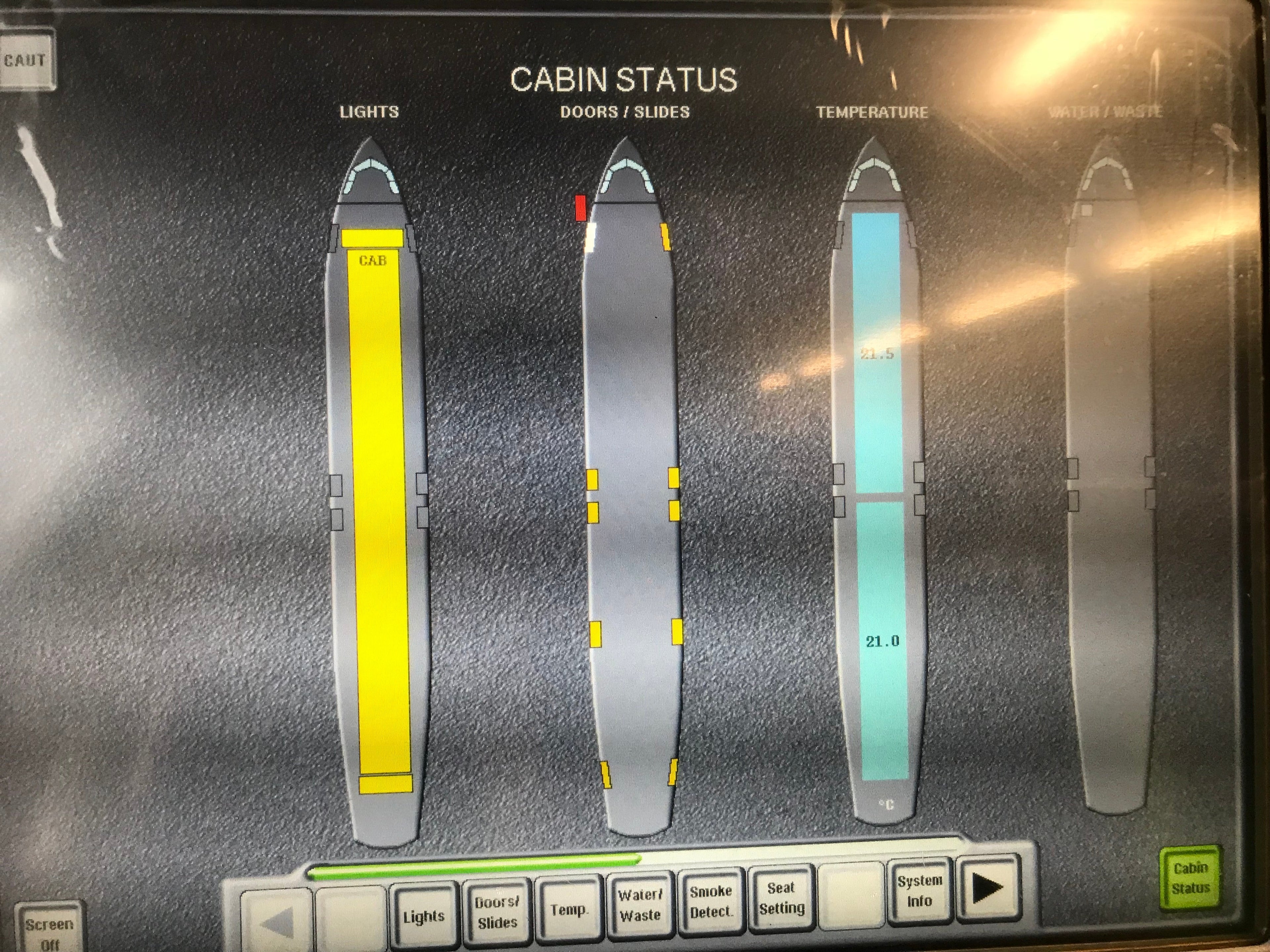
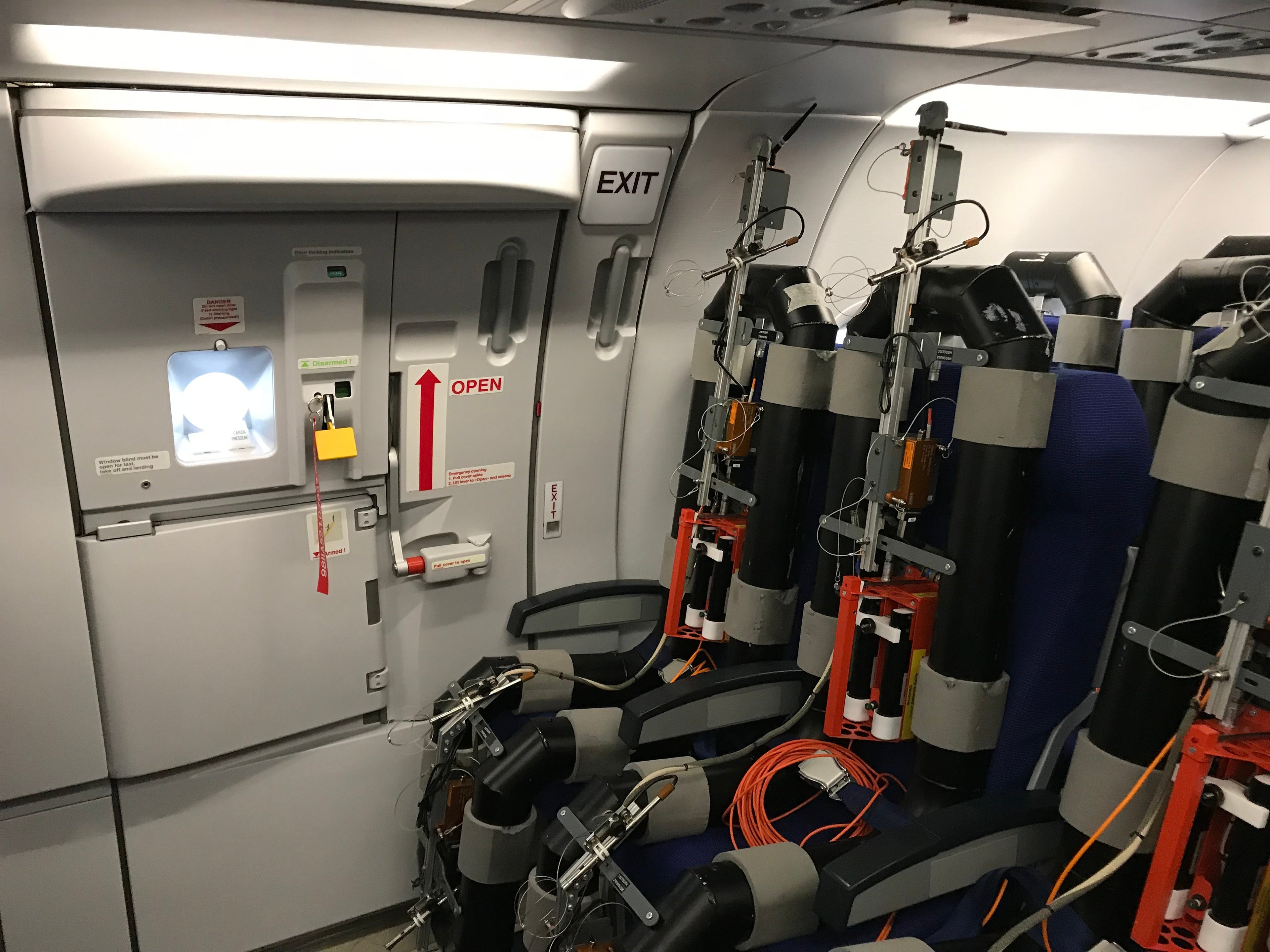
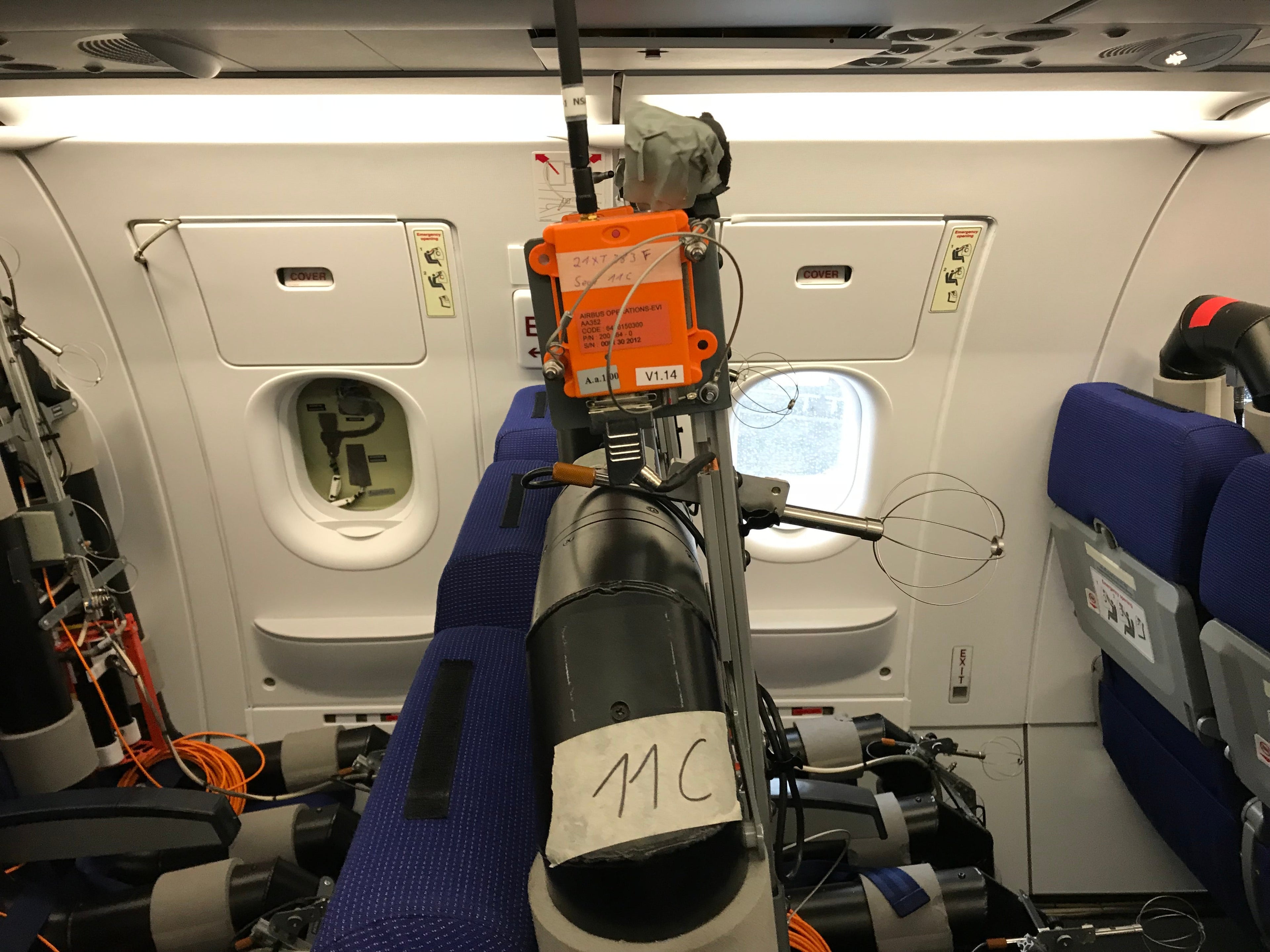
The cabin looks like Airbus is installing some kind of new seat with a weird back, but these are normal seats — with water tanks and wired test equipment strapped to them. The equipment measures and records data in different phases of the flight.
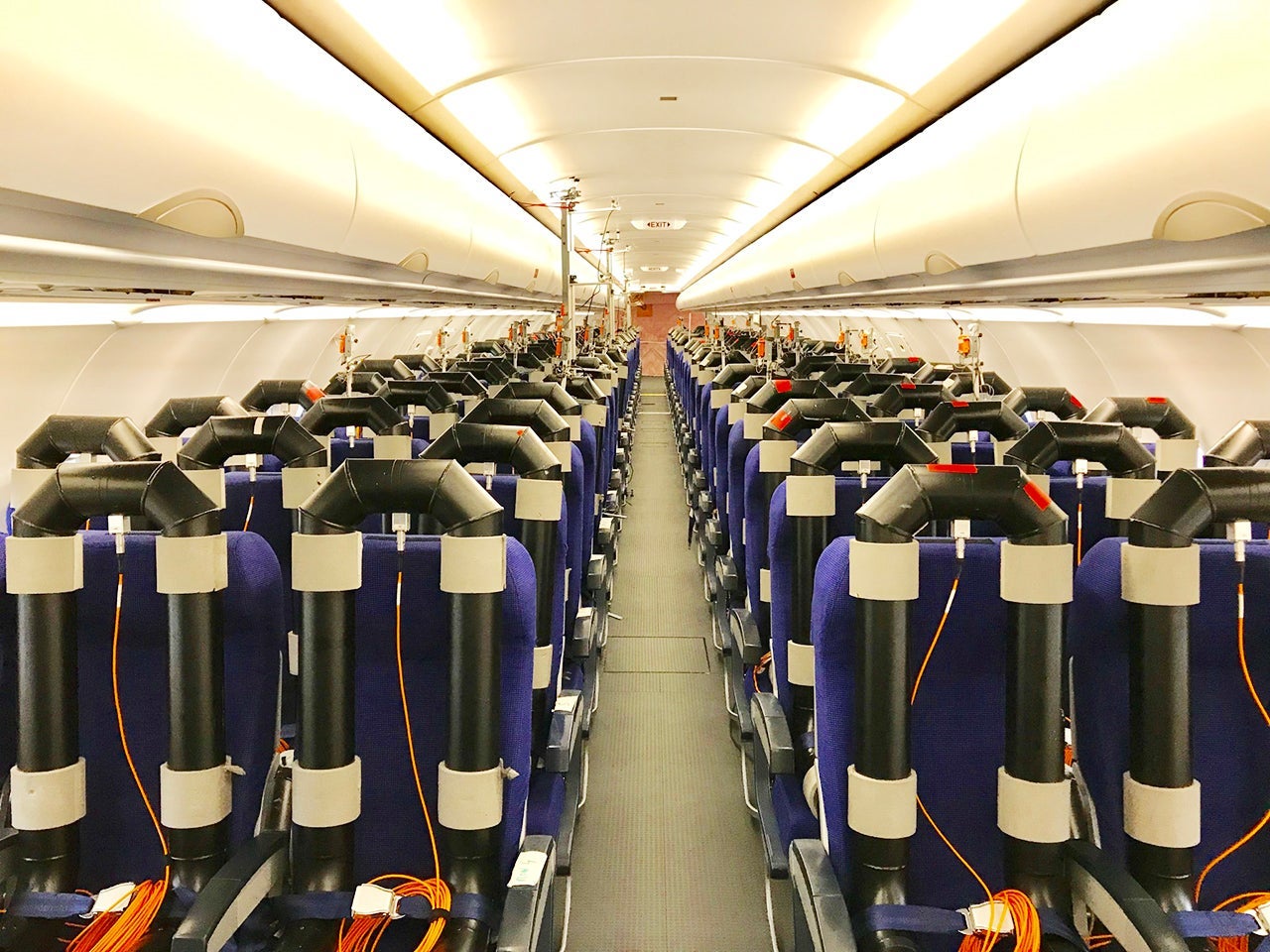
The tanks allow increases or decreases in weight as well as different weight distributions.
The center of gravity is an important aspect of the flight test, and Airbus uses the water tanks to ensure the plane is tested on its ability to cope with potential situations that may see the cabin structure move around, for example in severe turbulence.
The twin emergency exits are now automatic, the first for an Airbus single-aisle aircraft. It means that in the event of an evacuation, a door will pop up, rather than become totally detached and require the passenger to throw it out.

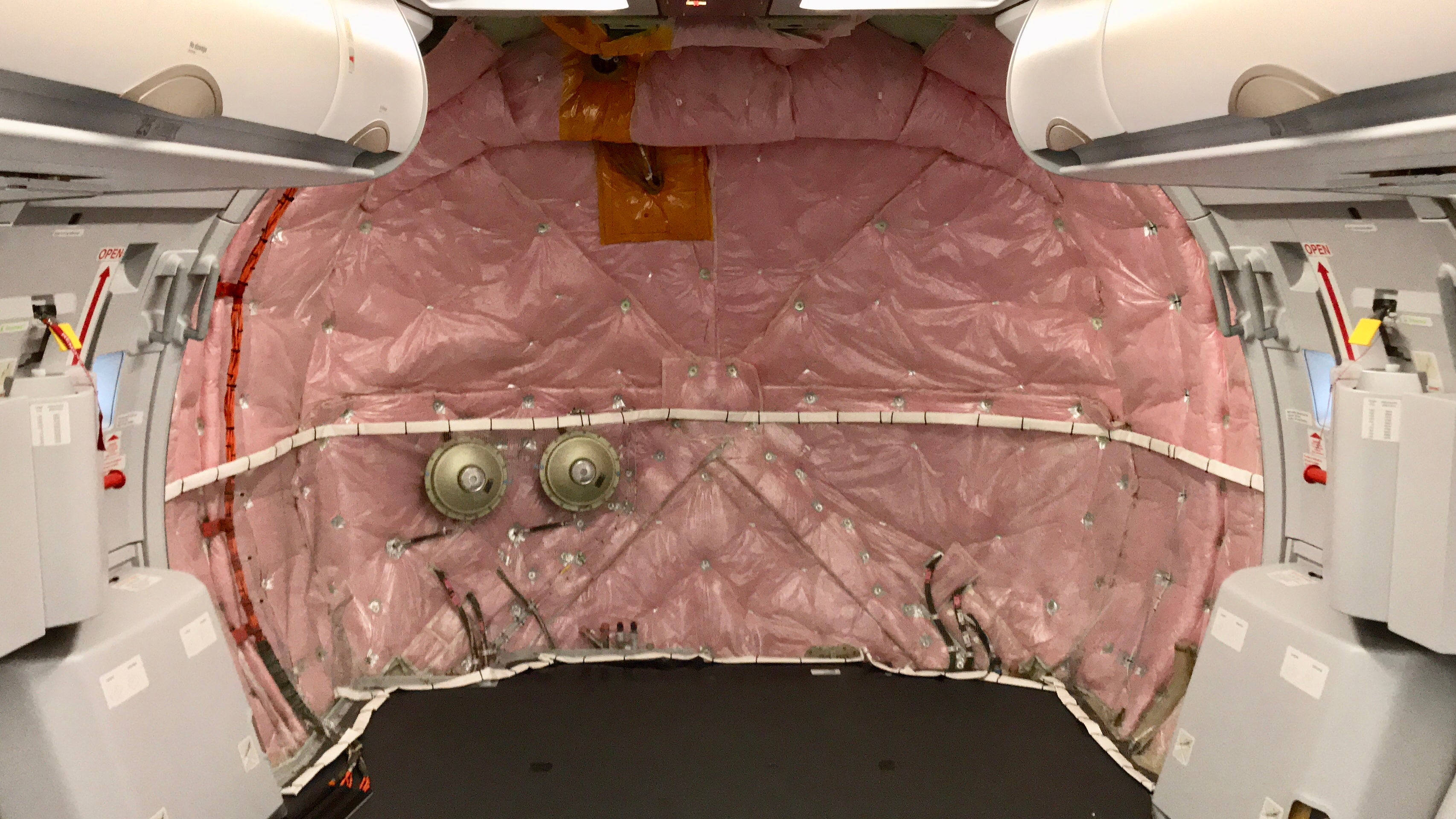
Towards the rear, not something you see every day: the rear pressure bulkhead is exposed. making the rear seem much, much wider than we're used to seeing on a single aisle. This bulkhead helps maintain cabin pressure when airborne, when the cabin is kept at a much lower altitude than the atmosphere outside. Ordinarily, a mix of galleys and lavatories will be in front of the rear pressure bulkhead, but this is a test aircraft, and there are no passengers needing those facilities.
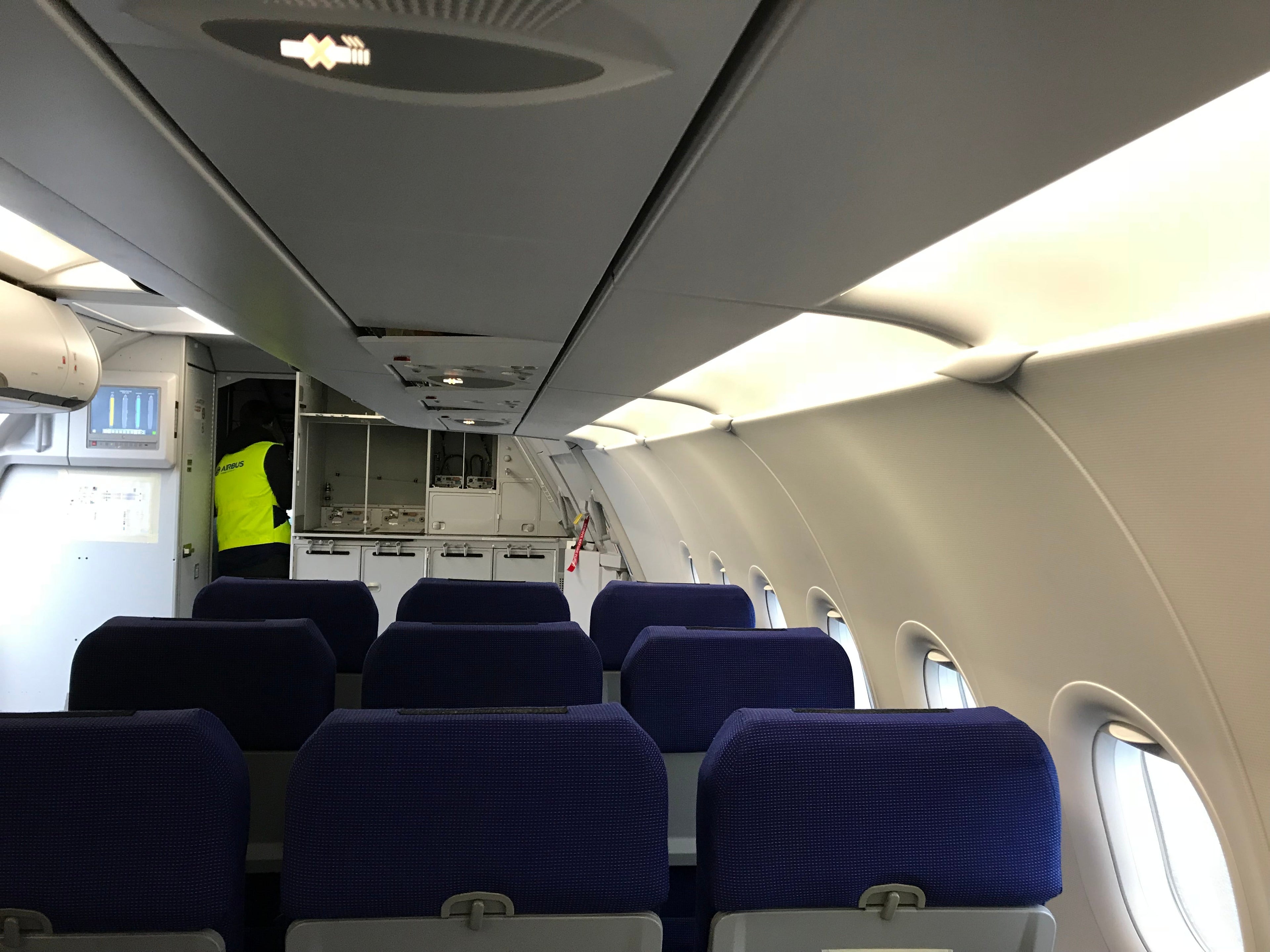
Towards the front of the aircraft, there are a few rows of old, second-hand seats, for those onboard test flights to sit when they aren't busy operating the test equipment. There's also a small exposed galley with limited equipment, and one lavatory. This definitely isn't anything like what you will see once the LR is in service.
The flight deck is pretty much the same you'll see on every other A320 family aircraft...
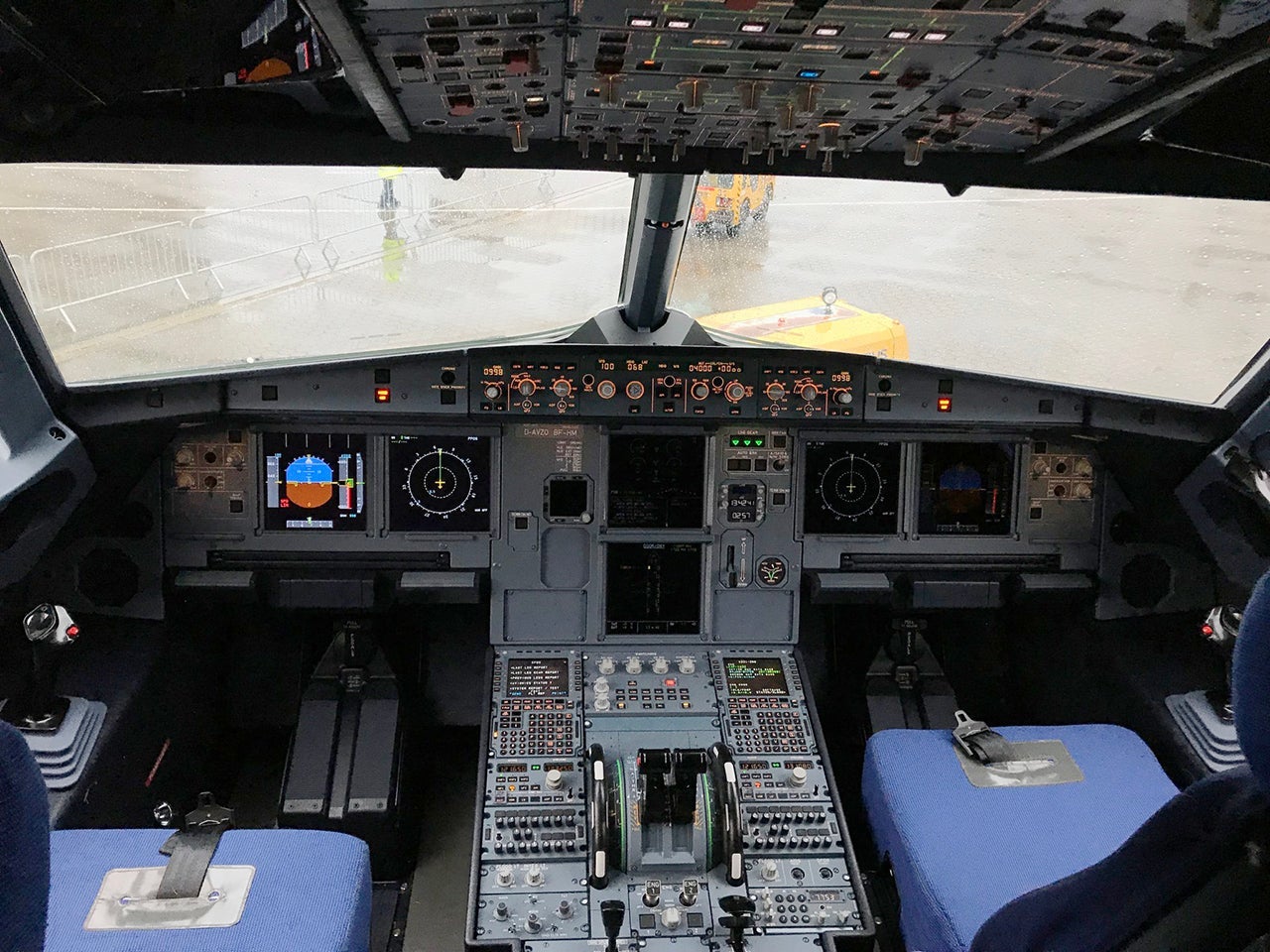
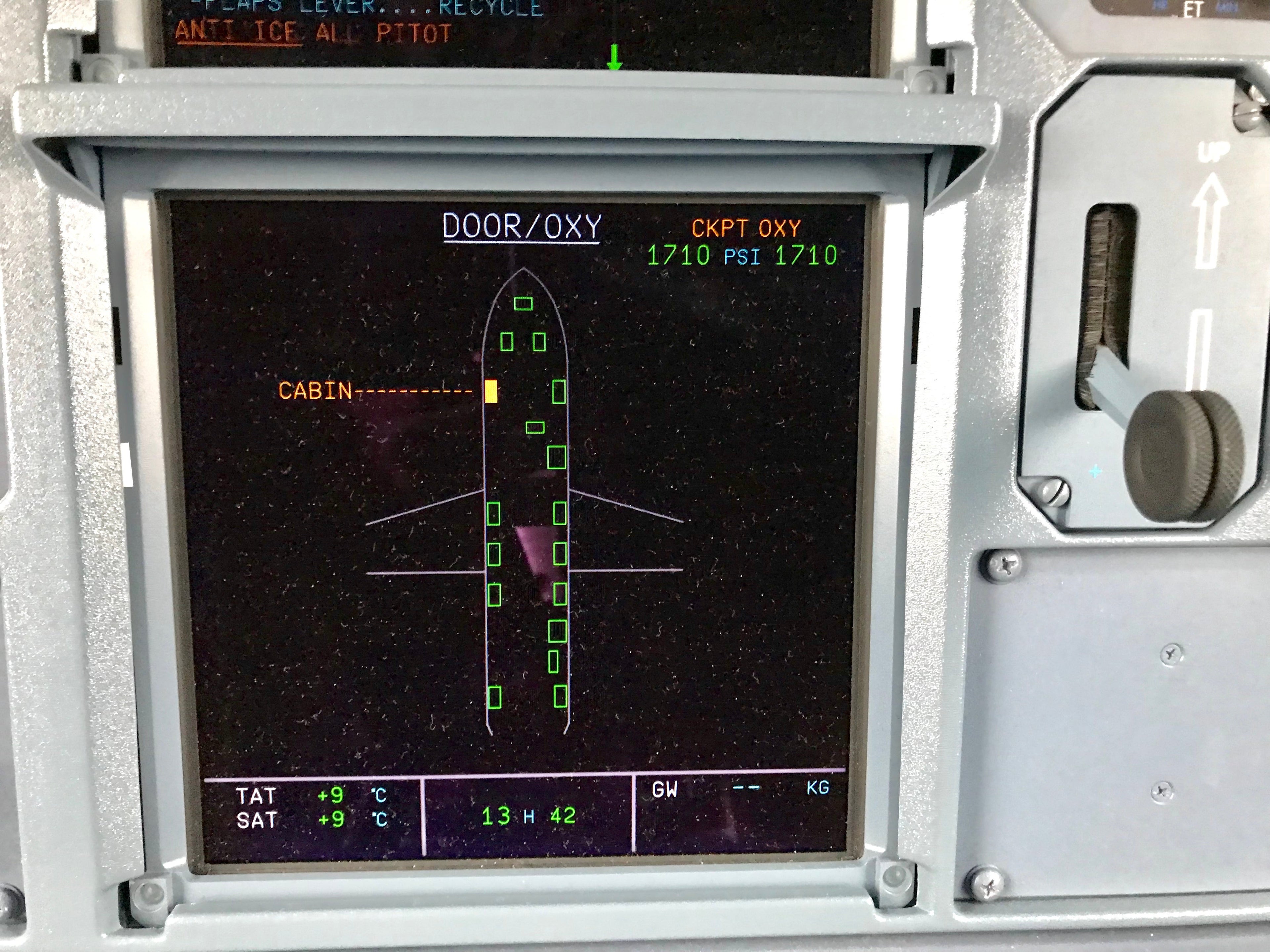
... but with a difference if you look close, and the center display happens to be turned on and set to show the state of the aircraft's doors: again, there's that lone door forward of the wing that gives the LR away.
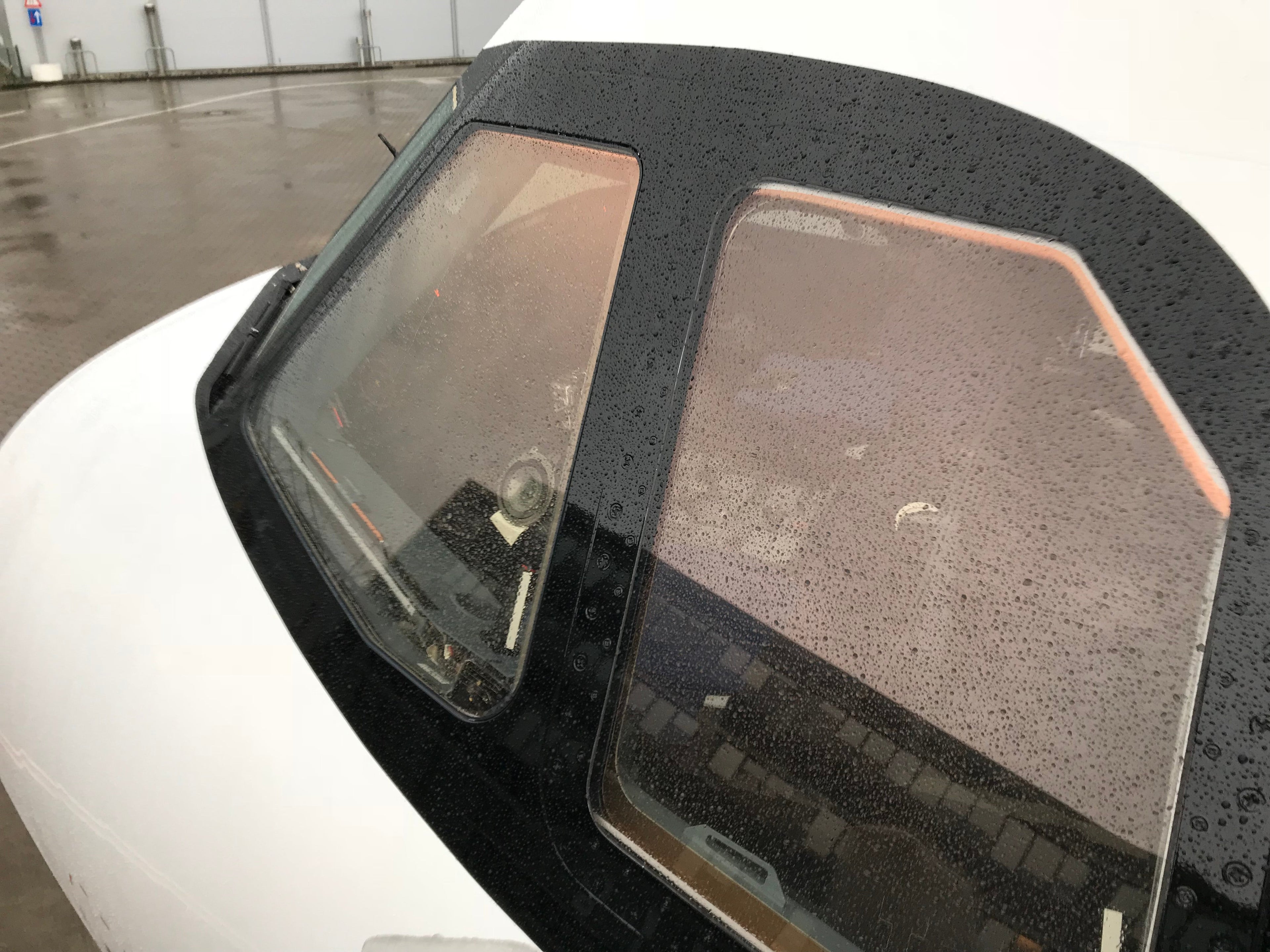
And finally, a closeup of the other innovation on this plane: a (very wet) "mask" — the elegant black color around the cockpit windows that debuted on the bigger A350.
This A321LR will continue its flight test campaign for most of the year, before entering commercial service in late 2018 with its launch customer, which for now remains a secret. You can use flight tracking sites like FlightRadar24 to check where the aircraft is being tested: just search for the German test-registration D-AVZO. Heads up: it's headed to the US in the coming weeks!
TPG featured card

at American Express's secure site
Terms & restrictions apply. See rates & fees.
| 4X | Earn 4X Membership Rewards® points per dollar spent on purchases at restaurants worldwide, on up to $50,000 in purchases per calendar year, then 1X points for the rest of the year. |
| 4X | Earn 4X Membership Rewards® points per dollar spent at US supermarkets, on up to $25,000 in purchases per calendar year, then 1X points for the rest of the year. |
| 5X | Earn 5X Membership Rewards® points on prepaid hotel stays booked through AmexTravel.com or the Amex Travel App™. |
| 3X | Earn 3X Membership Rewards® points on flights booked through AmexTravel.com, the Amex Travel App™, or purchased directly from airlines. |
| 2X | Earn 2X Membership Rewards® points on prepaid car rentals booked through AmexTravel.com or the Amex Travel App™ and cruises booked and paid through AmexTravel.com. |
| 1X | Earn 1X Membership Rewards® point per dollar spent on all other eligible purchases. |
Pros
- Valuable dining and food-related credits
- Flexible rewards with airline and hotel transfer partners
- Multiple travel and purchase protections
- No foreign transaction fees
- Access to Amex Offers for additional savings (enrollment required)
Cons
- Not as useful for those living outside the U.S.
- Some may have trouble using Uber and other dining credits
- You may be eligible for as high as 100,000 Membership Rewards® Points after you spend $8,000 in eligible purchases on your new Card in your first 6 months of Card Membership. Welcome offers vary and you may not be eligible for an offer. Apply to know if you’re approved and find out your exact welcome offer amount – all with no credit score impact. If you’re approved and choose to accept the Card, your score may be impacted.
- Earn 4X Membership Rewards® points per dollar spent on purchases at restaurants worldwide, on up to $50,000 in purchases per calendar year, then 1X points for the rest of the year.
- Earn 4X Membership Rewards® points per dollar spent at US supermarkets, on up to $25,000 in purchases per calendar year, then 1X points for the rest of the year.
- Earn 5X Membership Rewards® points on prepaid hotel stays booked through AmexTravel.com or the Amex Travel App™.
- Earn 3X Membership Rewards® points on flights booked through AmexTravel.com, the Amex Travel App™, or purchased directly from airlines.
- Earn 2X Membership Rewards® points on prepaid car rentals booked through AmexTravel.com or the Amex Travel App™ and cruises booked and paid through AmexTravel.com.
- Earn 1X Membership Rewards® point per dollar spent on all other eligible purchases.
- Pay It® lets you tap in the American Express® App to quickly pay for small purchase amounts throughout the month and still earn rewards the way you usually do. Plan It® gives you the option to split up big purchases into equal monthly payments with a fixed fee. You’ll know upfront exactly how much you’ll pay.
- $120 Dining Credit: Earn up to a total of $10 in statement credits monthly when you pay with the Gold Card at Grubhub (including Seamless), Buffalo Wild Wings, Five Guys, The Cheesecake Factory, and Wonder. This can be an annual savings of up to $120. Enrollment required.
- $100 Resy Credit: Get up to $100 in statement credits each calendar year at over 10,000 qualifying U.S. Resy restaurants after you pay for eligible purchases with the American Express® Gold Card. That’s up to $50 in statement credits semi-annually. Enrollment required.
- $84 Dunkin' Credit: Earn up to $7 in monthly statement credits after you pay with the American Express® Gold Card at U.S. Dunkin’ locations. Enrollment required.
- $120 Uber Cash on Gold: Enjoy up to $120 in Uber Cash annually with your Gold Card. Just add your Card to your Uber account and you'll get $10 in Uber Cash each month to use on orders and rides in the U.S. when you select an Amex Card for your transaction.
- Enjoy complimentary Hertz Five Star® Status benefits like skipping the counter at select locations, adding an additional driver at no additional cost*, and vehicle upgrades**. Benefit enrollment and Hertz Gold+ registration are required. *Additional drivers must meet standard rental qualifications and must be a spouse or domestic partner to qualify as complimentary. Other additional drivers subject to fees. **Benefits are subject to availability and vary by location. Additional Hertz program Terms and Conditions including age restrictions apply.
- Book two nights or more with The Hotel Collection through AmexTravel.com or the Amex Travel App™ and receive a $100* credit towards eligible charges at over 1,400 upscale hotels worldwide. *Eligible charges vary by property.
- Book your travel through the Amex Travel App™ with added peace of mind – backed by American Express® service and support. Only for American Express® Card Members.
- Whenever you need us, we're here. Our Member Services team will ensure you are taken care of. From lost Card replacement to statement questions, we are available to help 24/7.
- No Foreign Transaction Fees.
- Annual Fee is $325.
- Terms Apply.