The Points Guy believes that credit cards can transform lives, helping you leverage everyday spending for cash back or travel experiences that might otherwise be out of reach. That's why we publish a variety of editorial content and card comparisons: to help you find a great card to turn your goals into reality.
Our site may earn compensation when a customer clicks on a link, when an application is approved, or when an account is opened with our partners, and this may impact how or where these products appear. While we don't cover all available credit cards, our editorial team creates and maintains all of the analysis of these cards, and our content is not influenced nor subject to review by any credit card company, bank or partner prior to (or after) publication. Please view our advertising policy and product review methodology for more information.
Advertiser disclosure
The Points Guy believes that credit cards can transform lives, helping you leverage everyday spending for cash back or travel experiences that might otherwise be out of reach. That's why we publish a variety of editorial content and card comparisons: to help you find a great card to turn your goals into reality.
Our site may earn compensation when a customer clicks on a link, when an application is approved, or when an account is opened with our partners, and this may impact how or where these products appear. While we don't cover all available credit cards, our editorial team creates and maintains all of the analysis of these cards, and our content is not influenced nor subject to review by any credit card company, bank or partner prior to (or after) publication. Please view our advertising policy and product review methodology for more information.
News
How a changed climate has affected travel this year
A classically trained journalist, Caroline Tanner covers news and travel for TPG. She is a dual-journalism graduate of Mizzou and Northwestern.
December 1, 2024 • 10 min read
The cards we feature here are from partners who compensate us when you are approved through our site, and this may impact how or where these products appear. We don't cover all available credit cards, but our analysis, reviews, and opinions are entirely from our editorial team. Terms apply to the offers listed on this page. Please view our advertising policy and product review methodology for more information.Editorial disclaimer: Opinions expressed here are the author's alone, not those of any bank, credit card issuer, airline or hotel chain, and have not been reviewed, approved or otherwise endorsed by any of these entities.
Comments
By commenting, you agree to our Community Guidelines to help create a positive space for conversation. The responses below are not provided or commissioned by the bank advertiser, our partners, or The Points Guy (“TPG”). They have not been reviewed, approved, or otherwise endorsed by any of these parties. All responses are submitted by individual contributors, and neither the bank advertiser, our partners, nor TPG are responsible for ensuring that all posts and/or questions are answered.
Related stories
Quick summary
Extreme weather events like turbulence, hurricanes, wildfires and winter storms are increasingly disrupting travel, causing more delays, cancellations and added expenses.
Climate change is intensifying these disruptions, with more frequent and severe weather patterns impacting both airlines and travelers.
Travelers face higher costs and longer journeys as airlines reroute flights to avoid turbulence and weather events, also increasing carbon emissions.
Many popular destinations have introduced or raised tourism taxes and implemented water restrictions to address over-tourism and environmental strain.
What to consider
Travel insurance may not cover cancellations for anticipated weather, only for actual disruptions.
Tourism taxes and climate-related fees vary widely by destination and may increase total trip costs.
Government regulations require airlines to refund passengers for significant delays or cancellations, but compensation policies differ by carrier.
What you'll miss from the article
Detailed strategies for minimizing travel disruption and a comprehensive overview of new tourism taxes and climate-related travel policies worldwide.
Generated by AI with support from our editorial team.
Update: Some offers mentioned below are no longer available. View the current offers here.
There's no denying how extreme weather affects travel. Travelers see delayed and canceled flights due to winter storms, hurricanes, wildfires and even turbulence.
These issues add more money and time to your travel experience, increasing frustration overall with an inherently stressful process, even on the best days.
The bad news is that weather continues to make travel more expensive, and frankly, there's nothing you can do about that. But there are some ways you can at least ease the stress.
Jet streams and turbulence
FATIH AKTAS/ANADOLU/GETTY IMAGES
As reported in 2023, turbulence is increasing on commercial flights due to more extreme weather affected by global warming. This has led to more time on the ground due to flight delays and more time spent in the air as airlines try to avoid turbulence through diverted flight paths.
Clear air turbulence or non-convective turbulence is most concerning for travelers. It develops around jet streams, which are "fast-flowing bands of wind that propagate around the globe," Isabel Smith, a Ph.D. student at the University of Reading, said. Smith warns that this type of turbulence will increase with climate change as jet streams strengthen with global warming.
"Clear air is projected to increase with climate change because jet streams are strengthening with global warming," she said. "Aircraft flying at their cruising heights (30 to 40 thousand feet from the surface) can be struck suddenly from clear air without warning, resulting in damages and injuries."
Smith uses high-resolution climate models to predict increases in atmospheric turbulence.
"Airlines try to avoid turbulence as much as they can, which often leads to longer flights and longer wait times," she said. "As a result, airlines use more fuel and, therefore, emit more carbon dioxide into the atmosphere."
The resulting financial burden borne by the domestic aviation industry from convoluted flight routes is twofold — not to mention 70 million additional kilograms of CO2 are emitted into the atmosphere annually. U.S. airlines spend up to $500 million on turbulence-related injuries, delays and damages annually, according to the National Center for Atmospheric Research.
Hurricanes
NOAA.GOV
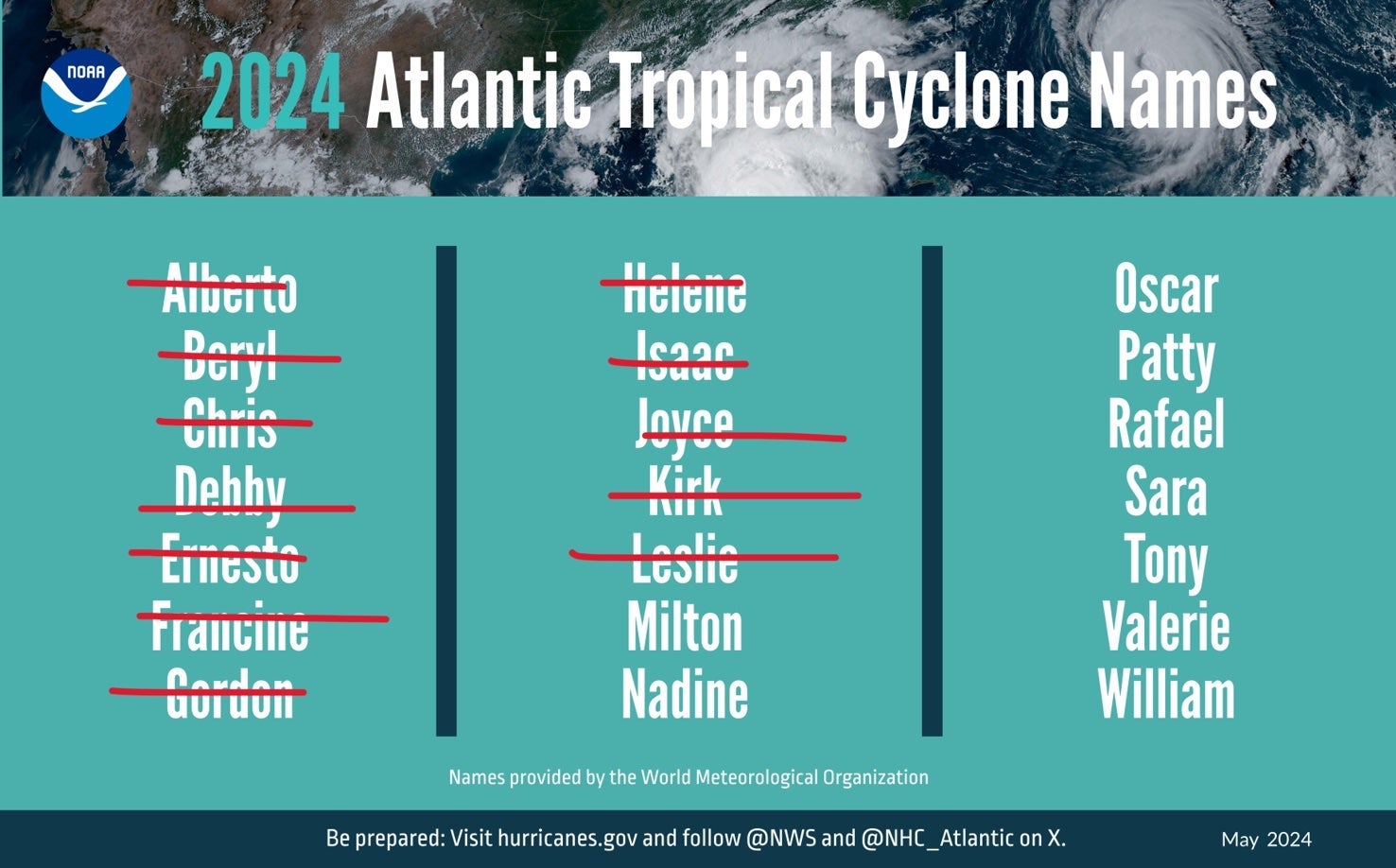
Hurricane Helene afflicted much of the Southeast, including North Carolina, Georgia, and Northeast Florida, in late September. It was no doubt a large factor in the nearly 1,000 flights (plus delayed and canceled cruises) in the U.S. per Flight Aware data as of Sept. 27.
Just days later, Western Florida saw another storm — Hurricane Milton. It hit south of Tampa Bay, and damage reached as far as Palm Beach County on the state's east coast. All local airports, including Tampa International Airport (TPA) and Orlando International Airport (MCO), temporarily ceased operations.
In July, just one month into hurricane season, the Caribbean saw its first Category 5 hurricane,marking the earliest Category 5 storm in hurricane season ever.
Forecasters at NOAA's Climate Prediction Center are predicting an 85% chance of an above-normal hurricane season across the Atlantic Ocean for 2024. This outlook is far less optimistic than 2023, when the same scientists estimated a 40% chance of a near-normal hurricane season across the Atlantic Ocean.
As of Nov. 27, 18 named storms had formed in the Atlantic 2024.
Wildfires
QIAN WEIZHONG/VCG/GETTY IMAGES
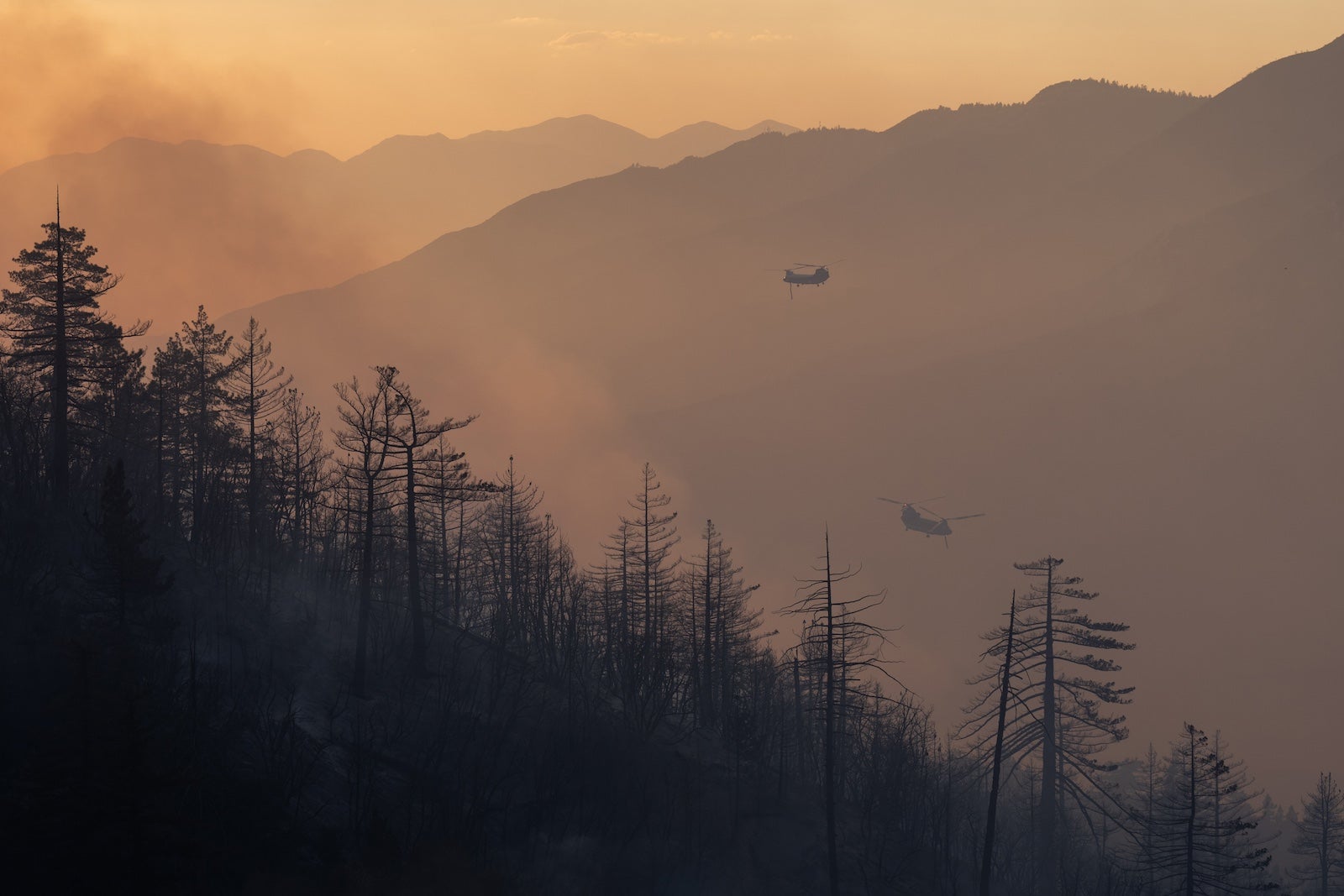
As of Nov. 22, more than 52,00 wildfires have burned more than 8.1 million acres to date in 2024, per the National Interagency Fire Center. The Center for Disaster Philanthropy predicts this number will "occur with ever-increasing frequency and intensity" due to climate change. Reporting warns that half of the people at risk of wildfire by 2052 will live in the American South.
"Climate change, including increased heat, extended drought, and a thirsty atmosphere, has been a key driver in increasing the risk and extent of wildfires in the western United States during the last two decades," according to the National Ocean and Atmospheric Administration. "Wildfires require the alignment of a number of factors, including temperature, humidity, and the lack of moisture in fuels, such as trees, shrubs, grasses, and forest debris. All these factors have strong direct or indirect ties to climate variability and climate change.”
In June 2023, Canadian wildfirescaused smoke and poor air quality on the East Coast and Midwest. Just two months later, wind-driven wildfires in Hawaii caused evacuations, road closures, power issues and devastation to much of west Maui and the Big Island's Kohala Coast.
Wildfires in Europe have been particularly bad the last two years; there were fires in Portugal, Greece and Turkey in the summer of 2024 and in Croatia, Portugal, Greece, Spain, Italy and others in 2023. The European Union dubbed 2023 the "worst in this century" for fires across its member nations.
Winter storms
SCOTT OLSON/GETTY IMAGES
Bad weather is inevitable at certain times of year in certain regions. However, like the other patterns documented in this story, we are seeing more frequent occurrences of extreme weather, which has largely been attributed to climate change.
This means that typical winter storms have the potential to wreak more havoc than they have previously and often impact travel.
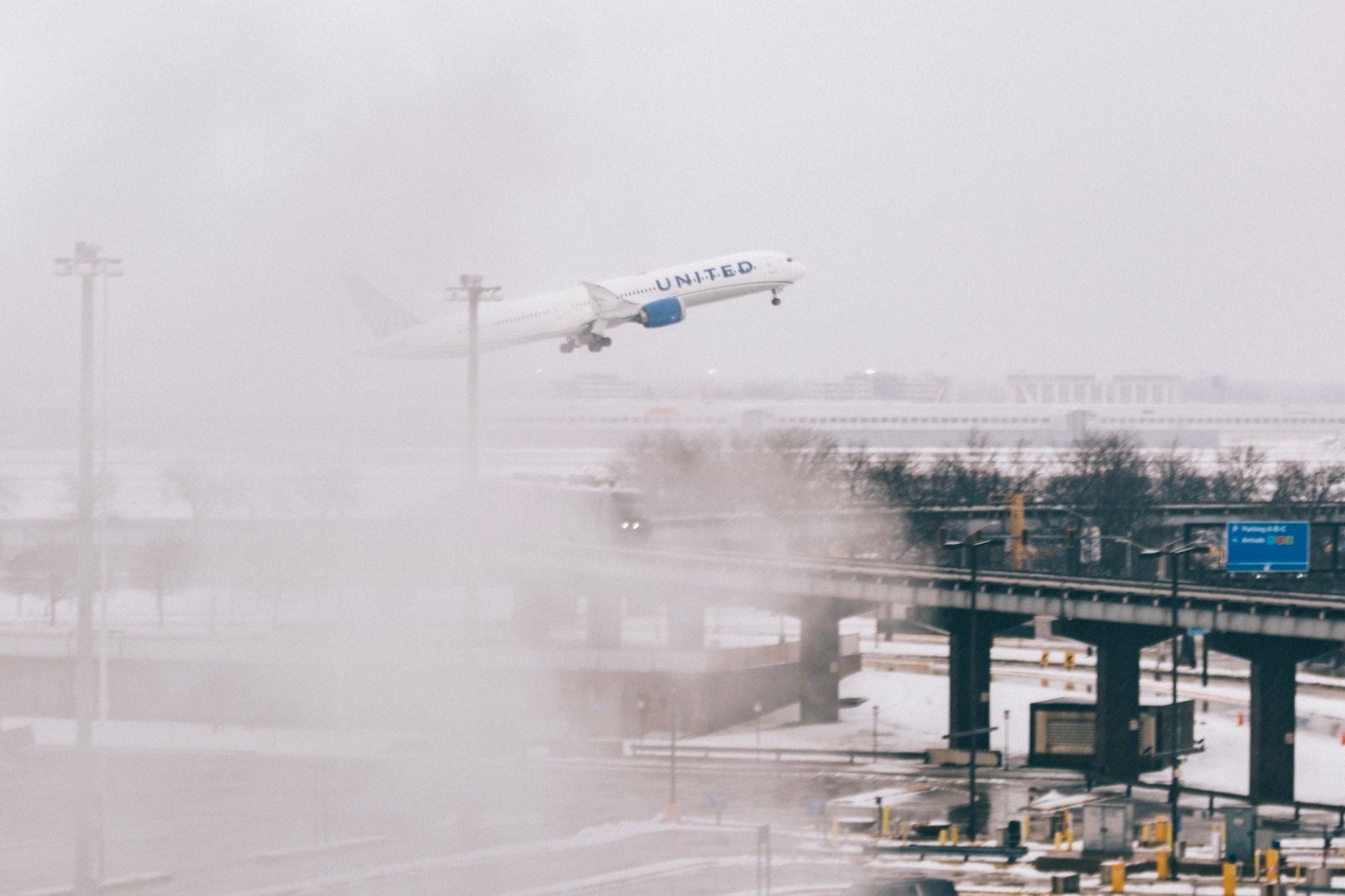
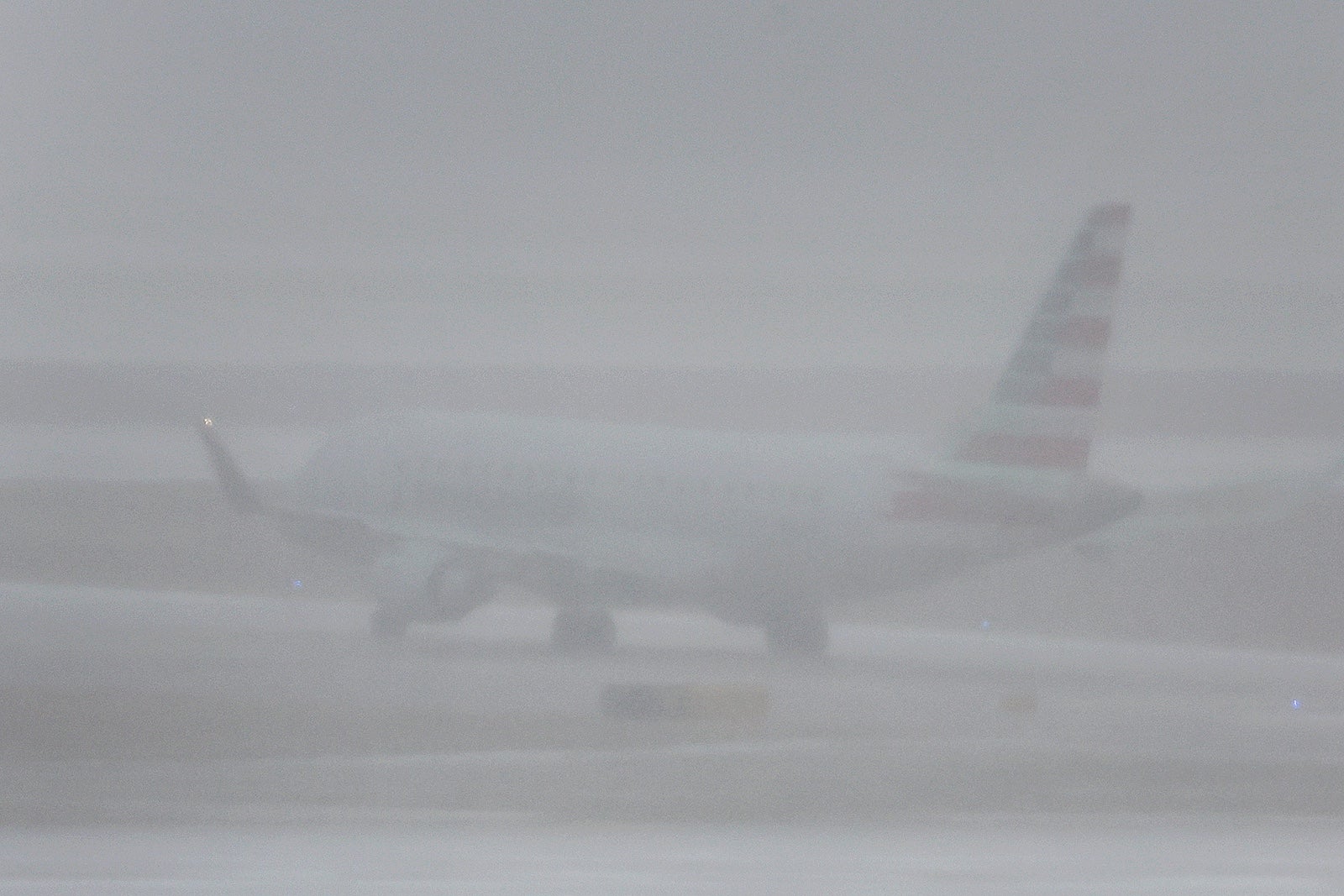
So far in 2024, major winter storms have occurred in the Midwest in January, followed by a storm on the East Coast in February. A late winter storm in Denver in March resulted in more than 5,000 flight delays and cancellations.
The holiday season will be a test for airlines in managing high passenger volume and winter weather.
Measures put in place
CLINT HENDERSON/THE POINTS GUY
Many European cities have made it more expensive for tourists to visit in response to over-tourism, including:
Rome introduced a tourism tax in 2024. The rate varies from 3 to 7 euros ($3.17 to $7.40) per night, depending on the star rating of the accommodation.
Venice introduced a tourism tax in 2024, ranging from 1 euro to 5 euros ($1.08 to $5.40) per night per accommodation, in addition to a 5 euro ($5.40) day trip tax during peak times between April and mid-July.
Barcelona has long charged a regional tourist tax and a citywide surcharge for visitors since 2012, with regional taxes starting at 1.70 euros ($1.84) for four-star hotels and an increased surcharge of 3.25 euros ($3.52) per night.
Spain's Balearic Islands charge a sustainable tourism tax on the islands, from 1 to 4 euros ($1.06 to $4.23) per night, based on accommodation type.
Germany charges tourists a culture and bed tax in several cities — including Berlin, Hamburg and Frankfurt — ranging from 2 to 3 euros ($2.16 to $3.24) per night.
Greece charges a nightly climate tax of 0.54 to 4 euros ($0.54 to $4.32) per night; this increases to 5 euros ($5.40) for visits April to October.
France charges a tourist tax by city, ranging from 0.80 euros to 4 euros ($0.86 to $4.32) per night, depending on accommodation type.
Portugal charges 2 euros ($2.16) per night for the first seven nights in select cities, including Libson, Porto and Faro, with lower fees in other cities.
Prague charges 50 korunas ($2.11) per person, per night for hotel stays.
Elsewhere, countries are issuing varying tourism taxes, including:
Bhutan charges a $200 Sustainable Development Fee.
Bali charges a 150,000 rupiah ($9.25) tourist tax.
The Maldives charge tourists a Green Tax, ranging from $3 to $6 per day.
New Zealand charges tourists an International Visitor Levy of 100 New Zealand dollars ($59.80).
A growing concern of over-tourism is water scarcity, often made worse by extreme heat and lack of rainfall. An increasing number of cities, from Barcelona to Mexico City, are implementing measures to prevent future water disruptions and restricting water to residents and tourists alike.
In Greece, infrastructure has failed to keep up with a rising number of tourists as its islands have exploded in popularity; it is the latest destination to have its main water reservoir dwindled by climate change. With a reservoir currently at its lowest level in more than 15 years, city officials warn of further water restrictions or even no water at all.
Data and weather patterns suggest inclement weather will continue to increase. The effects will continue to touch each point of the travel process and will be felt by airlines and travelers alike.
In short, inclement weather is becoming more routine in many aspects of daily life, and travel is no exception. In fact, I am writing this on a flight to Jackson Hole, Wyoming, where I am currently experiencing, you guessed it, turbulence.
Weather disruptions are inevitable, but there are steps you can take as a traveler to prepare. For example, you can use third-party travel insurance or rely on a credit card that comes with insurance.
Remember that most travel insurance policies don't cover trip cancellation if you preemptively cancel your trip because the weather forecast looks dismal.
One of TPG's favorite travel rewards cards is the Chase Sapphire Reserve® (see rates and fees). If you use this card to book a flight that is delayed for more than six hours or results in an overnight stay because of inclement weather, you can get up to $500 per ticket, among other reimbursements. Some of our other most recommended credit cards providing trip cancellation and interruption insurance are the Chase Sapphire Preferred® Card (see rates and fees) and The Platinum Card® from American Express.
These can offset the cost of unexpected expenses you might incur due to delayed travel.
Also, remember that the U.S. Department of Transportation requires airlines to refund passengers whose flights are canceled, significantly delayed or face a significant schedule change.
Flight delays and cancellations might leave you pivoting to come up with a plan B, but there are tools that can help make it easier. TSA PreCheck and Clear can help you pass through TSA security quicker, while Global Entry expedites entry into the U.S.
TPG Tip: If you want to try Clear and sign up using TPG's special offer, you can save $50 on the first year's membership.
By commenting, you agree to our Community Guidelines to help create a positive space for conversation. The responses below are not provided or commissioned by the bank advertiser, our partners, or The Points Guy (“TPG”). They have not been reviewed, approved, or otherwise endorsed by any of these parties. All responses are submitted by individual contributors, and neither the bank advertiser, our partners, nor TPG are responsible for ensuring that all posts and/or questions are answered.