Olivia Mittak is a credit cards editor at TPG. She specializes in maximizing earn for points and miles, finding the best welcome bonuses and choosing the right credit cards for your wallet.
March 26, 2026 • 10 min read
ZACH GRIFF/THE POINTS GUY
The cards we feature here are from partners who compensate us when you are approved through our site, and this may impact how or where these products appear. We don't cover all available credit cards, but our analysis, reviews, and opinions are entirely from our editorial team. Terms apply to the offers listed on this page. Please view our advertising policy and product review methodology for more information.
Editorial note:
Editorial disclaimer: Opinions expressed here are the author's alone, not those of any bank, credit card issuer, airline or hotel chain, and have not been reviewed, approved or otherwise endorsed by any of these entities.
Comments
By commenting, you agree to our Community Guidelines to help create a positive space for conversation. The responses below are not provided or commissioned by the bank advertiser, our partners, or The Points Guy (“TPG”). They have not been reviewed, approved, or otherwise endorsed by any of these parties. All responses are submitted by individual contributors, and neither the bank advertiser, our partners, nor TPG are responsible for ensuring that all posts and/or questions are answered.
Related stories
Quick summary
A new business cash-back card offers straightforward rewards but faces tough competition from products with better value and broader benefits.
The card features a high annual fee and limited redemption options, making it less appealing for most small businesses or side hustles.
Its main perk—a large annual statement credit—requires an exceptionally high annual spending threshold, restricting its usefulness to high-volume spenders.
Alternative business cards are available that provide more flexible earning categories, easier-to-access benefits and potentially greater overall value.
What to consider
The card's annual statement credit is only available after meeting a very high annual spending requirement, which may be out of reach for many small businesses.
Cash back can only be redeemed as a statement credit or at a specific online merchant, limiting flexibility.
Other business cards offer broader earning categories and more accessible perks, making them better suited for a wider range of business needs.
What you'll miss from the article
A detailed comparison of how this card stacks up against other leading business options, including which types of businesses might benefit most from each.
Generated by AI with support from our editorial team.
One of the most important decisions you'll make in your small business's card journey is choosing between cash back and points and miles. If you're Team Cash Back, the new has a bid to make for a spot in your business's wallet.
However, despite its straightforward earning structure, the card struggles to stand out among competitors offering better value at a lower cost.
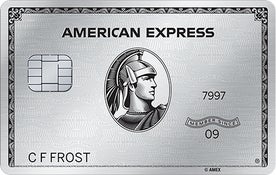
With weak benefits, a high annual fee relative to its value proposition and a steep spending requirement for its welcome offer, the Amex Graphite card is one to avoid unless you're fully committed to American Express.
Card rating*: ⭐⭐½
*Card rating is based on the opinion of TPG's editors and is not influenced by the card issuer.
Amex Graphite card: The basics
With a $295 annual fee (see rates and fees), it's fair to assume the offers a solid roster of benefits. After all, that annual fee is approaching premium-card territory.
The Graphite card presents a fairly simple list of perks:
No preset spending limit: Unlike a traditional card with a set limit, the amount you can spend adapts based on factors such as your purchase, payment and credit history
Pay Over Time: Carry a balance with interest on eligible charges, subject to the pay over time limit (variable APR 17.99% — 28.74%; see rates and fees)
Access to One AP Invoice Management: Enrollment required for buyers and suppliers
One AP statement credit: Receive up to $2,400 in annual statement credits to use in the next calendar year on Amex One AP monthly fees after spending $250,000 eligible on purchases in a calendar year (subject to auto-renewal)
American Express Business Blueprint™: A cash-flow management system that grants you further insight into your Amex and linked, eligible external accounts
As far as earning rates go, the Graphite card has a single bonus category: 5% cash back on flights and prepaid hotels booked through American Express Travel® Online. Other than that, you'll earn 2% cash back on all eligible purchases. There's no spending cap for either category, which aligns with this card's aim at high-spending businesses.
Cash back is received in the form of Reward Dollars that can be redeemed as a statement credit and at amazon.com checkout.
High spending requirement to receive statement credit
*Unlike a traditional card with a set limit, the amount you can spend adapts based on factors such as your purchase, payment and credit history
Amex Graphite card benefits
For a card with a $295 annual fee, I expected more out of the . The only tangible way to offset its annual fee, outside of earning enough cash back, is with its up to $2,400 in statement credits that cardmembers can receive for Amex One AP monthly fees.
The problem with this is that you'll have to spend a whopping $250,000 in the previous calendar year to access this perk. That's a huge ask of most small businesses, and fully out of reach for anyone with a side hustle.
AMERICAN EXPRESS
Aside from this, you'll be charged no foreign transaction fees and receive access to Pay Over Time (on eligible purchases; subject to the Pay Over Time limit; variable APR 17.99% — 28.74%), Amex's business management tools and various protections.
You'll also have no preset spending limit. Unlike a traditional card with a set limit, the amount you can spend adapts based on factors such as your purchase, payment and credit history.
While these benefits are nice, they're standard across many Amex cards, especially those with significantly more perks than the Graphite card.
The Graphite card would be a much better card if it followed in the footsteps of Amex's Membership Rewards business cards and offered multiple statement credits to help cardmembers justify its annual fee.
How to earn and use your rewards
Many people choose to go the cash-back route instead of points and miles because they place a high value on simplicity with their rewards. The Graphite card delivers here, with the following earning rates:
5% cash back on flights and prepaid hotels booked through Amex Travel Online
2% cash back on all other eligible purchases
Cash back is received in the form of Reward Dollars that can be redeemed as a statement credit and at Amazon checkout.
AMERICAN EXPRESS
In order to get outsize value from this card's $295 annual fee, you'd need to spend about $6,000 on eligible Amex Travel purchases or $14,750 on everyday purchases. If your business spends a lot on travel and you're willing to book through a travel portal, it shouldn't be hard to spend enough to recoup the Graphite card's annual fee.
Compared to cash-back cards from other issuers, your redemption options are very limited. Most cardmembers will likely want to redeem their Reward Dollars for a statement credit, but it would be nice to have the option to deposit Reward Dollars into an Amex business checking account.
Where the Amex Graphite card falls short
If you aren't fully committed to both cash back and American Express, there's almost certainly a better option for your business. It isn't easy to get value out of this card's $295 annual fee.
You need to hit an extremely high spending requirement just to get access to the card's single statement credit, and its other perks are standard across many other cards.
Amex Graphite card vs. Amex Business Gold
As far as cards for high-spending businesses go, the closest comparison to the Amex Graphite card is the slightly more expensive . Coming in at $375 each year (see rates and fees), the Amex Business Gold does a much better job of offering substantial potential value to cardmembers.
ILONA TITOVA/GETTY IMAGES
You'll receive up to $240 each calendar year for purchases made at U.S. Grubhub, office supply stores and shipment purchases at UPS.com, and strong, business-oriented earning categories. The Amex Business Gold earns Membership Rewards points, which can be transferred to 20 airline and hotel partners for maximum redemption value.
Enrollment is required for select benefits.
Between these two cards, I believe it's a no-brainer to go with the Amex Business Gold in most circumstances. The rewards you'll earn are more valuable, and it's much easier to get outsize value from its annual fee.
In my opinion, the is only worth it if you're fully committed to earning cash back with American Express. If your business doesn't fall under that category, I recommend considering one of Amex's other business cards instead. It's too difficult to get meaningful value out of the Graphite card year after year, particularly for those working side hustles or running a very small business.
When to apply for the Amex Graphite card
If you've decided you want to give the a chance, new cardmembers can find out their offer and see if they are eligible for as high as $2,000 cash back after spending $50,000 on purchases within the first six months of card membership. (Welcome offers vary, and you may not be eligible for an offer.) Cash back is received as Reward Dollars that can be redeemed as a statement credit and at Amazon.com checkout.
AMERICAN EXPRESS
This is the second offer we've ever seen on this card. It's worth noting that the spending requirement is exceptionally high for a small-business card; you'll need to spend over $8,000 per month to hit it. For a return as high as $2,000, that's a big ask.
That said, I wouldn't wait to apply for this card.
Other cards to consider if you don't want the Amex Graphite card
I've already mentioned the as a great alternative to the Amex Graphite, but here are three additional options to consider:
If you want more earning categories: The earns cash back in a variety of categories, for a $95 annual fee ($0 introductory annual fee for the first year; see rates and fees). Cash back is received as Reward Dollars that can be redeemed for a statement credit or for other select options. To learn more, check out our full review of the Blue Cash Preferred.
If you want a simple no-annual-fee business card: The has no annual fee (see rates and fees) and earns a flat 2% cash back on the first $50,000 you spend on purchases each calendar year (then 1% back). Unlike with the Graphite card, cash back earned is automatically redeemed as a statement credit. To learn more, check out our full review of the Amex Blue Business Cash.
If you want to earn Membership Rewards points for no annual fee: has no annual fee (see rates and fees) and earns 2 points per dollar on up to $50,000 in spending each calendar year (then 1 point per dollar spent). These points can be transferred to any of Amex's 20 travel partners. To learn more, check out our full review of the Amex Blue Business Plus.
The Graphite card leaves a lot to be desired. For a $295 annual fee, it should offer a more comprehensive set of bonus categories and easy-to-earn statement credits.
Unless you're all-in on earning cash back with Amex and your business spends a lot each month, your best bet is to check out one of Amex's several other business cards. Most of them offer a substantially better value proposition.
For rates and fees of the Amex Graphite card, click here. For rates and fees of the Amex Business Gold, click here. For rates and fees of the Amex Blue Cash Preferred, click here. For rates and fees of the Amex Blue Business Cash, click here.
For rates and fees of the Amex Blue Business Plus, click here.
By commenting, you agree to our Community Guidelines to help create a positive space for conversation. The responses below are not provided or commissioned by the bank advertiser, our partners, or The Points Guy (“TPG”). They have not been reviewed, approved, or otherwise endorsed by any of these parties. All responses are submitted by individual contributors, and neither the bank advertiser, our partners, nor TPG are responsible for ensuring that all posts and/or questions are answered.