The Points Guy believes that credit cards can transform lives, helping you leverage everyday spending for cash back or travel experiences that might otherwise be out of reach. That's why we publish a variety of editorial content and card comparisons: to help you find a great card to turn your goals into reality.
Our site may earn compensation when a customer clicks on a link, when an application is approved, or when an account is opened with our partners, and this may impact how or where these products appear. While we don't cover all available credit cards, our editorial team creates and maintains all of the analysis of these cards, and our content is not influenced nor subject to review by any credit card company, bank or partner prior to (or after) publication. Please view our advertising policy and product review methodology for more information.
Advertiser disclosure
The Points Guy believes that credit cards can transform lives, helping you leverage everyday spending for cash back or travel experiences that might otherwise be out of reach. That's why we publish a variety of editorial content and card comparisons: to help you find a great card to turn your goals into reality.
Our site may earn compensation when a customer clicks on a link, when an application is approved, or when an account is opened with our partners, and this may impact how or where these products appear. While we don't cover all available credit cards, our editorial team creates and maintains all of the analysis of these cards, and our content is not influenced nor subject to review by any credit card company, bank or partner prior to (or after) publication. Please view our advertising policy and product review methodology for more information.
Guides
Delta and United cards offer cheaper award flights — will other airlines follow?
Augusta Stone is a credit cards writer for TPG. She joined the TPG team in 2023 and is excited to take points and miles beginners with her on a journey toward maximizing rewards.
April 24, 2026 • 9 min read
The cards we feature here are from partners who compensate us when you are approved through our site, and this may impact how or where these products appear. We don't cover all available credit cards, but our analysis, reviews, and opinions are entirely from our editorial team. Terms apply to the offers listed on this page. Please view our advertising policy and product review methodology for more information.Editorial disclaimer: Opinions expressed here are the author's alone, not those of any bank, credit card issuer, airline or hotel chain, and have not been reviewed, approved or otherwise endorsed by any of these entities.
Comments
By commenting, you agree to our Community Guidelines to help create a positive space for conversation. The responses below are not provided or commissioned by the bank advertiser, our partners, or The Points Guy (“TPG”). They have not been reviewed, approved, or otherwise endorsed by any of these parties. All responses are submitted by individual contributors, and neither the bank advertiser, our partners, nor TPG are responsible for ensuring that all posts and/or questions are answered.
Related stories
Quick summary
Major U.S. airlines are offering cardholders lower award ticket prices as a loyalty perk.
Delta and United currently provide discounts on the miles required for award flights to eligible cardholders, making redemptions more attractive.
These perks are part of a broader trend to encourage travelers to remain loyal to one airline and use cobranded cards for added benefits.
Other airlines, such as American, Alaska and Hawaiian, may consider similar cardholder redemption perks in the future.
What to consider
Discounted award rates are only available to those with eligible airline cards or elite status, limiting flexibility for travelers who prefer transferable points.
Dynamic pricing and frequent devaluations can impact the overall value of airline miles, especially for those without a cobranded card.
Alternative options, such as booking through partner airline programs, may yield better redemption rates for non-cardholders.
What you'll miss from the article
A detailed comparison of current airline cardholder discounts and insights into whether other U.S. carriers may introduce similar perks.
Generated by AI with support from our editorial team.
Comments
By commenting, you agree to our Community Guidelines to help create a positive space for conversation. The responses below are not provided or commissioned by the bank advertiser, our partners, or The Points Guy (“TPG”). They have not been reviewed, approved, or otherwise endorsed by any of these parties. All responses are submitted by individual contributors, and neither the bank advertiser, our partners, nor TPG are responsible for ensuring that all posts and/or questions are answered.
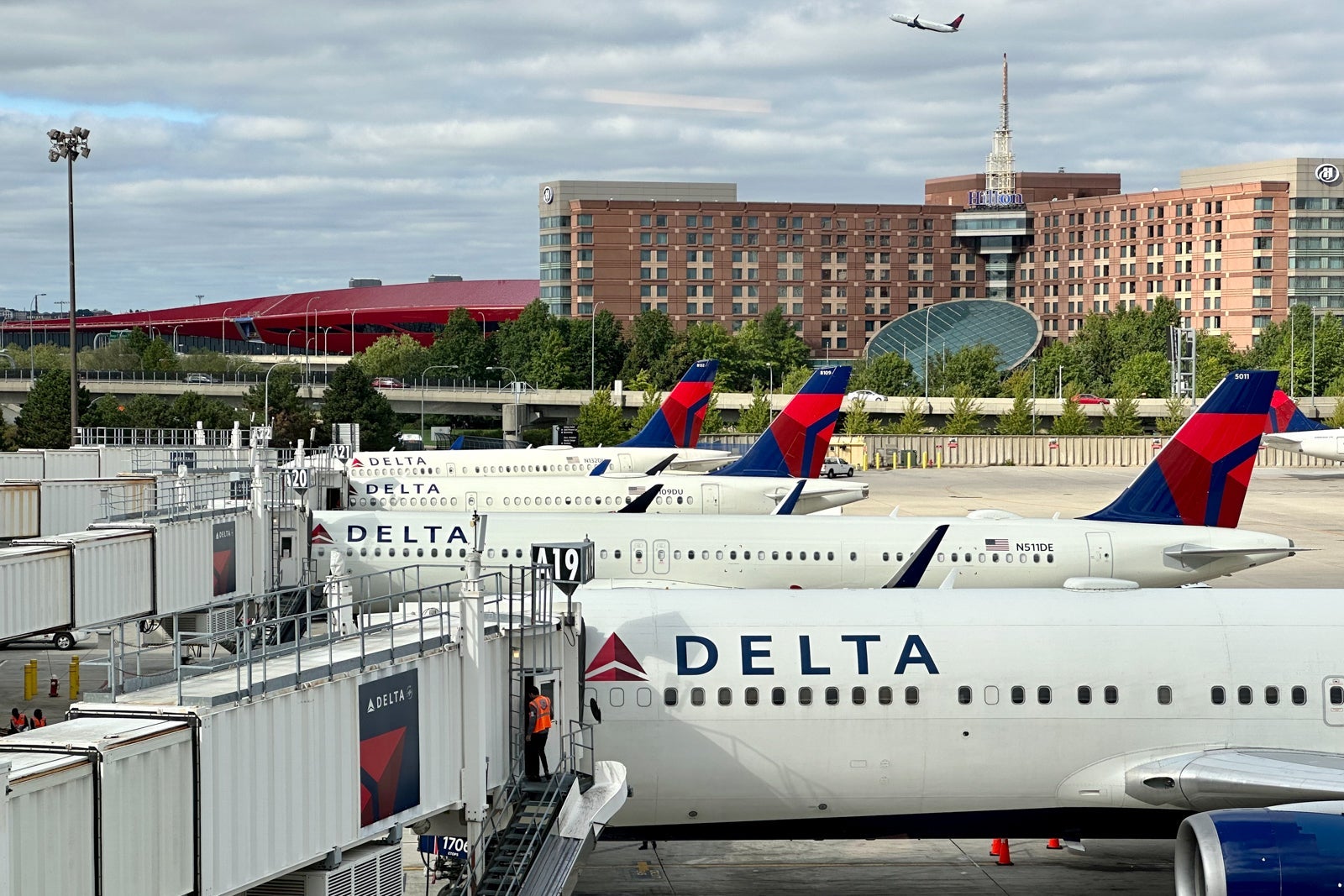
Two of the largest airlines in the U.S. now offer their cardholders lower award ticket prices. If you have a Delta Air Lines card eligible for the TakeOff 15 perk or a United Airlines card that unlocks lower redemption rates, you're likely familiar with this.
We've noticed airline programs working to keep consumers spending within their brand by offering cobranded cardholders additional travel perks, including free checked bags, priority boarding and even lower award pricing.
What does this trend tell us about the intersection of airline loyalty and credit cards? Are other domestic programs, such as American Airlines AAdvantage and Alaska and Hawaiian Airlines' Atmos Rewards, likely to follow with their own cardholder redemption perks? Let's dive into the trend and discover what may be on the horizon.
Delta and United's award ticket discounts for cardholders
Before we dive into what may happen, let's detail what's already in place for Delta and United cardholders.
Delta TakeOff 15
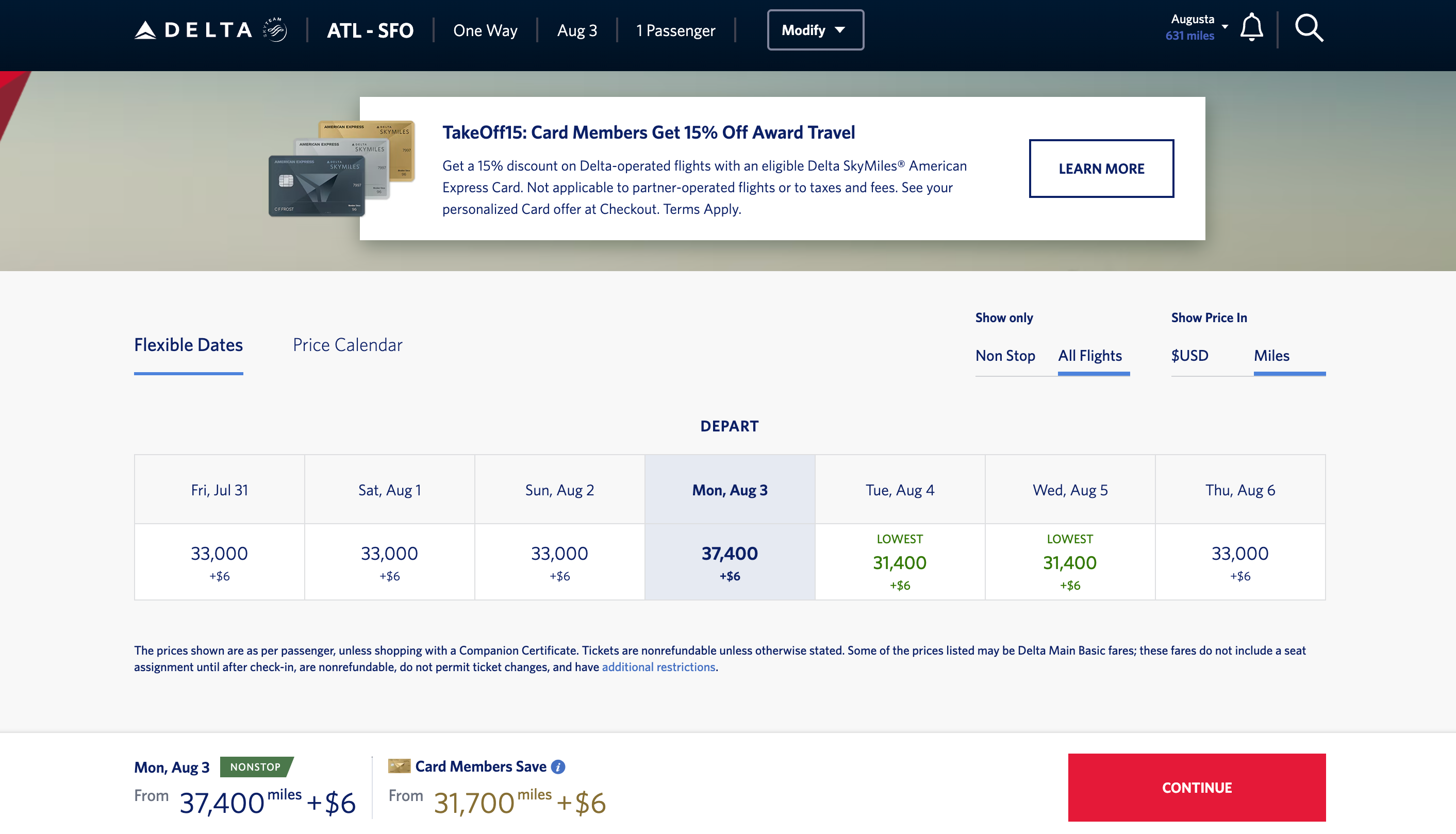
Thanks to TakeOff 15, Delta flyers with an eligible American Express cobranded card get at least 15% off the miles portion of their award ticket, as long as they use their card to pay for the taxes and fees.
Even if you aren't a Delta Amex cardmember, you can see what redemption rates would be if you held the card.
In this example, a one-way flight between Hartsfield-Jackson Atlanta International Airport (ATL) and San Francisco International Airport (SFO) would require 37,400 miles without a card, and 31,700 miles if you hold one.
DELTA
United award discounts
A TPG data project showed how United MileagePlus award pricing is quite nuanced. Redemption rates can vary depending on multiple factors (such as elite status or whether they hold a cobranded card).
These are the Chase credit cards that provide at least 10% off the miles portion of United redemptions:
The information for the United Club Business has been collected independently by The Points Guy. The card details on this page have not been reviewed or provided by the card issuer.
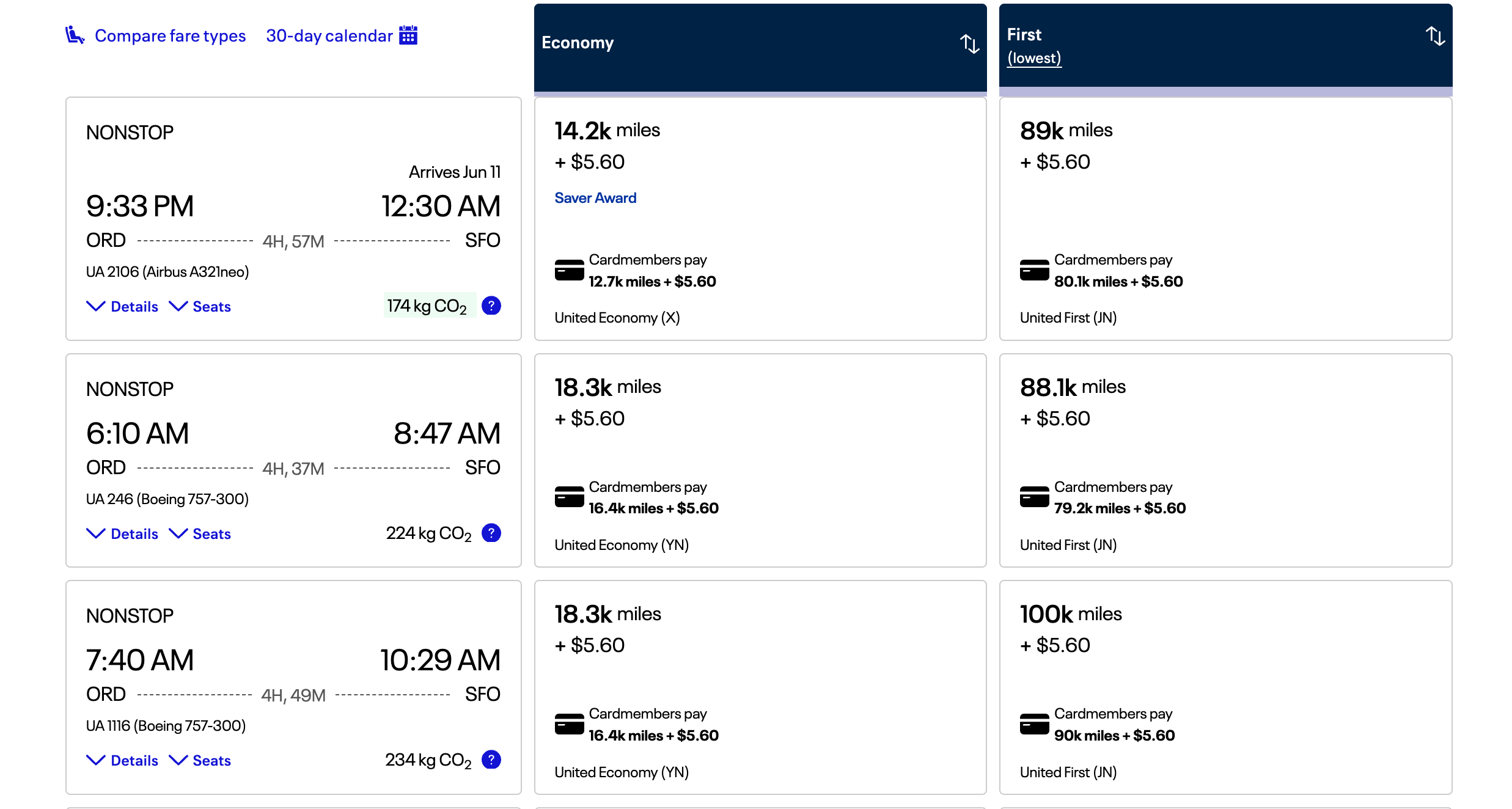
Like Delta, United will show non-cardholders the lower redemption rates available to United credit card holders.
UNITED
For instance, an economy award from Chicago's O'Hare International Airport (ORD) to SFO could cost 14,200 miles without a card, or as few as 12,700 miles with one.
Despite the wide variations in award pricing for certain accounts, it's still generally good practice to have a United card with an annual fee or hold elite status to receive discounts.
Pros and cons of lower airline award pricing for cardholders
Pro: Loyalty is rewarded — making deals easier to find
Delta fans and United loyalists can get a lot out of this. Even with dynamic pricing, eligible Delta Amex cardmembers will see 15% off eligible flights, and those with a United Chase card will get at least 10% off eligible flights.
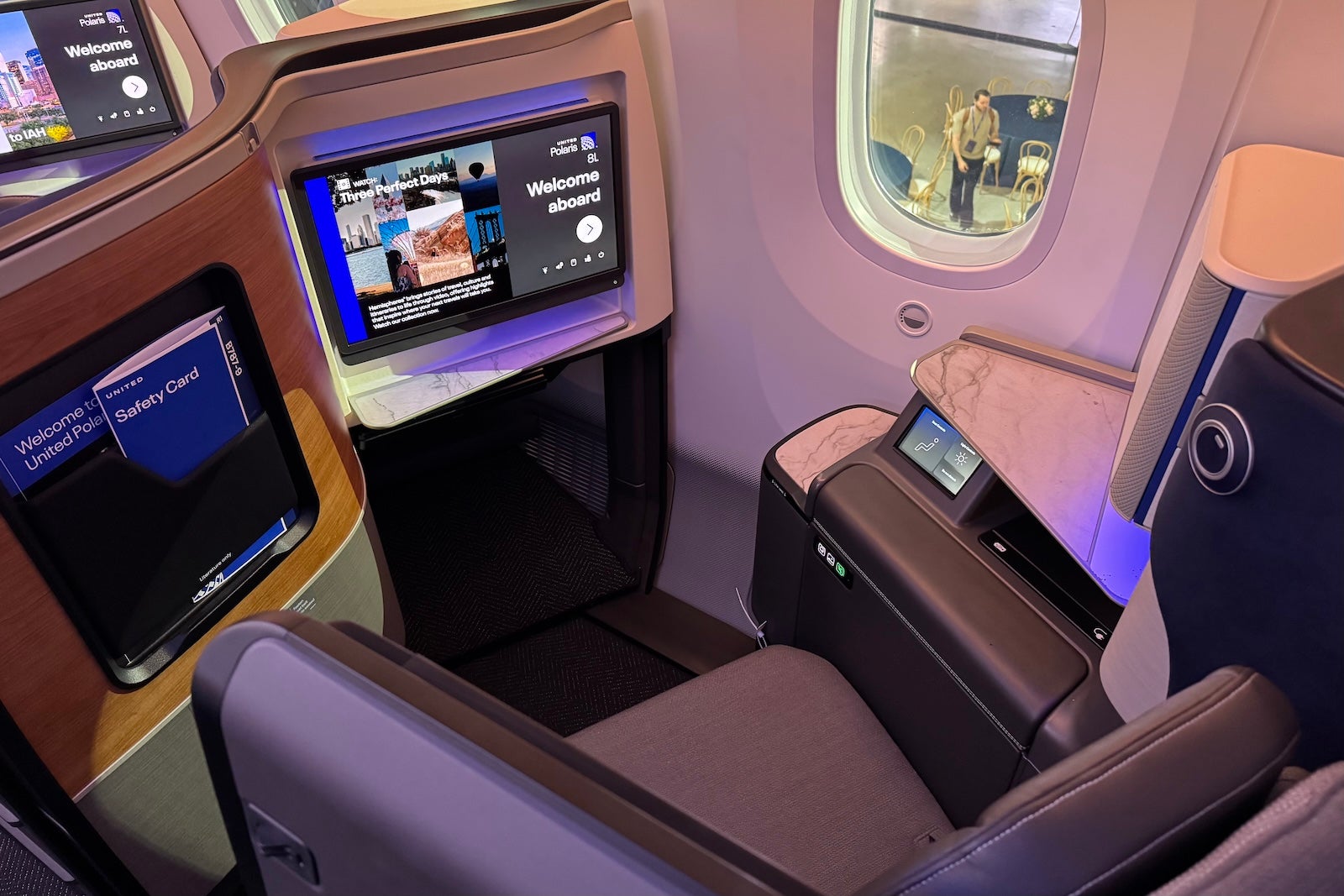
United Polaris interior. SEAN CUDAHY/THE POINTS GUY
This is the case even for the lower-annual-fee cards in the lineup. The United Explorer unlocks at least 10% off award redemptions and charges a $0 introductory annual fee for the first year, then $150. The Delta SkyMiles Gold also comes with a $0 introductory annual fee for the first year, then charges $150 each year thereafter (see ).
Therefore, if you have a stash of SkyMiles or United miles and hold an eligible cobranded card, you will automatically receive a discount on award flights. This is undoubtedly a positive for those who frequently book with Delta or United.
Con: It could become tougher for "free agents" to maximize points and miles
If you're a flyer without loyalty to one particular airline, you won't be able to access these discounted rates. But on many occasions, you will still see them as an option as you book.
While I rarely redeem SkyMiles, I recently had a decent amount in my account from some work travel. And, the best option for my specific route from my home airport, Greenville-Spartanburg International Airport (GSP) in South Carolina, to Appleton International Airport (ATW) in Wisconsin was a Delta itinerary connecting through Detroit Metropolitan Wayne County Airport (DTW).
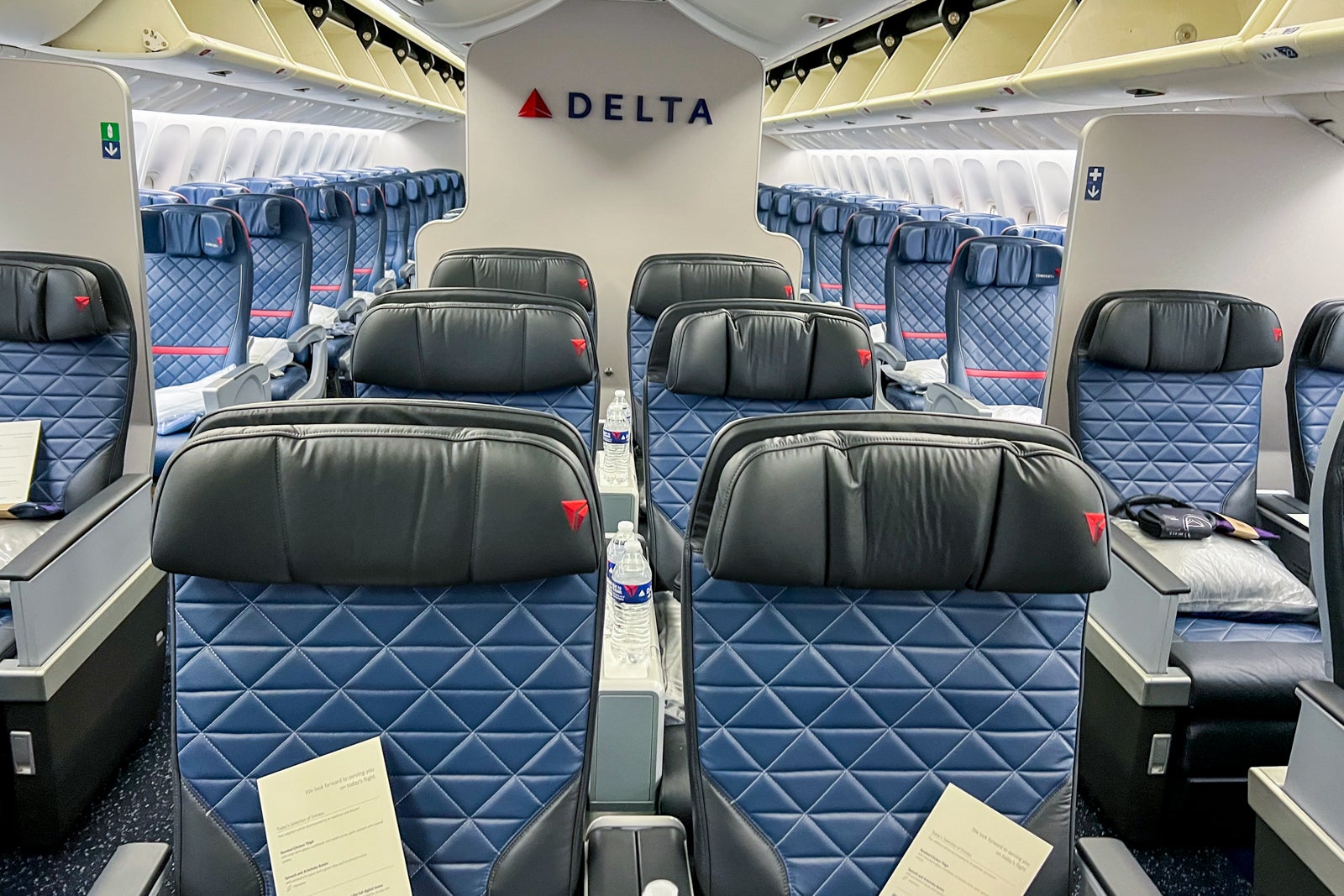
Delta Premium Select cabin. CLINT HENDERSON/THE POINTS GUY
Since I don't have a cobranded Delta Amex card, I wasn't eligible for a discounted award rate, and I paid 34,200 SkyMiles for the flight, which I transferred from American Express Membership Rewards.
I could have saved about 5,000 Amex points if I had an eligible Delta Amex card, which would've been worth $100 in savings, per TPG's April 2026 valuations.
Con: Transferable points could be less valuable for Delta and United redemptions
TPG founder Brian Kelly is a Bilt adviser and investor.
However, when I need to book through Delta SkyMiles or United MileagePlus, I need to transfer more points since I don't have a cobranded card with either airline, which would give me a discount on award tickets.
It is worth noting that you can still often find partner award availability at better rates than those offered by domestic airlines. If you want to book a Delta flight, consider checking out SkyTeam alliance member Air France-KLM Flying Blue. For United flyers, Star Alliance partner Air Canada Aeroplan could be worth a search.
This is what I stick to most of the time, since I'd rather enjoy the flexibility of transferable points and miles than rack up rewards in a specific program that could be devalued.
U.S. air travelers have a wide range of options when it comes to carriers, with many airports and popular routes oversaturated. And with airfare cash prices rising, there's now more incentive than ever to lean into loyalty for better deals — and to redeem points and miles to avoid high cash costs.
Card perks that provide ongoing discounted award rates for cardholders (like Delta's TakeOff 15) create long-term customer value beyond a lucrative, one-time welcome bonus.
So, if American Airlines wanted to create another incentive to keep their cobranded cards and engage more within their ecosystem, it could be advantageous to add a similar ongoing perk for cardholders.
Alaska and Hawaiian Airlines' Atmos Rewards could also see value in implementing this card benefit. Atmos Rewards is a newer loyalty program that emerged after the merger of Alaska and Hawaiian, so it could benefit the brand to add a perk that encourages loyalty and recognition.
The Atmos Rewards cards already include some incentives, such as priority boarding and free checked bags, but adding the ability to book cheaper awards could incentivize more consumers to apply for their cobranded cards.
An Alaska Airlines plane takes off as a Hawaiian Airlines jet taxis at San Francisco International Airport (SFO). ANDALOU/GETTY IMAGES
Personally, I find better redemption options with the AAdvantage and Atmos Rewards programs than with Delta SkyMiles and United MileagePlus, so these programs may not see an advantage in following Delta and United's formula.
Even still, there's a push for brands to maintain long-term customer value — especially through their cobranded credit cards. Past airline-specific benefits, we see this trend as cards add bonus categories for spending in various outside categories, such as foreign transactions, gas and restaurant purchases.
Discounted award rates are another way for issuers and loyalty programs to broaden their reach through cobranded cards and incentivize more consumers. And, if you're getting a discount on redeeming your rewards, you're incentivized to engage even more with these airlines' ecosystems.
Airlines have always been in competition with each other, but now could be an excellent time to see more card-specific benefits roll out to entice new cardholders and engage current program members in their ecosystem.
This is a good trend for those who are fiercely loyal to one airline or interested in carrying airline credit cards. This is the double-edged sword, since transferable points enthusiasts may be forced to go with higher redemption rates.
However, if more airline programs roll out points discounts for cardholders, it could incentivize points maximizers to add a cobranded credit card to their setups.
If you're flying often enough with Delta or United that you've collected a decent number of miles, it may be time to consider whether adding a cobranded credit card will help you get the most out of them.