The Points Guy believes that credit cards can transform lives, helping you leverage everyday spending for cash back or travel experiences that might otherwise be out of reach. That's why we publish a variety of editorial content and card comparisons: to help you find a great card to turn your goals into reality.
Our site may earn compensation when a customer clicks on a link, when an application is approved, or when an account is opened with our partners, and this may impact how or where these products appear. While we don't cover all available credit cards, our editorial team creates and maintains all of the analysis of these cards, and our content is not influenced nor subject to review by any credit card company, bank or partner prior to (or after) publication. Please view our advertising policy and product review methodology for more information.
Advertiser disclosure
The Points Guy believes that credit cards can transform lives, helping you leverage everyday spending for cash back or travel experiences that might otherwise be out of reach. That's why we publish a variety of editorial content and card comparisons: to help you find a great card to turn your goals into reality.
Our site may earn compensation when a customer clicks on a link, when an application is approved, or when an account is opened with our partners, and this may impact how or where these products appear. While we don't cover all available credit cards, our editorial team creates and maintains all of the analysis of these cards, and our content is not influenced nor subject to review by any credit card company, bank or partner prior to (or after) publication. Please view our advertising policy and product review methodology for more information.
Guides
American Express vs. Chase cash-back: Which is best?
Credit card writer Danyal Ahmed is an avid traveler, averaging about 100,000 aeronautical miles per year. He regularly applies that knowledge and his expertise in credit cards to his role as a credit card writer at TPG.
Ariana has been writing about points and miles for almost a decade. She previously served as editor at FlyerTalk, Frugal Travel Guy and NerdWallet while running her own travel blog, PointChaser.
also contributed to this story
March 24, 2025 • 14 min read
The cards we feature here are from partners who compensate us when you are approved through our site, and this may impact how or where these products appear. We don't cover all available credit cards, but our analysis, reviews, and opinions are entirely from our editorial team. Terms apply to the offers listed on this page. Please view our advertising policy and product review methodology for more information.
Editorial note: This is a recurring post, regularly updated with new information and offers.
Editorial disclaimer: Opinions expressed here are the author's alone, not those of any bank, credit card issuer, airline or hotel chain, and have not been reviewed, approved or otherwise endorsed by any of these entities.
Comments
By commenting, you agree to our Community Guidelines to help create a positive space for conversation. The responses below are not provided or commissioned by the bank advertiser, our partners, or The Points Guy (“TPG”). They have not been reviewed, approved, or otherwise endorsed by any of these parties. All responses are submitted by individual contributors, and neither the bank advertiser, our partners, nor TPG are responsible for ensuring that all posts and/or questions are answered.
Related stories
Quick summary
The article compares two major issuers' cash-back card lineups, highlighting key differences in reward structures and perks.
Some cards are best for maximizing cash back at specific merchants, while others offer flat-rate rewards or rotating bonus categories.
Personal and business cards are evaluated separately, with guidance on which types of spenders may benefit most from each option.
Flexibility in redeeming rewards and access to merchant offers or referral bonuses are notable distinctions between the issuers.
What to consider
Eligibility for welcome offers may vary, and spending requirements differ across products.
Certain cards offer enhanced rewards at select merchants or for specific spending categories, while others provide flat rates up to annual caps.
Redemption options and the ability to convert rewards to transferable points differ by issuer, impacting overall value.
What you'll miss from the article
A detailed side-by-side comparison of personal and business cash-back cards, including which features and perks best match different spending habits.
Generated by AI with support from our editorial team.
People turn to cash-back cards for simple rewards that can maximize — and sometimes even offset — their everyday spending. Both American Express and Chase offer an impressive lineup of cash-back credit cards. However, they're very different and provide unique benefits that may make choosing "the best" challenging.
We'll take a deep dive into Amex and Chase cash-back cards and see how they stack up against each other.
Find out your offer and see if you are eligible for as high as $300 cash back after spending $3,000 on purchases in the first six months of card membership. Welcome offers vary, and you may not be eligible for an offer. Cash Back is received in the form of Reward Dollars that can be redeemed as a statement credit or at Amazon.com checkout.
find out your offer and see if you are eligible for as high as $200 cash back after spending $2,000 on purchases in the first six months of card membership. Welcome offers vary, and you may not be eligible for an offer. Cash Back is received in the form of Reward Dollars that can be redeemed as a statement credit or at Amazon.com checkout.
Earn a $200 bonus after spending $500 on purchases within the first three months from account opening.
Earn $250 cash back after spending $500 in the first three months of account opening.
Annual fee
$0 introductory annual fee for the first year, then $95 (see rates and fees)
6% cash back on purchases at U.S. supermarkets (on up to $6,000 each calendar year, then 1%) and on select U.S. streaming subscriptions
3% on transit and at U.S. gas stations
Cash back is received in the form of Reward Dollars that can be redeemed as a statement credit and at Amazon.com checkout
Terms apply
3% cash back on U.S. supermarkets (up to $6,000 per calendar year; then 1%)
3% on U.S. online retail purchases (up to $6,000 per calendar year; then 1%)
3% at U.S. gas stations (up to $6,000 per calendar year; then 1%)
Cash back is received in the form of Reward Dollars that can be redeemed as a statement credit and at Amazon.com checkout
Terms apply
5% on travel booked through Chase Travel℠
3% on dining at restaurants, including takeout and eligible delivery services
3% on drugstore purchases
5% on up to $1,500 of combined purchases in bonus categories each quarter you activate
5% on travel purchased through Chase Travel
3% on dining at restaurants, including takeout and eligible delivery services
3% on drugstore purchases
All other eligible purchases
1% cash back
Cash back is received in the form of Reward Dollars that can be redeemed as a statement credit or at Amazon.com checkout
Terms apply
1% cash back
Cash back is received in the form of Reward Dollars that can be redeemed as a statement credit or at Amazon.com checkout
Terms apply
1.5% cash back
1% cash back
Comparing Amex and Chase cash-back business cards
American Express Blue Business Cash Card
Ink Business Unlimited Credit Card
Welcome offer
Find out your offer and see if you are eligible for as high as a $500 statement credit after spending $5,000 on purchases within the first three months of card membership. (Welcome offers vary, and you may not be eligible for an offer.)
Earn $750 cash back after spending $6,000 on purchases in the first three months from account opening.
2% cash back on all eligible purchases up to $50,000 per calendar year, then 1%
Cash back earned is automatically credited to your account as a statement credit
Terms apply
1.5% cash back on every purchase
Which Amex or Chase cash-back card is best for personal cards?
The best Amex or Chase card for personal use depends entirely on how you utilize the card's bonus categories and benefits. You should also keep a close eye on welcome offers, as this is your best chance to rack up quite a bit of cash back from the start.
FRESHSPLASH/GETTY IMAGES
Best welcome offer for personal cards
At a quick glance, the Chase Freedom Flex appears to have the best welcome offer. You'll only need to spend $500 in three months to earn $250 and that's very doable, even for low spenders.
New Blue Cash Preferred cardmembers can find out their offer and see if they are eligible for as high as $300 cash back after spending $3,000 on purchases in the first six months of card membership. Welcome offers vary, and you may not be eligible for an offer. Cash Back is received in the form of Reward Dollars that can be redeemed as a statement credit or at Amazon.com checkout. That should still be realistic for most spenders, but it's a significantly higher spending requirement.
The other downside? The card has a $95 annual fee after the first year, while the other personal cash back cards we've highlighted have none.
The Freedom Flex is the clear winner as far as welcome offers go.
Most rewarding personal cash-back card for spending
Once you've earned a welcome bonus, it's important to get recurring earning potential to justify keeping the card. Both Amex and Chase's cash back cards offer generous category bonuses. Choosing the "most rewarding card" is highly subjective, depending solely on your spending habits and preferences.
The Chase Freedom Flex offers the most comprehensive suite of category bonuses. With this card, you'll earn 5% back on travel booked through Chase Travel, 3% cash back on dining (including eligible delivery services) and 3% at drugstores. Plus, you'll earn 5% back on a rotating selection of categories each quarter you activate (on the first $1,500 spent, then 1% back). All other purchases earn 1% cash back.
As a bonus, these rewards can be converted to transferable Ultimate Rewards points if you have another credit card that earns these points.
KLAUS VEDFELT/GETTY IMAGES)
While the Amex Blue Cash Preferred Card earns 6% cash back on the first $6,000 spent at U.S. supermarkets per calendar year (1% after that) and select U.S. streaming subscriptions, it carries a $95 annual fee after the first year $0 intro annual fee. Cash back is received in the form of Reward Dollars that can be redeemed for a statement credit and at Amazon.com checkout.
To offset that annual fee, you'll need to spend at least $1,600 on these categories each year.
If you're searching for a cash-back card that earns more than 1% back on all purchases, the Chase Freedom Unlimited is your best bet. This card earns 1.5% back on all non-bonused spending. That doesn't stack up against a lot of other cards that earn more than 1% on every purchase, but it's good for a cash-back card.
The rewards the Freedom Unlimited earns can be converted to transferable Ultimate Rewards points with the right card, like the Freedom Flex.
Again, the best option comes down to your spending habits, but Chase cash back cards take the lead when it comes to category bonuses.
Which Amex or Chase cash-back card is best for business cards?
When comparing cash-back business cards, you'll want to consider similar factors as with personal cash-back cards. As a business owner, your spending can vary based on the size of your business and where your business spends money. It's best to choose a card where you'll be earning bonus rewards on your most frequent spending categories.
Best welcome offer for business cards
The Ink Business Unlimited Credit Card stands out. The Ink Business Unlimited allows new cardholders to earn $750 cash back after spending $6,000 on purchases in the first three months from account opening.
The welcome offer from the American Express Blue Business Cash Card, on the other hand, is smaller. With it, new cardmembers can find out their offer and see if they are eligible for as high as a $500 statement credit after spending $5,000 on purchases within the first three months of card membership. (Welcome offers vary, and you may not be eligible for an offer.) Although this is $250 less than the Ink Business Unlimited's welcome offer, smaller businesses may have an easier time with the spending requirement.
If your business can naturally spend $6,000 in three months, go with the Ink Business Unlimited. Otherwise, the Amex Blue Business Cash may be a better fit.
Most rewarding business cash-back card for spending
The American Express Blue Business Cash Card offers a simple reward structure. Blue Business Cash cardmembers earn a flat 2% cash back on the first $50,000 spent on eligible purchases each calendar year (then 1%). It's ideal for those who don't want multiple cards in their wallets or to keep track of bonus categories.
Cash back earned on this card is automatically credited to your account as a statement credit. That's a great feature for anyone who wants to take the complication out of redeeming rewards.
SOLSTOCK/GETTY IMAGES
The Ink Business Unlimited earns cash back at a lower rate than the Amex Blue Business Cash but lacks a spending cap. With this card, you'll earn 1.5% back on all eligible purchases.
If your business spends more than $50,000 annually, it makes sense to go with the Ink Business Unlimited. Otherwise, you'll get more bang for your buck with the Blue Business Cash.
Amex and Chase cater to different customers with their respective cash-back cards. Consider your spending habits and determine which option is best for you.
Best recurring card perks
Cash-back cards aren't renowned for their travel perks — however, both Amex and Chase offer unique recurring benefits.
Statement credits
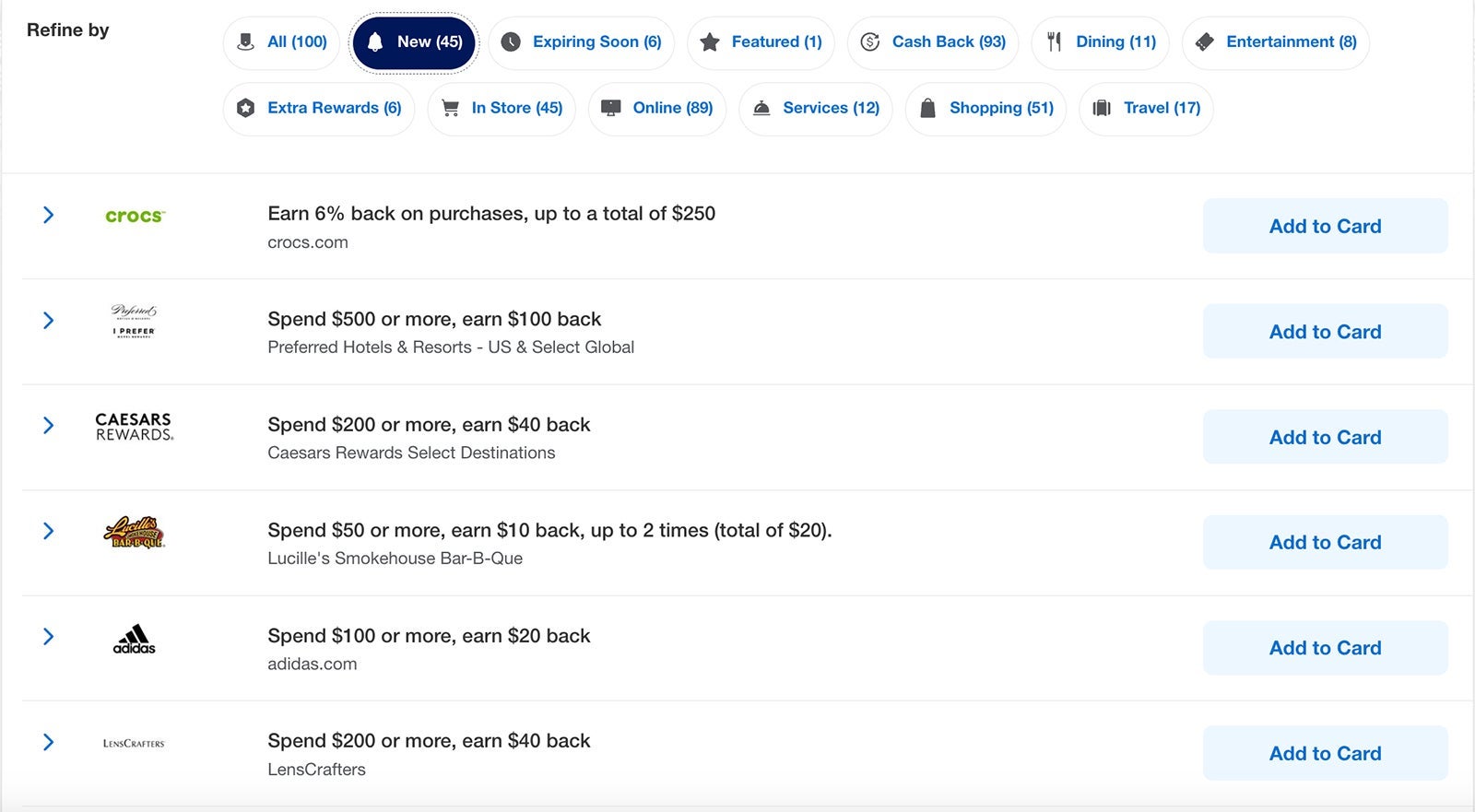
For starters, Amex cash-back cards give you access to Amex Offers, a changing list of deals from popular merchants offering statement credits and bonus points. Enrollment is required; terms apply.
AMERICANEXPRESS.COM
Many other banks now offer sync deals but don't quite measure up to Amex Offers. For example, Chase regularly offers 10% back at popular brands, but they usually come with a maximum of $20 back or less. Amex's higher-value offers make its cash-back cards even more valuable.
Amex Blue Cash Preferred cardmembers receive up to $120 annually (up to $10 each month) as a statement credit for Disney Streaming purchases. Blue Cash Everyday cardmembers receive up to $84 each calendar year (up to $7 each month) as a statement credit for Disney Streaming purchases. While these credits may not cover the cost of your entire Disney Bundle subscription, it can help a lot if you're already a subscriber.
Valid at DisneyPlus.com, Hulu.com or Stream.ESPN.com U.S. websites; subject to auto-renewal; enrollment is required.
Shopping
Chase compensates by offering a slew of other perks. Specifically, Chase Freedom Unlimited and Freedom Flex cardholders get three months of complimentary DoorDash DashPass (activate by Dec. 31, 2029). Plus, cardholders get 2% cash back on Lyft rides through Sept. 30, 2027. Ink Business Unlimited cardholders will enjoy 5% back on Lyft rides through the same date.
Depending on your shopping habits, these Chase perks may far outweigh the offers you'll get with an Amex card.
Refer-a-friend bonuses
Amex cash-back cards also have an advantage when it comes to refer-a-friend bonuses. Both Amex and Chase banks allow cash-back cardmembers to earn bonus rewards for successful referrals.
When it comes to business cards, I utilize refer-a-friend links as an Ink Business Preferred® Credit Card (see rates and fees) cardholder. In the past 12 months, I've earned 80,000 bonus Chase Ultimate Rewards from successful approvals to various Chase Ink cards from friends and family.
Amex offers referral bonuses, but they're inconsistent and often limited to certain cards. If you're planning to earn more rewards by referring friends and family to your card, you'll want to opt for a Chase card.
Flexibility
One significant advantage that Chase cash-back cards have over Amex is flexibility in redeeming rewards. Cash back doesn't have to be just cash back if you have another Chase card that earns Ultimate Rewards points.
You can convert your cash back to transferable Ultimate Rewards points if you also have a card such as the Chase Sapphire Preferred® Card (see rates and fees). So those 5% rotating category bonuses from the Chase Freedom Flex can be equivalent to earning 5 Ultimate Rewards points per dollar spent.
OSCAR WONG/GETTY IMAGES
This is significant because according to TPG's March 2025 valuation, Ultimate Rewards points are worth 2.05 cents each when transferred to airline and hotel partners. So, by taking advantage of this option, you're essentially doubling the value of your rewards.
Unfortunately, you can't convert Amex cash-back rewards to Membership Rewards points, so your Amex cash redemption options are far more limited than what you'll get with a Chase card.
Bottom line
When comparing Amex versus Chase cash-back cards, it's important to weigh all the different features based on what's important to you.
If you're after more flexible rewards and referral bonuses, Chase is easily your winner. However, Amex will take the lead if you want more valuable merchant offers.
But remember — you don't have to choose just one. You might decide that a card from each issuer will make the perfect card pairing for your wallet.
For rates and fees of the Blue Cash Preferred card, click here. For rates and fees of the Blue Cash Everyday card, click here. For rates and fees of the Amex Blue Business Cash card, click here.
Comments
By commenting, you agree to our Community Guidelines to help create a positive space for conversation. The responses below are not provided or commissioned by the bank advertiser, our partners, or The Points Guy (“TPG”). They have not been reviewed, approved, or otherwise endorsed by any of these parties. All responses are submitted by individual contributors, and neither the bank advertiser, our partners, nor TPG are responsible for ensuring that all posts and/or questions are answered.