The Points Guy believes that credit cards can transform lives, helping you leverage everyday spending for cash back or travel experiences that might otherwise be out of reach. That's why we publish a variety of editorial content and card comparisons: to help you find a great card to turn your goals into reality.
Our site may earn compensation when a customer clicks on a link, when an application is approved, or when an account is opened with our partners, and this may impact how or where these products appear. While we don't cover all available credit cards, our editorial team creates and maintains all of the analysis of these cards, and our content is not influenced nor subject to review by any credit card company, bank or partner prior to (or after) publication. Please view our advertising policy and product review methodology for more information.
Advertiser disclosure
The Points Guy believes that credit cards can transform lives, helping you leverage everyday spending for cash back or travel experiences that might otherwise be out of reach. That's why we publish a variety of editorial content and card comparisons: to help you find a great card to turn your goals into reality.
Our site may earn compensation when a customer clicks on a link, when an application is approved, or when an account is opened with our partners, and this may impact how or where these products appear. While we don't cover all available credit cards, our editorial team creates and maintains all of the analysis of these cards, and our content is not influenced nor subject to review by any credit card company, bank or partner prior to (or after) publication. Please view our advertising policy and product review methodology for more information.
Guides
Complete guide to United’s revenue, award and upgrade fare classes
Kyle Olsen is the former points and miles reporter at TPG. He specializes in maximizing points and miles, elite status and credit cards so readers travel more comfortably and at a lower cost.
Mike Avila is an Emmy Award-winning TV producer who has worked for NBC, CBS, ABC, to name just a few. He’s a published author of books such as the recent “Wolverine: Creating Marvel’s Legendary Mutant.” He also was executive producer of the SYFY Originals documentary, “Todd McFarlane: Like Hell I Won’t.”
also contributed to this story
February 24, 2025 • 10 min read
The cards we feature here are from partners who compensate us when you are approved through our site, and this may impact how or where these products appear. We don't cover all available credit cards, but our analysis, reviews, and opinions are entirely from our editorial team. Terms apply to the offers listed on this page. Please view our advertising policy and product review methodology for more information.
Editorial note: This is a recurring post, regularly updated with the latest information.
Editorial disclaimer: Opinions expressed here are the author's alone, not those of any bank, credit card issuer, airline or hotel chain, and have not been reviewed, approved or otherwise endorsed by any of these entities.
Comments
By commenting, you agree to our Community Guidelines to help create a positive space for conversation. The responses below are not provided or commissioned by the bank advertiser, our partners, or The Points Guy (“TPG”). They have not been reviewed, approved, or otherwise endorsed by any of these parties. All responses are submitted by individual contributors, and neither the bank advertiser, our partners, nor TPG are responsible for ensuring that all posts and/or questions are answered.
Related stories
Quick summary
United Airlines has increased the requirements for earning elite status, making it more challenging to achieve higher Premier tiers.
The carrier has simplified the process for redeeming upgrade benefits, particularly PlusPoints, for Premier status holders.
Understanding United's fare classes is crucial, as they impact upgrade eligibility, mileage accrual and flight change policies.
Enabling Expert Mode on United's website allows travelers to view detailed fare class information when booking flights.
What to consider
Fare class codes determine upgrade eligibility and the number of PlusPoints required for cabin upgrades.
Basic economy fares are not eligible for upgrades and may earn fewer miles compared to higher fare classes.
Mileage accrual can differ significantly when crediting United flights to partner loyalty programs, depending on fare class and distance flown.
What you'll miss from the article
A detailed breakdown of United's fare classes, including how they affect upgrades, award bookings and earning miles with partner programs.
Generated by AI with support from our editorial team.
Comments
By commenting, you agree to our Community Guidelines to help create a positive space for conversation. The responses below are not provided or commissioned by the bank advertiser, our partners, or The Points Guy (“TPG”). They have not been reviewed, approved, or otherwise endorsed by any of these parties. All responses are submitted by individual contributors, and neither the bank advertiser, our partners, nor TPG are responsible for ensuring that all posts and/or questions are answered.
The recent changes to United Airlines' MileagePlus program are a mixed bag for customers. For one, the carrier raised thresholds for each tier — Silver, Gold, Platinum and 1K — by roughly 25%, making it harder to achieve Premier status across them. At the same time, however, United has made the perks that come with achieving status easier to redeem — specifically regarding PlusPoints, the airline's flexible upgrade currency for Premier status holders.
The MileagePlus program has a variety of fare classes, and if you're a beginner to the points and miles game, they can be confusing and overwhelming to figure out at first.
United uses different letter codes within its reservation systems to label different buckets of tickets. While we commonly refer to them as economy, premium economy, business class or first class, the reservations systems use designators such as Y, O and J, among others.
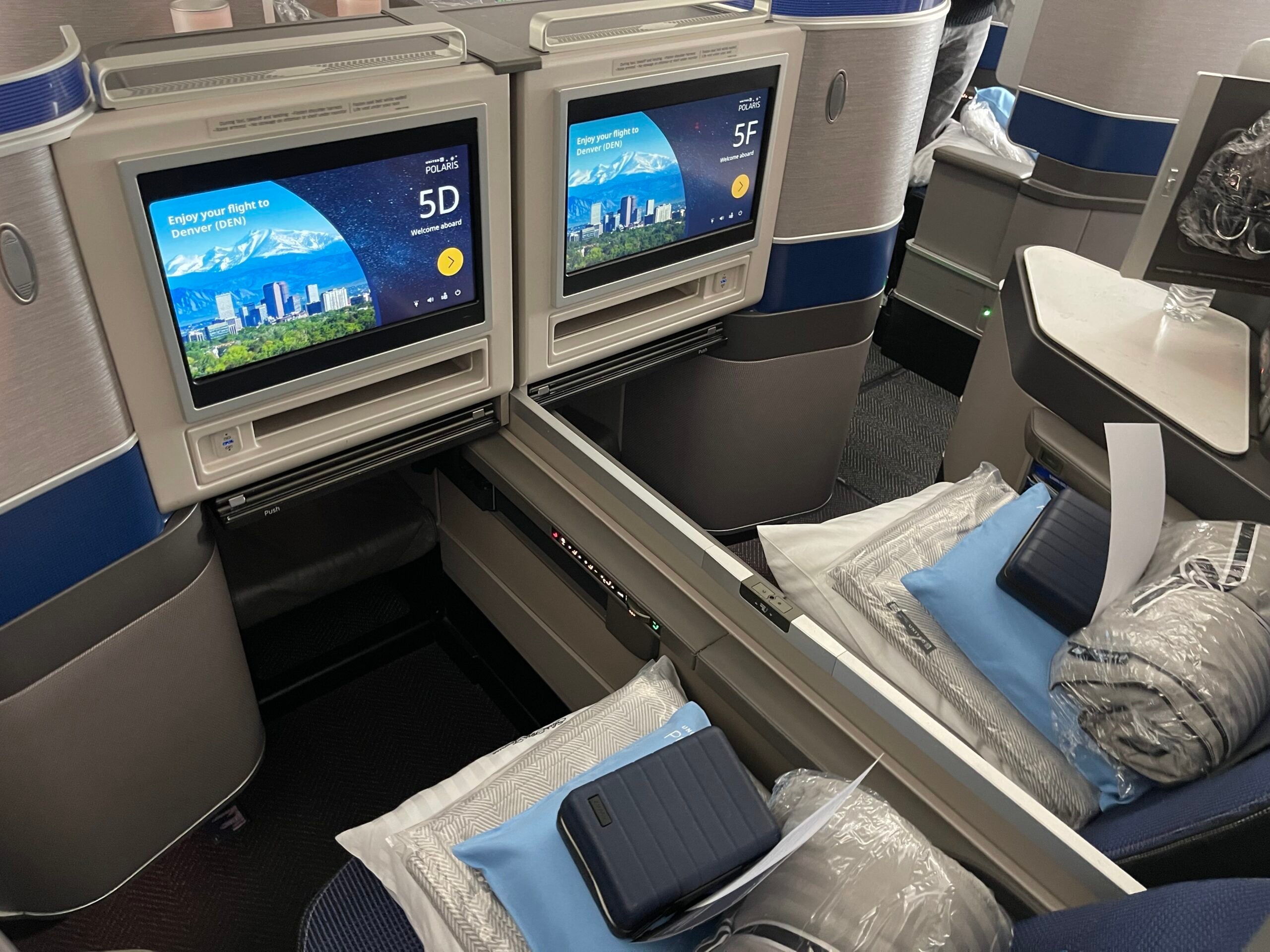
Let's consider the United Polaris cabin. Regardless of the seat they choose, passengers in this cabin may have booked their tickets in different fare classes. For example, a passenger in Seat 1A might have booked the "I" class, which typically is the fare class for booking a "Saver Reward" ticket using miles. Another passenger in Seat 8L might have booked a full-fare (cash) "J" ticket. While the inflight experience will remain the same, important distinctions remain between the two.
United’s Polaris business class uses the same fare codes as domestic first class. KYLE OLSEN/THE POINTS GUY
Understanding fare classes is essential for frequent United flyers as they affect mileage and Premier qualifying point earnings, which are tied to the price of your ticket. For instance, a basic economy passenger with an "N" ticket will earn significantly fewer miles than a business traveler with a full-fare "Y" ticket.
Paying attention to fare classes is important if you're looking to get an upgrade to a higher cabin. An upgrade from economy, the "W" fare class, to Polaris business class requires 40 PlusPoints, while lower-priced fare classes could require double that amount to get bumped on long-haul flights.
These fare class codes also apply when making flight changes. If only a higher fare class is available, you may need to pay the price difference, even when using United's same-day-change policy. Therefore, it's crucial to familiarize yourself with these codes.
Let's take a look at how United breaks them down.
Revenue fare classes
United uses many different fare classes for standard revenue tickets. These letters apply to paid tickets booked directly with United, but they also apply to reservations made via credit card travel portals — including Chase Travel™ and American Express Travel.
This will allow you to see the complete list of fare classes when searching for paid itineraries on United-operated flights, like this flight below from Miami International Airport (MIA) to Munich Airport (MUC). Note that this setting can sometimes be disabled automatically and may require you to reactivate it when you revisit.
UNITED
The list of available fare classes includes paid tickets, upgrades and awards, all mixed in.
Starting with revenue fares, here’s how it breaks down:
First/business class
J: Full fare
C: High fare
D: High fare
Z: Discounted fare
P: Deepest-discounted fare
Premium Plus
O: High fare
A: Discounted fare
R: Deepest-discounted fare
Economy
Y: Highest full fare — regional instant upgrades for all elite members when PN is available (or PZ if Premier 1K)
B: Full fare — regional instant upgrades for all elite members when PN is available (or PZ if Premier 1K)
M: High fare — regional instant upgrades for Premier 1K when PZ is available
E: High fare
U: High fare
H: High fare
Q: Discounted fare
V: Discounted fare
W: Lowest standard Polaris-upgrade-eligible fare
S: Deep-discounted fare
T: Deep-discounted fare
L: Deep-discounted fare
K: Deep-discounted fare
G: Deepest-discounted fare
N: Basic economy on domestic and short-haul international flights
Notice that the last fare class you see for this ticket in the above example is "K."
In the following itinerary from San Francisco International Airport (SFO) to Singapore Changi Airport (SIN), you'll notice all the previous fare classes along with "G" and "N," which are United's deepest-discounted class and its basic economy class, respectively.
UNITED
When you book United tickets, you'll often see multiple prices for the same economy fare class. Domestic and short-haul international flights offer an "upgrade" option to convert a discounted fare into a fully refundable one. Meanwhile, long-haul international flights usually have three different options for the lowest-priced economy fare class:
Basic economy (limited perks)
Economy (standard perks)
Flexible economy (standard perks on a fully refundable fare)
Pay close attention to the ticket you book to know exactly what to expect.
How fare classes affect partner mileage rates
When you book United flights via United's website, you earn MileagePlus miles based on the price of your ticket. However, if you opt to credit these flights to a partner program, such as Air Canada Aeroplan, the miles are typically earned based on fare class or distance flown.
Let's use Air Canada Aeroplan as an extended example. Here's the accrual chart for United-operated flights credited to your Aeroplan account:
AIR CANADA
In the above flight from San Francisco to Singapore, Great Circle Map calculates the distance as 8,446 miles. Booking a ticket in the "S" fare class would accrue Aeroplan points at 50% of said distance — so you'd take home 4,223 points. This is notably higher than the 1,975 United miles you'd earn with United MileagePlus.
Using the same chart, the Miami-to-Munich flight is calculated at 5,007 miles. A "T" fare class ticket would earn 2,950 miles with MileagePlus, a notable improvement over the 2,500 points you would earn with Aeroplan.
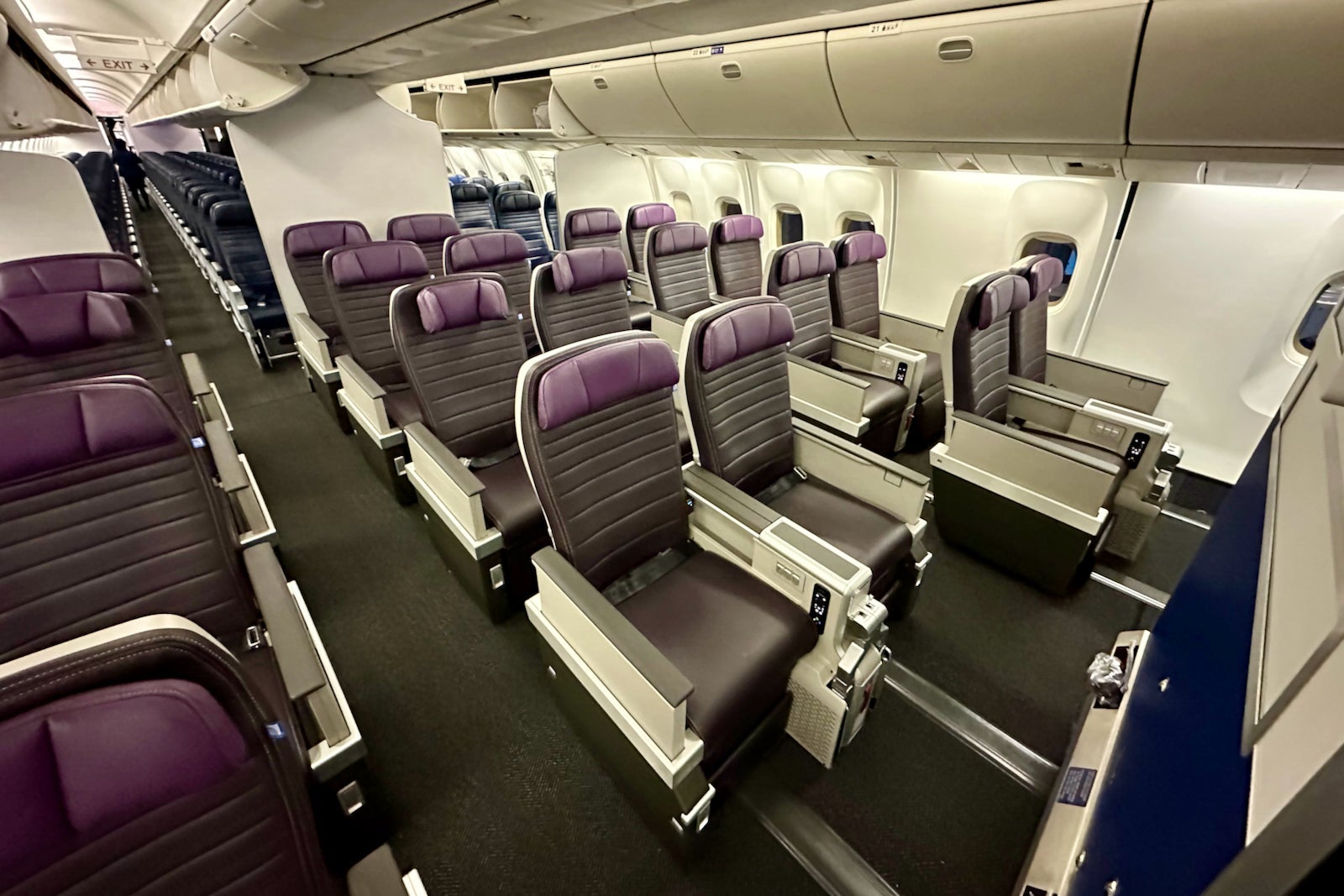
Understanding United's fare classes could help you upgrade from economy to Premium Plus. ZACH GRIFF/THE POINTS GUY
United also has different fare classes for upgrading to a higher cabin. This includes travelers booked in economy who want to upgrade to Premium Plus or Polaris business class, as well as ticketed passengers in Premium Plus who want to snag a business-class seat. These can also vary depending on your United elite status tier.
First/business class
PN: Reserved for Global Services members, providing instant upgrades and mileage redemptions for Premier 1K customers on eligible full-fare economy tickets
PZ: Available for Premier Platinum and 1K members using PlusPoints or mileage awards; also applies to Complimentary Premier Upgrades
Premium Plus
RN: Upgrades for all members
Upgrade-eligible fare classes
While these upgrade classes are fixed, the price you'll need to pay to upgrade is not, as it depends on the revenue fare class you book. Passengers with tickets in the "W" fare class or higher can use 40 PlusPoints to upgrade to Polaris business class on eligible international flights. However, tickets booked in S, T, L, K or G fare classes require 80 points for the upgrade.
All paid Premium Plus fares are eligible for Polaris upgrades at 30 PlusPoints, and all regular economy fares can be upgraded to Premium Plus for 20 PlusPoints.
Note that United's basic economy fares — which book into the N fare class — aren't eligible for any upgrade.
Now, let's discuss award tickets. There are nine fare classes for mileage tickets, and the rates can differ significantly among the codes. As noted above, you can view all fare class availability by enabling Expert Mode. From there, you'd initiate a revenue search instead of selecting "Book with miles" on United's website.
Here's a breakdown of United's award fare classes:
First/business class
JN: Everyday award for all members (dynamic pricing)
IN: Saver award for Premier Platinum and 1K members
I: Saver award for all other customers and partner redemptions
Premier Platinum, 1K and Global Services members have expanded access to business- and first-class saver awards in the IN fare class on United-operated flights, offering greater availability than standard saver awards in the"I" fare class. These additional award seats are only visible when logged in to an eligible MileagePlus account.
As a general rule of thumb, United typically releases more seats to the "IN" fare than the "I" fare (the standard fare class for business-class and domestic first-class saver awards), so Premier Platinum and 1K members will get more choices.
YN: Everyday award for all members (dynamic pricing)
XN: Saver award for elite members and select credit card holders
X: Saver award for all other customers and partner redemptions
If you're the primary cardholder of a United℠ Explorer Card (see ), United℠ Business Card (see ), United Quest℠ Card (see ) or United Club℠ Card (see ), you can access expanded economy-class saver awards, giving you access to the XN fare class. This also applies to all United elite members — including Premier Silver and Premier Gold members. United often releases more seats to the XN fare than the X fare (the standard fare class for economy-class saver awards); however, like with business class, only X inventory is available using partner programs.
Bottom line
While navigating rewards programs like MileagePlus can be confounding at times, frequent flyers should familiarize themselves with fare classes. Understanding their meanings will help make the booking process and earning credit from flights much easier.
While you don't need to memorize all the fare classes immediately, don't forget to enable Expert Mode on United's website. This will grant you access to this valuable information whenever you log in, whether through the airline's website or mobile app. Keep in mind that occasionally the website may disable it — so you may have to go back into your settings and reset it.