Fairness of frequent flyer programs put in the spotlight at hearing in Washington

Are frequent flyer programs fair to their members?
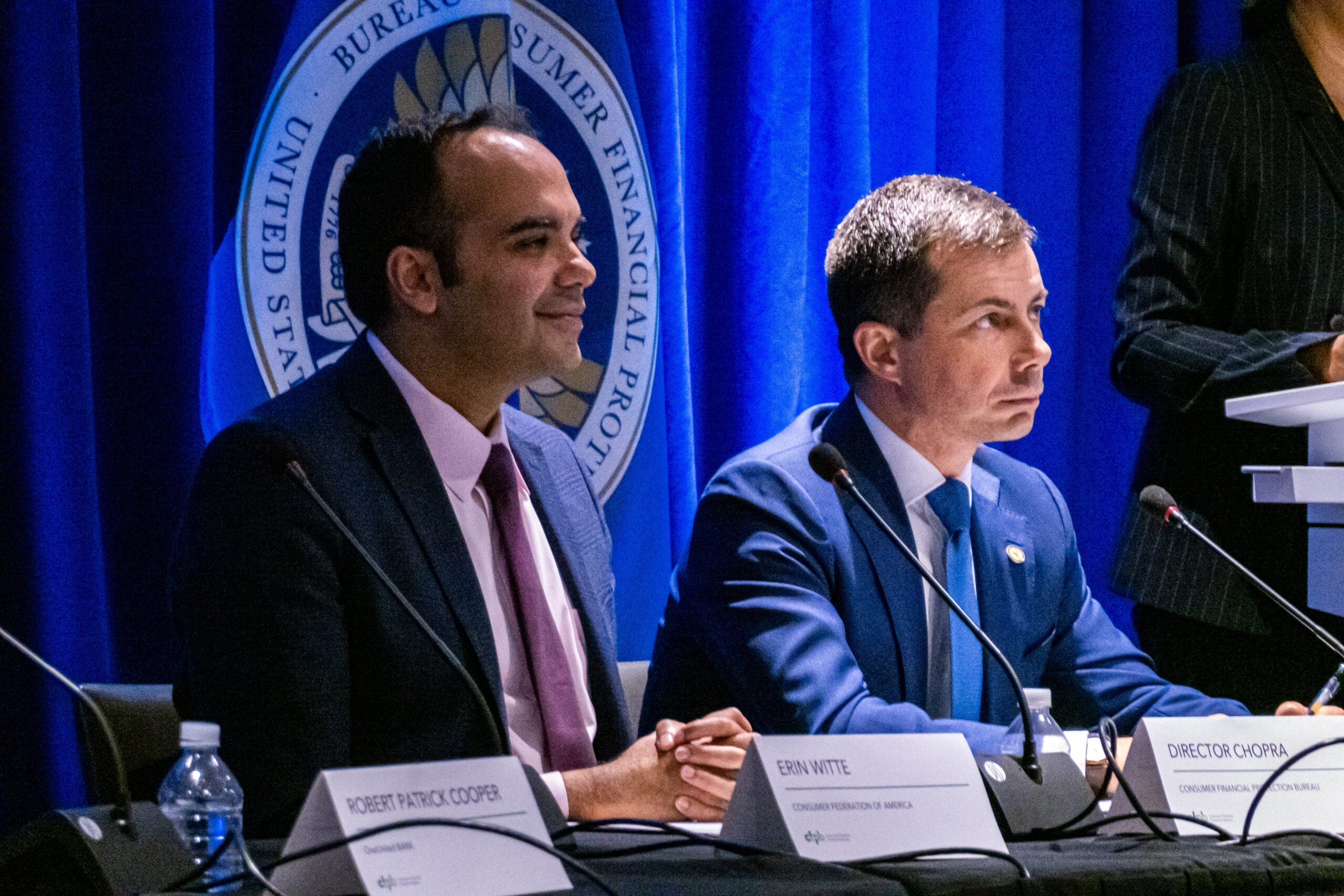
That was the subject of a Thursday hearing in Washington, D.C., held jointly by the U.S. Department of Transportation and the Consumer Financial Protection Bureau.
The hearing, announced last month following reports in late December that the DOT was investigating frequent flyer programs, was positioned as a fact-finding, informational event rather than a formal investigation.
"The joint hearing is an opportunity for DOT and CFPB to gather more information for determining if additional action is needed to ensure fair competition in these industries and a fair and transparent experience for passengers and cardholders," the agencies said in a statement last month announcing the hearing.
Along with remarks by Transportation Secretary Pete Buttigieg and CFPB director Rohit Chopra, the hearing featured remarks and a panel discussion with several airline and banking industry representatives.
But there was one group that was conspicuously absent from the hearing: the largest airlines and banks that control the biggest frequent flyer programs.
Instead, participants included:
- Scott DeAngelo, executive vice president and chief marketing officer at Allegiant Air
- Morgan Harper, director of policy and advocacy at the American Economic Liberties Project
- Andrew Grimm, president and CEO of Apple Federal Credit Union
- Sara Nelson, international president of the Association of Flight Attendants-CWA
- Lukas Johnson, chief commercial officer at Breeze Airways
- Erin Witte, director of consumer protection at the Consumer Federation of America
- Robert Patrick Cooper, senior vice president and general counsel at OneUnited Bank
- Matthew H. Klein, executive vice president and chief commercial officer at Spirit Airlines
At least one of the "big four" U.S. airlines — American Airlines, Delta Air Lines, United Airlines and Southwest Airlines — was not invited to participate, an airline source familiar with the matter confirmed to TPG.

A representative for the DOT told TPG that every airline except for American and United had been invited — those two were omitted because they were originally scheduled to have representatives appear at a conflicting congressional hearing at the same time but where they did not ultimately appear. Delta and Southwest declined to share why they were not present.
The point of the two agencies' focus on frequent flyer programs and credit card rewards is primarily geared toward making sure that consumers get the value they expect and are treated fairly, the two agency heads said.
The rewards have evolved and expanded significantly since they were first introduced in the 1980s, with some consumers factoring in their savings in points and future rewards potential into their broader financial decision making.
"Point systems like frequent flyer miles, and credit card points have become a meaningful part of our economy," Buttigieg said during opening statements. "It's clear that these programs contain a considerable amount of value, and like anything of value transacted in our economy, it's important that it's handled fairly."
"These programs have evolved from many years ago, from rewards for the airlines' most loyal customers to a multibillion-dollar currency market where credit card companies and airlines buy, sell, convert and issue miles and points throughout sectors of the economy," Chopra added.
Most of the speakers said that they were broadly in favor of the programs and the value they provide to consumers, and personally engaged with them. Buttigieg, for instance, described how his family would use frequent flyer miles to visit family abroad when he was growing up. Buttigieg has previously told TPG that he is a frequent user of points and miles and maintains elite status in various loyalty programs.
Related: DOT Sec. Pete Buttigieg is a points and miles fan — but he tells TPG he turns down the free upgrades
With points and miles increasingly functioning as a currency, the idea is to ensure that consumers have a degree of protection.
Over the course of the 90-minute hearing, two clear themes emerged, offering a clue into how the DOT and the CFPB might plan to take the project.
First up was whether changes to frequent flyer programs are fair to consumers. Speakers brought up the track record of major airlines devaluing their frequent flyer programs, offering fewer rewards and raising redemption rates.
"Our initial review of all the fine print suggests that credit card companies and airlines have the power to quickly and dramatically devalue points by making it more challenging to redeem them, or by limiting the inventory that can be purchased with points," Chopra said.
Witte suggested that devaluations should be prohibited altogether.
"Devaluing something that a person has earned, and the reason they entered into that program — a retroactive devaluation, where they've invested their time and money — is really problematic," Witte said.
The second recurring theme at the hearing was the ways in which rewards programs contribute to — or harm — competition between airlines and banks.
On the airline side, in particular, larger carriers can lean on revenue from their frequent flyer programs to help subsidize less profitable flights. The largest airlines make billions of dollars per year from their frequent programs. In some cases, they can make more money from the programs than from flying.
The bulk of that revenue comes from selling miles in bulk to their banking partners, which issue cobranded credit cards. The banks pay airlines for the miles, which they distribute to cardholders as rewards for spending.
Cobranded credit cards have become big business for airlines over the past decade, boosting valuations of their frequent flyer programs and driving billions of dollars in annual revenue for the carriers.
Delta, for instance, has said that nearly 1% of the U.S. gross domestic product is spent on its cobranded credit cards. The airline earned $1.7 billion from its cobranded credit card partnership with American Express in the first quarter of this year.
In 2020, during the peak of the COVID-19 pandemic, United used its MileagePlus loyalty program to secure a $5 billion loan, valuing the program at nearly $22 billion.
Because the bigger airlines make so much money from the programs, they can afford to compete more aggressively when a new or smaller airline tries to get a foothold in a given market, several speakers said on Thursday.
"We would be particularly concerned if there were evidence that some programs are being operated in a way that has the potential to block the entry or growth of smaller airlines competitors, which could ultimately limit options for consumers," Buttigieg said.
Nelson said that airlines offer flight attendants bonuses of around $50 to $100 when someone is approved for a credit card using an application they give out during a flight.
"There are some flight attendants who are subsidizing their incomes by $10,000 to $15,000 per year through these programs," Nelson said.
The departments' joint process of looking at loyalty programs is still in preliminary stages, Buttigieg said, as they're focused on gathering information and understanding the finer points.
It was unclear whether anything further would come following the hearing. One thing seemed evident, however: The programs offer overall value to users.
According to a report published by the CFPB on Thursday, even as some consumers express frustration over the complexity and opacity of frequent flyer programs, the programs remain valuable.
Consumers earned $40 billion worth of rewards from credit cards in 2022, a 50% increase from 2019, the report said. While costs associated with the programs have risen mostly because of increased spending, the value of rewards earned has risen, too, from 1.4 cents per dollar spent in 2019 to 1.6 cents per dollar spent in 2022.
Related reading:
TPG featured card

at Capital One's secure site
Terms & restrictions apply. See rates & fees.
| 5X miles | Earn 5X miles on hotels, vacation rentals and rental cars booked through Capital One Travel |
| 2X miles | Earn unlimited 2X miles on every purchase, every day |
Pros
- Stellar welcome offer of 75,000 miles after spending $4,000 on purchases in the first three months from account opening. Plus, a $250 Capital One Travel credit to use in your first cardholder year upon account opening.
- You'll earn 2 miles per dollar on every purchase, which means you won't have to worry about memorizing bonus categories
- Rewards are versatile and can be redeemed for a statement credit or transferred to Capital One’s transfer partners
Cons
- Highest bonus-earning categories only on travel booked via Capital One Travel
- LIMITED-TIME OFFER: Enjoy $250 to use on Capital One Travel in your first cardholder year, plus earn 75,000 bonus miles once you spend $4,000 on purchases within the first 3 months from account opening - that’s equal to $1,000 in travel
- Earn unlimited 2X miles on every purchase, every day
- Earn 5X miles on hotels, vacation rentals and rental cars booked through Capital One Travel
- Miles won't expire for the life of the account and there's no limit to how many you can earn
- Receive up to a $120 credit for Global Entry or TSA PreCheck®
- Use your miles to get reimbursed for any travel purchase—or redeem by booking a trip through Capital One Travel
- Enjoy a $50 experience credit and other premium benefits with every hotel and vacation rental booked from the Lifestyle Collection
- Transfer your miles to your choice of 15+ travel loyalty programs
- Top rated mobile app