If you were planning a vacation, which recommendation sources would you be most likely to follow?
Gen Z & Millennials
Gen X & Older



New technology, a changing economic landscape, shifting consumer behaviors and fierce brand competition: Travel and loyalty look markedly different today than 10 years ago — and the evolution of the industry doesn’t show signs of slowing down.
That’s why it’s more important than ever that savvy travelers stay updated on changing government and industry policies. It also remains vital to be flexible when planning travel and to take advantage of all the tools that can help improve the experience (without breaking the bank).
Here are the top trends TPG experts are seeing across the industry — and what they mean for travelers in 2026.

Policies implemented by governments around the globe deeply affect travel — from where you can (or want to) travel to how far your dollar stretches once you’re there. We are currently in a period of economic uncertainty that is affecting both international tourism to the U.S. and the economic outlook for Americans hoping to travel in 2026.
Stricter immigration policies and enhanced screening procedures at borders have sparked safety concerns, especially for international visitors and non‑U.S. citizens. This has led to a dip in the number of international visitors to the U.S., which is expected to have a notable impact on the U.S. economy.
In the first half of 2025, the number of international visitors to the U.S. dropped by 14% compared to 2024.
Canada, the largest inbound market to the U.S. for tourism, realized a 26% decline in overnight land visits as of March 2025.
If the 14% decline continues throughout the rest of 2025, the U.S. stands to take an economic hit of $21 billion in travel‑related exports.
U.S. policy isn’t just affecting international travel demand to the U.S.
Tariff policies, a growing national debt and other economic uncertainties have all contributed to a drop in the value of the U.S. dollar and the strength of the U.S. passport abroad. In the first half of 2025 alone, the value of the dollar dropped around 10% — the largest six-month dip since 1973.
Inflation, economic hardship and uncertainty around how tariffs will affect the price of goods have also prompted changes in spending habits as we head into 2026.

of all respondents say they plan to spend less on travel in 2026
n=2,104 U.S. Adults. Source: TPG/YouGov July 2025 Survey
A weakening U.S. dollar means your money may not go as far in 2026 when traveling abroad. For example, $500 in the eurozone in 2024 (which had an average exchange rate of $1.08:1 euro throughout the year) would have given you an average of 462.96 euros in value.
As we head into 2026, that same $500 is only expected to give you an average of 400 euros in value.
Economic winds can always change, and the U.S. dollar could bounce back in 2026. But for those looking at destinations where the dollar will stretch furthest, focus your trips on Brazil, New Zealand and East Caribbean spots such as Anguilla.
Softening demand from abroad means international carriers are changing or cutting routes to and from the U.S. Air Canada has dropped multiple routes for the 2025–2026 winter season, and Norse Atlantic Airways has cut routes to U.S. cities.
However, travelers shouldn’t experience widespread route cuts to popular destinations. U.S. international outbound travel demand remains high — in fact, while inbound travel has dropped, U.S. citizens traveling abroad have increased.
Weakening international demand to the U.S. could mean fantastic deals in 2026 as airlines try to fill seats.
Destinations are introducing entrance fees, and the U.S. passport continues to lose strength (now 12th‑strongest globally). Both trends are contributing to new entry requirements for U.S. citizens traveling abroad in 2026.
While fees are minimal, they can add up quickly for families, so it’s important to budget for them when planning trips.
As of 2025, U.S. citizens must submit an electronic travel authorization before entering the U.K., costing around $22. The European ETIAS entry application for Schengen countries will launch in 2026 for about 20 euros (~$23).
Cities and countries (including some U.S. states) are adding tourist taxes. Venice, Italy, doubled its taxed days in 2025; New Zealand increased its tourist tax from NZ$35 (~$21) to NZ$100 (~$60).
It’s not all doom and gloom — while inbound demand softened, outbound demand remains strong.
Consumers are still planning to prioritize travel in their 2026 budgets where possible — instead focusing on cutting spending in other ways.

67% of consumers are shifting to offseason travel

63% of consumers are looking to travel to cheaper destinations.

65% of consumers are booking more affordable accommodations.
of Americans plan to shift from international to domestic travel


In 2026, many travelers will continue to look for alternative destinations beyond (or in addition to) top tourist draws in an effort to avoid crowds and seek lower prices.
of all respondents say they plan to spend less on travel in 2026
of Gen Z respondents say they will be staying in less expensive accommodations
(compared to 32% of all ages)
of Americans plan to focus their 2026 travels on visiting less-crowded destinations.
Whether to experience the joy of discovering a new place, avoid crowds and tourist hot spots, or simply save money, travelers are increasingly seeking out alternatives to well-known destinations.
According to data from the award flight search tool Points Path, the 2026 search volume for smaller airports, including Yampa Valley Regional Airport (HDN) near Steamboat Springs, Colorado; Bozeman Yellowstone International Airport (BZN); and Key West International Airport (EYW), has more than doubled compared to 2025.
It’s also worth noting that of destinations where Points Path search volume more than doubled year over year, nearly 70% were domestic spots rather than international.



Conversely, Paris, London and Athens, Greece, were among the international destinations where searches on Points Path decreased year over year. Large U.S. cities including Atlanta, Washington, Chicago and Boston were among the domestic destinations.



Hilton data shared with TPG also suggests a growing popularity of lesser-traveled cities....
In 2026, it’ll be easier than ever before for traveling trailblazers to reach underrated destinations.
U.S. airlines such as United Airlines and JetBlue are doubling down on route expansion — with a focus on lesser-traveled spots.
In addition to recently launched service to unique destinations like Madeira, Portugal; Mongolia; Sicily; Bilbao, Spain; and Nuuk, Greenland, United Airlines plans to expand even further in 2026 with additional routes to Ho Chi Minh City and Adelaide, Australia, with the possibility of additional far-flung destinations in the years to come.
New JetBlue routes to destinations such as Norfolk, Virginia; Traverse City, Michigan; and Wilmington, North Carolina, and budget-friendly Breeze Airways service to cities like Bend, Oregon, and Pasco, Washington, will benefit domestic travelers looking for exciting experiences in underrated destinations.

Salterra, a Luxury Collection Resort & Spa opened in 2025.

(an hour and a half northwest of Punta Cana)
Five new resorts opening in 2025 from Hyatt, Marriott, Hilton and Wyndham.

Dream Valle de Guadalupe (a Hyatt property) is set to open in late 2025 in Baja California's Valle de Guadalupe wine region.

The island's first points property, a new Hyatt Dreams, opened in 2025.
It’s clear that the hotel side of the industry is also helping fuel travelers’ desire to shift outside the expected tourist destinations.
Travelers are embracing the concept that variety is the spice of life — and hotel brands are following suit. Not only are we seeing major hotel loyalty programs branch out as they partner with unique, boutique-forward brands like Mr & Mrs Smith (now partnered with Hyatt) and Small Luxury Hotels of the World (now partnered with Hilton) — partnerships that are totally changing the way we use points for travel — but they’re also changing up their accommodation offerings.
Think: Hilton and AutoCamp, Hyatt and Under Canvas, and Marriott and Postcard Cabins, as well as Marriott’s expansion into more apartment-style accommodations and even safari camps. These new partnerships allow those looking to get off the beaten path a refreshing opportunity to check in to an Airstream, a safari property, a glamping tent or a cabin in the woods, all made incredibly accessible because they can be booked with points.
The sheer number of new hotel brands in the past couple of years alone shows that hotel companies are expanding beyond what we think of as a stereotypical hotel stay.
And of course, while all of these expanding loyalty program partnerships open up lots of (hotel) doors for travelers, there are still some independent properties that can be hard to book using anything other than cash. Luckily, that’s changing too: Take the recently launched, loyalty-based Journey app, for example, which features more than 1,500 independently operated hotels and rental homes that will be bookable using the app’s points program.
Credit card collections also continue to offer ways to use points for some independent properties — with Chase’s The Edit leading the pack with its integration with Points Boost for maximizing redemption values.
As travelers’ desire for unique, immersive experiences continues to grow, so does their awareness of the impacts of travel on local communities and the environment. Tourism can not only harm a destination’s fragile environment through pollution and habitat degradation, but also strain its infrastructure, erode the local culture and diminish the quality of life for those who live there. Regenerative tourism — the idea of leaving a place better than you found it — is gaining traction, giving rise to new tours and activities. Visiting smaller, less-visited destinations is one way to get closer to the local culture; another is booking guided tours by locals. According to recent GetYourGuide data,
of travelers think the best way to explore a destination is with a local guide.
Voluntourism, another facet of regenerative travel, is on the rise as well: Voluntourism’s global market size is estimated to increase from $848.9 million in 2023 to $1,273.3 million by 2030, according to a Grand View Research market report.
Travelers are looking to experience new destinations in new ways. As airlines, hotels and other travel companies answer that call, 2026 will see more variety in the travel sphere than ever before – and, thanks to points and miles, more ways for travelers to access these unforgettable experiences.
Be on the lookout for exciting new routes, unique accommodations and continued innovation in loyalty that can help you book your next dream trip.

Delta Air Lines announced that artificial intelligence is setting the price for some flights, with a goal for
of all flights to be AI-priced by the end of 2025.
Marriott has announced that AI will automate room assignments and prioritize automatic complimentary upgrades. AI-powered virtual agents are becoming more prevalent in customer service. Hyatt’s homepage search is testing a beta AI tool that allows travelers to search for properties by amenities, price or even vibes.
It’s safe to say that travelers should expect to see AI integrated with nearly every aspect of the travel experience as we head into 2026.
While current AI capabilities have both benefits and drawbacks, travelers are largely adopting the new technology — especially younger generations.
of consumers used AI for trip planning in 2024, according to Statista
As AI rolls out across other areas of the tourism industry, from consumer research to trip planning, transportation efficiency and more, the global AI tourism market size was estimated at
$3.37B
in 2024
and is expected to reach
$13.8B
by 2030
Millennials and Generation Z are leading the charge in AI adoption — both in using AI tools to help plan trips and in trusting the recommendations of those tools.
Among those who used GenAI in trip planning, more than 4 in 10 say they booked accommodations recommended by the tools.
But that doesn’t mean that AI is only a tool for millennials and Gen Z. TPG’s parent company, Red Ventures, dipped its toe into AI trip planning when it launched Guide in 2024, a tool that helps consumers not only decide where to go, but also filter results and collaborate with travel companions to create an itinerary.
“Interestingly, while industry data shows younger generations leading AI adoption, Guide's audience skews older: 70%-80% Generation X and baby boomers,” according to information shared by Claudia Corral, data analyst with Guide. “These are recently retired travelers with disposable income who value time savings over technical complexity. Our intuitive AI interface appeals to this less tech-savvy but time-conscious demographic.”
While AI tools are applauded for their ability to optimize tasks, there are some key things an AI model cannot accomplish, such as building relationships with hotels, organizing upgrades, and navigating complex, last-minute changes with empathy and insight. Many travel advisers are embracing it to handle time-consuming tasks while focusing on those elements of the travel experience that do require the human touch to meet traveler needs.
As with any new technology, there are pitfalls to accompany its positive use cases.
As AI tools become more common and widespread, new cybersecurity challenges are rising. The U.K.’s National Cyber Security Centre has warned that hackers can utilize AI to reveal confidential information or tamper with the data AI models are trained on to manipulate the results users see. These threats pose a risk to travelers as airlines, travel agents and other entities become more dependent on AI tools for managing their day-to-day operations.
According to the World Economic Forum’s Global Security Outlook 2025, 66% of companies expect AI to have the most significant impact on cybersecurity, but only 37% of them reported that they have “processes in place to assess the security of AI tools before deployment.”
Additionally, environmental impacts have been cited with AI usage — from electricity needs to the water consumption required to cool data center servers. The technology is still new and more work needs to be done to drive innovation and ensure its sustainability.
While AI can be a powerful tool that helps people travel the world, the industries that use it have a responsibility to make sure AI technology doesn’t render communities around the world unlivable. Additional greenhouse gas emissions, water consumption, strains on local infrastructure and rising property values can all be attributed to this growing technology and will need regulation. Travelers should expect more AI-driven automation in certain aspects of the travel industry.
But while some tools can be time-savers, consumers should be cautious when sharing information with new tools and trusting recommendations, due to the current lack of industry regulations.

Card issuers are continuing to innovate what perks and benefits they offer premium cardholders — but these new perks are accompanied by increased annual fees.
Meanwhile, with the exception of some high, limited-time bonus offers, issuers have rolled out few updates for cards with an annual fee of $100 or less.
The gap between your low-cost card and your premium rewards card has never been greater, and we only expect it to widen
Will we see a mass-market consumer credit card charge $1,000-plus as an annual fee? Delta Airlines has teased a new ultrapremium card above its top-tier product, the Delta SkyMiles® Reserve American Express Card. What premium benefits will be added to offset those costs?
Credit card issuers are investing their time and innovation in premium products, which comes as great news for those willing to pay sky-high annual fees for elevated earning rates, a coupon book of statement credits or exclusive experiences. At the same time, mid-tier and entry-level options (many with no annual fee) have seen far fewer changes to their offerings.
The demand for premium travel is holding steady. Even as consumers look to save money elsewhere, high-end leisure flyers have spurred a focus on front-of-cabin innovation. And the divide between coach and business class? It’s never been wider.
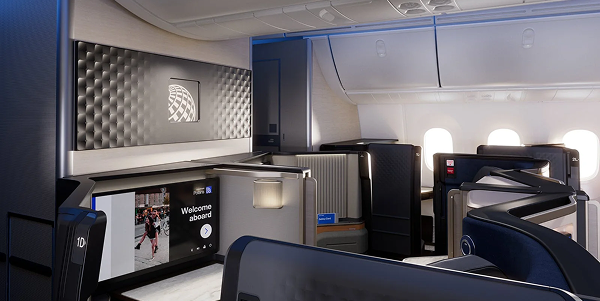

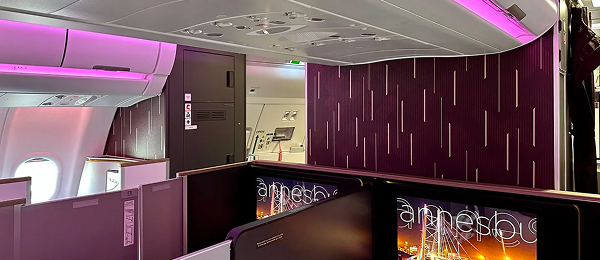
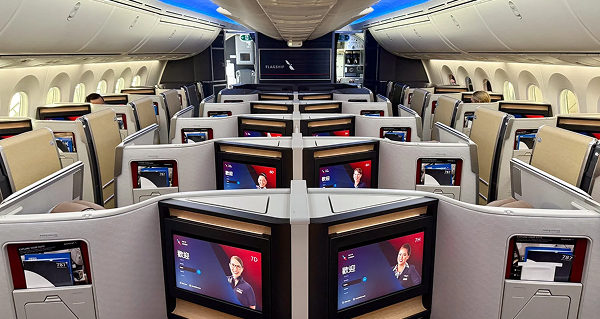
But don’t expect a free ride. Travelers will need to pay up for these improved experiences, with points and miles redemption rates remaining high in dynamically priced loyalty programs, complimentary upgrades for elite members becoming harder to secure, and airlines opening luxe lounges that no rewards credit card can give you access to.
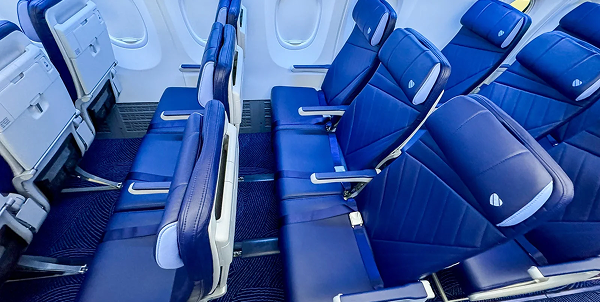
Meanwhile, in the back of the plane, improvements are measured in megabits. Free Wi-Fi, new seatback screens and extra USB ports are the extent of coach innovation on many carriers — a reality check for the economy crowd as domestic economy cash prices for 2026 travel are expected to increase nearly 13% year over year, according to Points Path data.
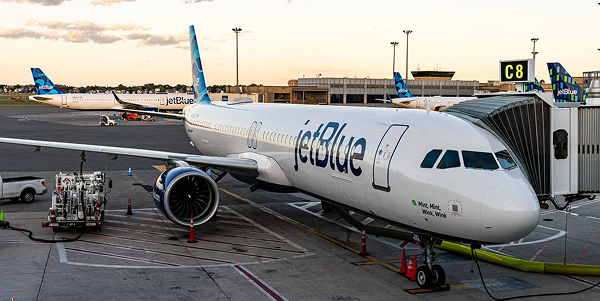
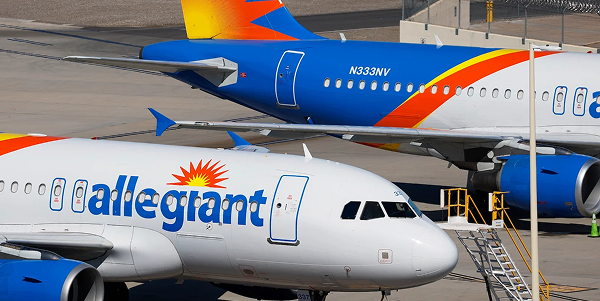
Even the low-cost carriers are going all-in on premium after years of watching their profits sink as travelers flocked to larger carriers with bona fide premium products, upending the once-tried-and-true budget airline model of no frills and few standout perks.


It's not an understatement to say that card issuers want all of your business, not just a portion.
Choosing a travel rewards credit card isn't just about choosing earning categories and straightforward benefits anymore. Now, choosing the right card means navigating entire ecosystems of partner benefits and proprietary rewards platforms where you'll need to spend money with certain brands or through certain travel portals in order to justify increasing annual fees.
And the mental fatigue of keeping it all straight is very real.
Every time a card or loyalty program gets a refresh, the incentives to stay inside a brand’s ecosystem grow stronger. The goal? To encourage consumers to divert a majority of their spending to specific products and partners in each issuer’s ecosystem.
Cardholders are encouraged to spend money with certain brands depending on what cards they hold because of the brand partnerships held by issuers. Card benefits aren’t just affecting consumer spending on the cards themselves, but also loyalty to their partners.
For example, the Chase Sapphire Reserve®’s generous $500 The Edit statement credit (issued as $250 biannually) only applies to reservations at properties in Chase’s curated The Edit collection and requires a two-night minimum stay. The recently launched Citi Strata Elite℠ Card offers extremely high earning rates — but only if you book through Citi’s travel and dining portals. And the American Express Platinum Card®’s Resy statement credit (up to $400 annually, disbursed as up to $100/quarter) only kicks in if you pay at U.S. Resy-affiliated restaurants or make other eligible Resy purchases with this card (enrollment required).
Bilt is striking its own path, building out a unique (and more personalized) loyalty ecosystem that is neighborhood-based and allows members to earn rewards by using a Bilt card or other linked credit cards at individual restaurants, pharmacies and gyms. The brand also has relationships with SoulCycle, multiple airline and hotel brands (similar to Chase’s and Amex’s transfer partner setup), Amazon, Lyft, and more. But while the setup of its program is unique, the goal is clearly to encourage spending through Bilt’s ecosystem — just as with other issuers.
And while Amex and Chase are definitely leading the pack with building out their brand ecosystems with partners, we expect Capital One and Citi to follow suit in the coming years. Capital One already has its own lounge network and luxury hotel collection via its portal. Citi’s addition of American Airlines as a premium travel partner and expansion of its rewards credit card lineup indicate it’s officially joining the issuer fray in the battle for cardholder spending.
As card portfolios expand, overlap is becoming a real issue.
Several cards offer the same benefits, such as general travel statement credits, streaming credits, TSA PreCheck/Global Entry application fee reimbursement and Priority Pass lounge access. This overlap leaves cardholders stuck managing redundant perks that don’t necessarily stack and, therefore, may go unused.
These days, holding more cards doesn't always mean more value; it may just mean more to track.
Each refresh or new launch brings more perks, more credits and more pressure to stay inside a particular system. Several cards have also introduced spending thresholds for more valuable rewards, including guest access to lounges, top-tier status with airlines or hotels, and the ability to earn free nights.
This increasing complexity, along with the need to spend more to access better benefits, incentivizes commitment to one ecosystem and risks burnout for those who try to balance a full wallet of cards with competing benefits.
The value you get from these cards can be real. But if the benefits don’t match your lifestyle or your location, they might not be worth the effort. With every swipe, you’re not just choosing how to pay — you’re choosing which ecosystem to live in.
With every swipe, you’re not just choosing how to pay — you’re choosing which ecosystem to live in.
In 2026, it will be all the more important for travelers to audit their wallets and make sure the cards they hold actually work for them. Rather than balancing multiple premium cards across different issuers and all their benefits, many consumers will lean toward the simplicity of cash-back cards or committing to one ecosystem.

You can still get excellent value from your points and miles. However, it’s becoming more difficult, so you must prioritize strategy and utilize the right tools to maximize your rewards.
The more flexible you are – regarding routes, travel dates, airlines and more – the better awards you’ll find. That hasn’t changed, but now you must also be flexible about the rewards currency you use to book your award travel.
In particular, having access to transferable points and miles is more valuable than ever, since it unlocks the ability to book the same flight through many different programs. This is particularly important as many airlines now only share award space with select partners.
of travelers say they find transferable points most valuable
prefer airline-specific points or miles.
With limited award space and programs only sharing award availability with partners, it’s been difficult to book some of the best award travel deals. However, this is changing.
n=2,104 U.S. Adults - Source: TPG/YouGov July 2025 Survey
This year, travelers have occasionally been able to book American Airlines’ new business-class suites from Chicago to London for just 55,000 Alaska Airlines miles, Etihad Airways business and first class using American miles, and even Cathay Pacific first class from New York to Hong Kong starting at 160,000 Asia Miles. Plus, we frequently see low rates across the Atlantic via Virgin Atlantic Flying Club.
Even so, to utilize these awards, you often have to book quickly, have flexible dates or both. Luckily, we’re also starting to see more cash deals, including plenty of sub-$500 round-trip flights to Europe.
While a weakening global economy (due in part to tariff fights) is bad news for the world, it can be good news for consumers looking for travel deals. We think 2026 will be another great year for cash and points deals since airlines are looking to fill seats that are otherwise going out empty.
Due to limited award availability and the fact that airlines often don’t share all their award space with every partner, award alerts and other tools have become critical.
Some apps and websites, like Seats.aero and Rooms.aero, let you search real-time award rates across multiple loyalty programs, while tools like Expert Flyer (owned by TPG parent company Red Ventures) let you set alerts for your desired route. Others, like Thrifty Traveler’s Premium award deal alerts, send the best deals straight to your inbox.
Most of these tools require a paid subscription to access the best features, which can be well worth the price. You can also save money on some tools with the right credit card. For example, the limited version of Point.me, a flight award search tool, is free for Bilt Rewards users and eligible American Express cardholders.
n=2,104 U.S. Adults - Source: TPG/YouGov July 2025 Survey
Focus on earning transferable rewards and learning to use award tools if you want to get the best value from your points and miles in 2026.
There will likely continue to be a flood of “unicorn” redemptions as airlines struggle to fill seats, but flexibility remains key.
Finally, act fast when you see cash deals, which are also surprisingly plentiful these days … even at the last minute.