How aircraft generate electricity and what happens if it fails during flight


Needless to say, a lot has changed in aircraft technology since the Wright brothers' first flight more than 100 years ago.
Advances in science have led to modern-day aircraft, such as the Boeing 787 Dreamliner, which uses electricity to power more systems than any other aircraft in history.
However, with such a reliance on this power, what happens if there is a failure? What happens if the aircraft manages to somehow lose all power?
[table-of-contents /]
How is electricity generated on an aircraft?
The generation of electricity on an aircraft works exactly the same way as it is done on the ground. In coal, gas and nuclear power stations around the world, water is heated to produce steam. This is why these forms of power generation are also known as thermal power.
This steam is then driven through a series of turbine blades and spins up a shaft connected to an electrical generator.
Inside the generator are a mass of magnets and coiled wire. The spinning shaft is used to rotate the magnets around the coiled wire, creating an electrical current. This power then reaches the electrical grid and gets distributed across the country.
The creation of electricity in this way ultimately depends on the generation of an electrical current by spinning a shaft to turn the magnets. Whether you use coal, gas or nuclear power, the method is the same — using energy in boiled water, or steam, to create the kinetic energy in the shaft.
Thinking laterally, if all we need to create electricity is a spinning shaft, there are a few other ways to do it.

Since the early days of science, mankind has been harnessing the power of wind to its advantage. Whether by using it to send sailboats across oceans or to crush grain via windmill, the kinetic energy of shifting air pressure has, and always will be, a source of free, clean energy.
In a traditional windmill, the turning blades are used to drive a shaft to crush grain, allowing millers to make flour for bread. The same principle is used in the modern-day wind turbine, instead using the energy from the wind to drive a shaft to turn an electrical generator, much like that in a power station.
There is another machine that uses a turbine to cause rotation — a jet engine.
Aircraft generators
The electrical system of a modern-day airliner is incredibly complex, but at the same time, simple in its operation.
Aircraft engines use hot, fast-moving air created by jet fuel ignition in the combustion chamber to drive turbine blades in the rear of the engine, generating thrust.
The spinning of these blades also turns a central shaft which — apart from being a central part in keeping the engine running — can also be used to turn an electrical generator.

On the 787 Dreamliner, there are two variable frequency engine starters/generators in each engine. Using a series of gears, kinetic energy is taken from the central drive shaft of the engine and fed into the VFSG. Here, like with our generators on the ground, magnets are turned around wire coils to generate electricity.
Related: Finnair could have fleet of electric planes in the sky within 5 years
This power is then delivered to an AC "bus," a place from which all aircraft electrical systems can source their power — much like a multiplug extension cord.
What is it used for?
The early uses of electricity in aircraft were limited to radios, flight instruments and lighting. However, with advances in technology, modern-day aircraft are using electricity for more and more systems.
Conspicuously in the cabin, electricity powers almost everything you can see, including the entertainment screens, the charging sockets in your seat area, the lighting above your head and the ovens and chillers in the galley.
However, one of the biggest leaps in aircraft technology was the invention of fly-by-wire flight controls.
Fly-by-wire
Traditional aircraft use a series of cables and pulleys to connect the flight controls in the cockpit directly to the control surfaces on the wings and tail. The simplicity of this method means that it's still used on light aircraft today.
However, with modern-day airliners, the speed of air over the control surfaces requires much greater physical strength to move the controls. In addition, all this metal is heavy. The heavier the aircraft, the more fuel it needs to fly.
To reduce this weight and to make it easier for the pilots, airliners now use a system known as fly-by-wire. Inputs to the controls in the flight deck send electrical signals to computers which, in turn, send other electrical signals to the relevant part of the aircraft.
Here, they activate motors and pumps to move the system as demanded by the pilots. This not only saves tons of weight but also means larger aircraft such as the A380 feel exactly the same flying as smaller aircraft like the A320.
Brakes
Stopping a 200-ton aircraft landing at 160 mph requires a lot of braking force. To do this, the 787 has eight wheels on the main gear assembly — each of which has a brake unit. On other aircraft types, a hydraulics system powers the brake units. An electrical signal travels from the flight deck to hydraulic actuators near the main landing gear. Here, hydraulic fluid at 3,000 pounds per square inch is used to force the brake unit against the wheel, thus slowing it down.
This system works fine, but the pipes and actuators that form this part of the hydraulic system come at a considerable weight cost. Extra weight means more fuel burn, which in turn increases costs and carbon emissions. What if the brakes could be powered a different way?
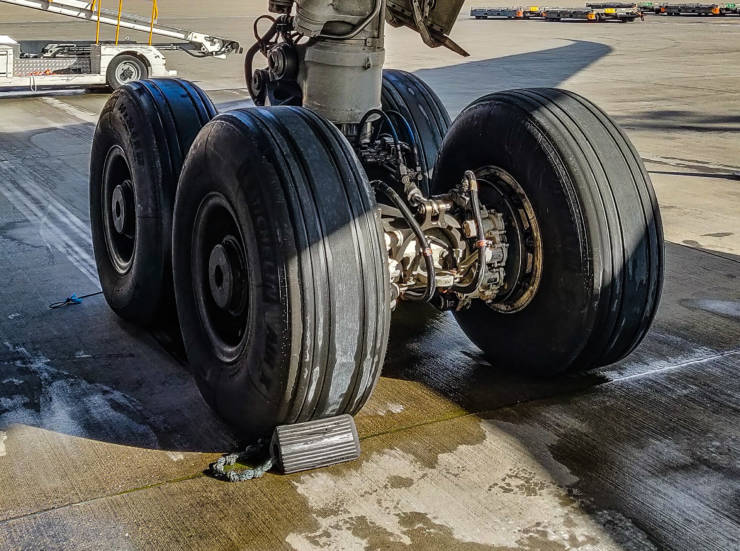
That's the case on the Dreamliner. Designers did away with the use of the hydraulic system and all its associated architecture. Instead, it uses electricity to power the brakes. When the pilots press on the brake pedals, an electrical signal travels directly to the brake unit on the wheel. Here, electrically powered actuators press the carbon brake disc against the wheel, slowing it down.
By changing to electric brakes, a 787-8 saves 141 pounds per aircraft and a 787-9 saves 245 pounds. The brakes are also known as "plug and play" because electrical wiring replaces the traditional hydraulics; this means it's much easier and quicker to change the brake units when needed. Smart features also allow engineers to monitor the brake performance more closely, giving a real-time measurement of wear on the carbon discs.
Related: How do aircraft brakes work?
Wing anti-ice
Another electrically powered system on the 787 is the anti-ice system. As aircraft fly through clouds in cold temperatures, ice can build up along the leading edge of the wing. As this reduces the efficiency of the wing, it's important to get rid of it.
Other aircraft types use hot air from the engines to melt it. On the 787, we use electrically powered pads along the leading edge which heat up to melt the ice.
Not only does this keep more power in the engines, but it also reduces the drag created as the hot air leaves the structure of the wing — a double win for fuel savings.
What happens if a generator fails?
Modern-day airliners are built on a system of redundancies. If one component of a system fails, then there will be a backup. For the most important systems, there will be a backup for the backup. So what about the electrical system?
Each of the two engines has two generators, making four in total. If one of these were to fail, first and foremost, nothing shocking would happen. The aircraft would continue to fly normally and the other three generators would continue to supply the aircraft systems demanding power. If you were sitting in the cabin, you'd have no idea this had happened.
The message alerting the pilots to the failure would lead them to the associated non-normal checklist which calls for them to try and reset it. If this works, great. If not, it's still not a problem.
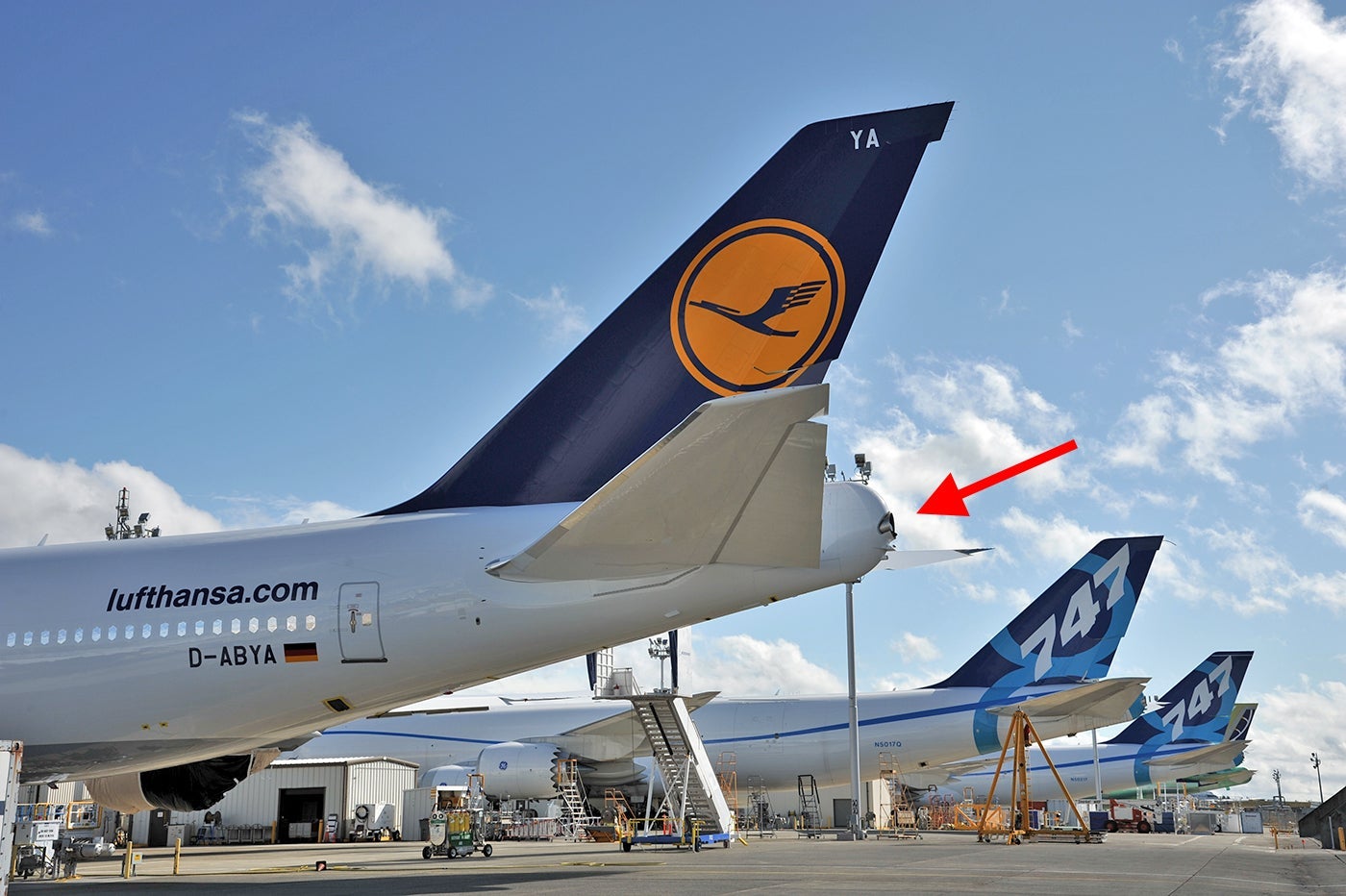
In the tail of the aircraft is another small engine called the auxiliary power unit. The APU contains two electrical generators, capable of providing the same power as the ones in the engine. The failed generator checklist then instructs the pilots to start the APU, powering those generators and returning the system to a full set of generators.
In the case of an engine failure, the aircraft would lose two generators. Still, the aircraft would fly perfectly well. Once again, the associated checklist would instruct the pilots to start the APU, returning the aircraft to a full complement of four generators.
What happens if they all fail?
In the highly unlikely event of a dual engine failure, there is an extra backup that comes to the rescue. Hidden away in the underside of the aircraft is a small propeller called the ram air turbine. If the aircraft detects that both engines have failed in flight, the RAT automatically deploys into the airflow. (It will also automatically deploy if the aircraft detects several other faults in various other systems, including the hydraulics).
The oncoming air causes the propeller to spin, driving a shaft and, you guessed it, powering a generator that is able to provide enough electricity to power the basic flight systems on the aircraft.
This ensures that even if all six of the normal generators on the aircraft happen to be unavailable (though I can't imagine a situation where this would ever happen), pilots are still able to control the aircraft.
The more likely scenario where the aircraft has no electrical power is in the event of an emergency evacuation.
If the pilots deem that the situation outside the aircraft is safer than what is going on inside the aircraft — for example in the case of a rejected takeoff — the captain will initiate an emergency evacuation.
As part of this process, the checklist calls for both engines to be shut down. This is to reduce the chance of a fire and, more importantly, remove the danger to passengers as they exit the aircraft.
Related: Why flying with 2 engines is better than flying with 4
At this stage of the flight, the only electrical power will be coming from the generators in the engines. As soon as they are shut down, this power source will be removed. As the aircraft is on the ground, the RAT will not deploy as there is no airflow to make it spin.
As a result, the only remaining power source is the aircraft battery.
As soon as power is lost from the engine generators, the battery kicks in to provide just enough electricity to power vital systems such as the emergency exit lighting and the PA system.
Bottom line
An aircraft like the 787 is heavily reliant on electrical power to operate. As a result, a massive amount of redundancy is built into the system to cover any eventuality that could be imagined. The loss of a single generator is of little concern. Even if two were unavailable due to an engine failure, the APU could make up the deficit.
If both engines failed, the RAT would still be able to provide enough power to allow the aircraft to glide in a controlled manner back to the ground.
If the power failure occurred on the ground, the battery would be sufficient enough to provide around 30 minutes of energy; this would power the systems needed to evacuate the aircraft safely.
TPG featured card

at Capital One's secure site
Terms & restrictions apply. See rates & fees.
| 5X miles | Earn 5X miles on hotels, vacation rentals and rental cars booked through Capital One Travel |
| 2X miles | Earn unlimited 2X miles on every purchase, every day |
Pros
- Stellar welcome offer of 75,000 miles after spending $4,000 on purchases in the first three months from account opening. Plus, a $250 Capital One Travel credit to use in your first cardholder year upon account opening.
- You'll earn 2 miles per dollar on every purchase, which means you won't have to worry about memorizing bonus categories
- Rewards are versatile and can be redeemed for a statement credit or transferred to Capital One’s transfer partners
Cons
- Highest bonus-earning categories only on travel booked via Capital One Travel
- LIMITED-TIME OFFER: Enjoy $250 to use on Capital One Travel in your first cardholder year, plus earn 75,000 bonus miles once you spend $4,000 on purchases within the first 3 months from account opening - that’s equal to $1,000 in travel
- Earn unlimited 2X miles on every purchase, every day
- Earn 5X miles on hotels, vacation rentals and rental cars booked through Capital One Travel
- Miles won't expire for the life of the account and there's no limit to how many you can earn
- Receive up to a $120 credit for Global Entry or TSA PreCheck®
- Use your miles to get reimbursed for any travel purchase—or redeem by booking a trip through Capital One Travel
- Enjoy a $50 experience credit and other premium benefits with every hotel and vacation rental booked from the Lifestyle Collection
- Transfer your miles to your choice of 15+ travel loyalty programs
- Top rated mobile app