The Points Guy believes that credit cards can transform lives, helping you leverage everyday spending for cash back or travel experiences that might otherwise be out of reach. That's why we publish a variety of editorial content and card comparisons: to help you find a great card to turn your goals into reality.
Our site may earn compensation when a customer clicks on a link, when an application is approved, or when an account is opened with our partners, and this may impact how or where these products appear. While we don't cover all available credit cards, our editorial team creates and maintains all of the analysis of these cards, and our content is not influenced nor subject to review by any credit card company, bank or partner prior to (or after) publication. Please view our advertising policy and product review methodology for more information.
Advertiser disclosure
The Points Guy believes that credit cards can transform lives, helping you leverage everyday spending for cash back or travel experiences that might otherwise be out of reach. That's why we publish a variety of editorial content and card comparisons: to help you find a great card to turn your goals into reality.
Our site may earn compensation when a customer clicks on a link, when an application is approved, or when an account is opened with our partners, and this may impact how or where these products appear. While we don't cover all available credit cards, our editorial team creates and maintains all of the analysis of these cards, and our content is not influenced nor subject to review by any credit card company, bank or partner prior to (or after) publication. Please view our advertising policy and product review methodology for more information.
News
Air travel concerns over European jet fuel shortage grow: What travelers should know
Sean Cudahy is an aviation reporter covering news about airlines, frequent flyer programs and consumer travel issues.
April 17, 2026 • 8 min read
The cards we feature here are from partners who compensate us when you are approved through our site, and this may impact how or where these products appear. We don't cover all available credit cards, but our analysis, reviews, and opinions are entirely from our editorial team. Terms apply to the offers listed on this page. Please view our advertising policy and product review methodology for more information.Editorial disclaimer: Opinions expressed here are the author's alone, not those of any bank, credit card issuer, airline or hotel chain, and have not been reviewed, approved or otherwise endorsed by any of these entities.
Comments
By commenting, you agree to our Community Guidelines to help create a positive space for conversation. The responses below are not provided or commissioned by the bank advertiser, our partners, or The Points Guy (“TPG”). They have not been reviewed, approved, or otherwise endorsed by any of these parties. All responses are submitted by individual contributors, and neither the bank advertiser, our partners, nor TPG are responsible for ensuring that all posts and/or questions are answered.
Related stories
Quick summary
Rising global oil prices and jet fuel shortages are causing airlines to increase fares, raise checked bag fees and cut routes, with some budget carriers facing severe financial strain.
European airports face the risk of running out of jet fuel within weeks, potentially leading to widespread flight cancellations and disruptions, especially during the busy summer season.
Several European airlines have already canceled or reduced routes due to high fuel costs, and further disruptions are possible if shortages persist.
Travelers are advised to understand their refund rights, consider backup travel plans and use flexible booking options to minimize risks.
What to consider
U.S. Department of Transportation rules require refunds for canceled or significantly delayed flights from the U.S. to Europe if travelers opt not to rebook.
EU261 regulations may provide additional compensation for affected flights within Europe, but coverage varies by situation.
Standard travel insurance policies may not cover cancellations due to fuel shortages; a 'cancel for any reason' add-on could offer broader protection.
What you'll miss from the article
Detailed guidance on refund rights, compensation rules and practical backup strategies for navigating potential disruptions during the European jet fuel shortage.
Generated by AI with support from our editorial team.
Meanwhile, in Europe, fears are growing that airports could quite literally run out of jet fuel to power their planes.
It’s a “stunning” and largely unprecedented situation, a global supply chain expert told TPG — one that could have a major impact on summer travel if things don’t change soon.
Higher fares, fees just the beginning
The impact of the run-up in global oil prices (and jet fuel costs) on the cost of flying is no secret.
Fares and fees have surged over the past several weeks.
If you’re booking a domestic flight three to five weeks ahead of departure, you’ll pay about 15% more than you would have at this time last year. That’s according to airfare data relayed to TPG on Thursday from our partners at Points Path.
And those checked bag fees that nearly all the major U.S. airlines have hiked? Don’t expect those to drop even after oil prices — and airfares — fall.
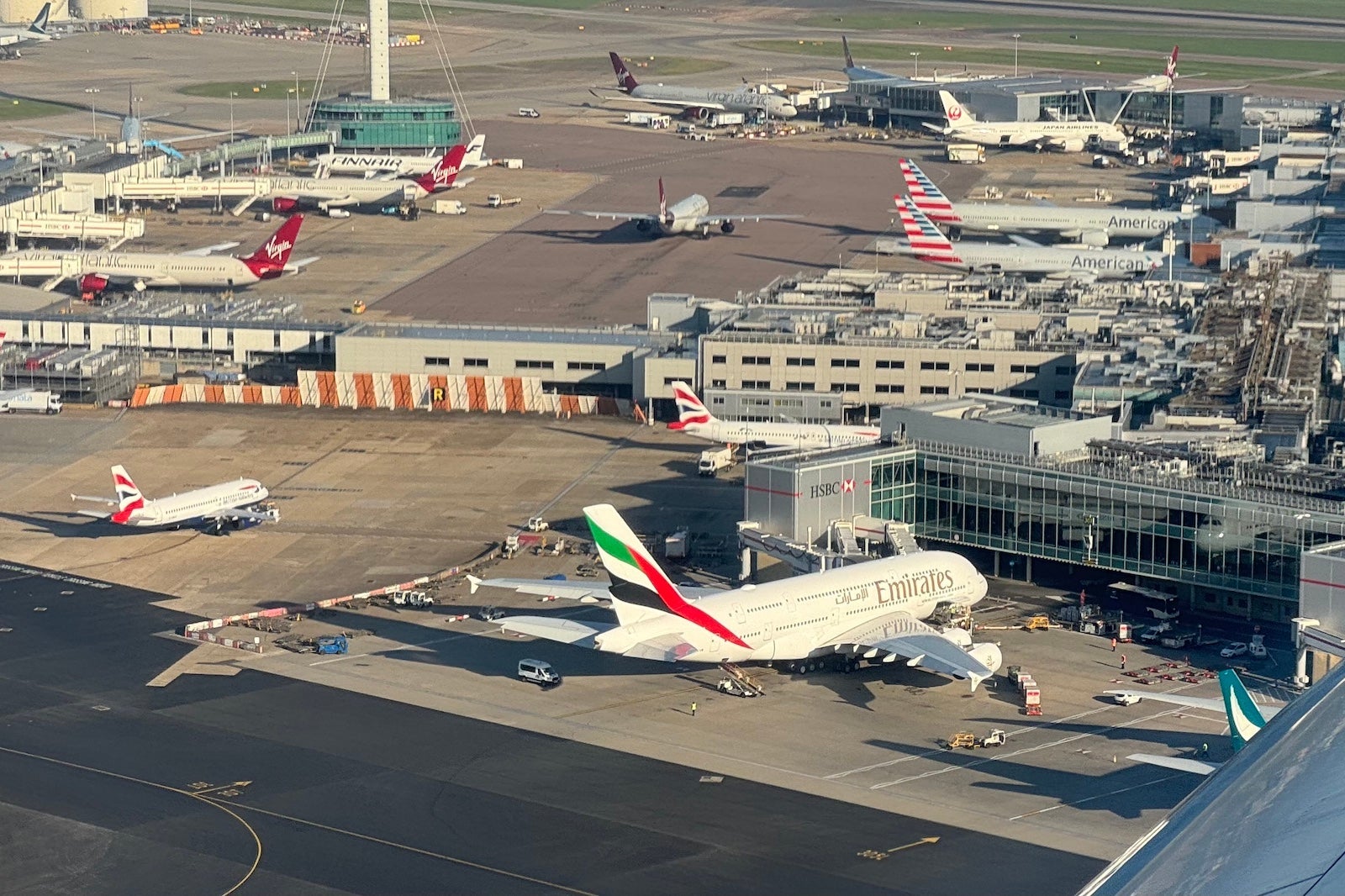
SEAN CUDAHY/THE POINTS GUY
But paying more to travel this summer now looks to be only part of the problem travelers could face in the coming weeks.
Concerns about European fuel supply grow
Speaking to the Associated Press on Thursday, the head of the International Energy Agency warned Europe had “maybe six weeks or so” of jet fuel left.
It’s an increasingly dire shortage that could lead to massive disruptions in air travel if oil supply doesn’t change quickly.
European low-cost giant Ryanair this week told the Irish Times that if the oil shortage continues to May or June, it "cannot rule out risks to fuel supplies at some airports in Europe."
MARCOS DEL MARZO/LIGHTROCKET/GETTY IMAGES
The news was certainly sobering for travelers ahead of what was expected to be another busy summer for travel across the Atlantic.
Rob Handfield, a global supply chain expert at North Carolina State University, said it could mean “big trouble” for travel and the transport of key goods.
“I doubt they will completely run out,” Handfield told TPG Friday. “But it is very likely that some flights may get canceled if this continues.”
In fact, we’re already seeing the cancellations.
Airline flight cancellations mount
European budget carrier Norse Atlantic revealed this week that it was pulling out of Los Angeles International Airport (LAX). Swiss leisure carrier Edelweiss announced it would immediately shutter service to Denver International Airport (DEN) and Seattle-Tacoma International Airport (SEA).
Meanwhile, Germany-based Lufthansa announced a host of cutbacks, including the shuttering of its CityLine regional subsidiary. It also accelerated plans to permanently ground its fuel-guzzling, four-engine Airbus A340-600s later this year.
For now, those cancellations have largely been due to the current cost of fuel, which has made turning a profit on those routes less likely. But if actual shortages begin to pile on top of soaring costs, expect more disruptions to arise.
A Lufthansa Airbus A340. NICOLAS ECONOMOU/NURPHOTO/GETTY IMAGES
Of course, it’s not just European airlines that would be affected by fuel shortages in Europe.
The largest U.S. carriers have largely avoided commenting so far on what jet-fuel shortages in Europe could mean for transatlantic service in the coming months.
There were growing signs of hope for the global oil crunch. Reports on Friday indicated the Strait of Hormuz, the critical oil shipping corridor that’s been blocked amid the conflict in the Middle East, had begun to reopen.
PHOTOSFORYOU/MOMENT/GETTY IMAGES
Still, concerns are far from over about the supply of jet fuel — not just the cost of it — giving pause to travelers with flights booked for the coming months.
TPG's tips for navigating the European jet fuel shortage
In a video posted Friday, TPG founder Brian Kelly offered a few tips for those planning to fly to Europe in the near future. Here's what you should do if you have a trip planned.
U.S. Department of Transportation refund rules remain in place if your flight from the U.S. to Europe is canceled. It would also apply to flights that experience a delay or schedule change of six hours or more.
You’d be owed a refund if you choose not to travel rather than accept a rebooking.
Most of us would still want to go on that long-planned trip, though.
There’s no telling exactly how airlines would implement schedule reductions, but I’d imagine many carriers would probably look to curtail shorter intra-Europe flights before axing long-haul departures on big planes.
For that reason, I’d build in contingency plans if you’re hoping to hop around to a bunch of European cities via plane. Consider exploring rail options, or at least have a backup flight in mind — and don’t cut it close if you’re trying to catch a cruise or another flight.
A Renfe train at Madrid's Atocha railway station in Spain. SEAN CUDAHY/THE POINTS GUY
Also, if you’re still making hotel or lodging reservations, I’d aim for flexible bookings you can cancel without penalty if you run into travel woes.
Use your credit card with travel insurance to book
And if you have a credit card in your wallet that offers travel insurance protections, be sure to make your travel reservations with that card. While exact coverages vary from one card and policy to another, there's one rule that’s pretty universal: To make a claim, you typically must have booked your trip with that card.
Still, you'll want to consult your benefits guide for exact coverage included in your plan.
"Flight cancellations due to lack of jet fuel or route suspensions would not likely be covered under most standard policies," insurance marketplace Squaremouth told TPG. It also noted that a "cancel for any reason" add-on could come in handy during a situation like this.
Looking ahead
Stay tuned to TPG. As we learn more about the evolving fuel shortage and its impacts on air travel, we’ll be sure to update you with the latest information.
By commenting, you agree to our Community Guidelines to help create a positive space for conversation. The responses below are not provided or commissioned by the bank advertiser, our partners, or The Points Guy (“TPG”). They have not been reviewed, approved, or otherwise endorsed by any of these parties. All responses are submitted by individual contributors, and neither the bank advertiser, our partners, nor TPG are responsible for ensuring that all posts and/or questions are answered.